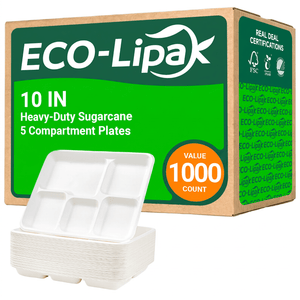
Quick Answer: A meal-prep kitchen should buy five-compartment plates only after testing its actual menu in both tray footprints. ECO-Lipak's wholesale white sugarcane plates come in 10 x 8.25 inches at 1,000 per carton and 12.5 x 8.6 inches at 800 per carton. The smaller plate can work for controlled lunch portions; the larger plate gives a full meal more room. Count completed meals, not food components, then compare the carton count with your weekly production and storage space.
Key Takeaways
- The two current wholesale variants differ in both footprint and carton quantity: 1,000 smaller plates versus 800 larger plates.
- Five compartments help separate parts of a meal, but the plate is open-topped; a matching lid is not implied.
- Test the real food, fill height and handoff route before buying a full carton.
- A small kitchen may find the available 125- or 100-count trial boxes more practical than wholesale during menu testing.
- Set a reorder trigger from plates used during delivery lead time plus a buffer for events and damage.
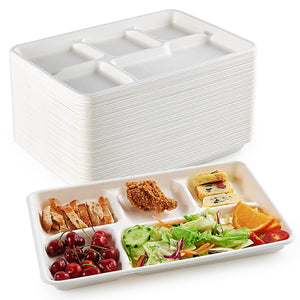
Five compartments can make portioning easier for a repetitive lunch menu: protein, starch, vegetables, sauce-free side and fruit each have a place. That layout is not automatically a better choice for every food. A burrito bowl, sandwich-and-chip meal or saucy stew may use the space poorly. For a small buyer, the purchasing question is whether the format improves assembly and handoff enough to justify a carton.
The wholesale five-compartment sugarcane plate listing currently offers a 10 x 8.25 inch option at 1,000 per carton and a 12.5 x 8.6 inch option at 800 per carton. These are separate variants, so check the live selected size and quantity before checkout. Do not treat the larger carton number as a quality ranking.

Choose the Footprint Before the Carton
| Variant | Current wholesale count | Good first test | Watch for |
|---|---|---|---|
| 10 x 8.25 inches | 1,000 per carton | Controlled lunch portions and modest sides | Overfilled protein or sauce crossing dividers |
| 12.5 x 8.6 inches | 800 per carton | Larger five-part meals and catering plates | Unused space or larger storage footprint |
Prepare the heaviest normal meal, not a tidy photo sample. Let hot food stand for the expected pickup period, then carry the plate as a customer would. Check whether the dividers keep foods meaningfully separated, whether the rim stays comfortable to grip and whether food height makes any separately sourced cover impractical. The product is an open plate, so test any closure as a separate purchase and do not promise delivery protection from the plate alone.
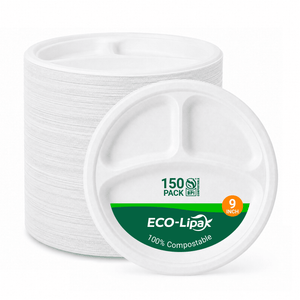
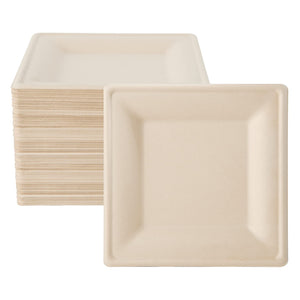
If the tray proves too small, moving to the larger size may be simpler than adding another side bowl. If the menu does not need five divisions, compare a three-compartment sugarcane plate or a plain square plate. The least expensive piece is not always the least expensive meal assembly.
Work Out the First Order
Suppose a meal-prep service expects 60 five-part lunches on each of five weekdays: 300 plates per week. A 1,000-count smaller carton covers a little over three weeks before damaged stock or extra orders; an 800-count larger carton covers about two and two-thirds weeks. If production is only 30 meals per week, either carton may tie up space for months. At that volume, test a smaller pack first.
The retail five-compartment plate options currently include 125/box for the smaller size and 100/box for the larger size. Those boxes support a controlled trial without forcing an early wholesale commitment. The retail listing also has carton variants, but check availability for the selected size; do not assume every displayed count is in stock.

Three Small-Business Buying Scenarios
Subscription lunch kitchen
A predictable weekly subscription makes carton buying easier. Count confirmed meals plus a modest forecast for late additions. If the menu changes each week, repeat the plate-fit test for the sauciest or bulkiest recipe, not just the easiest one.
School or community meal service
The five-part layout may support a planned meal pattern, but the serving staff need a consistent scoop and assembly order. Count one plate per meal plus a realistic allowance for damage. Confirm collection and disposal with the facility rather than promising composting in every cafeteria.
Weekend catering operator
Orders come in bursts. Reserve plates for booked events before treating remaining stock as available for walk-ins. A single 400-person event can consume nearly half a 1,000-count carton. A backup pack may be sensible if the next delivery will arrive after the event.
Set a Reorder Trigger
If a kitchen uses 60 plates daily, supplier lead time is four operating days and it wants two extra days of coverage, reorder around 60 x (4 + 2) = 360 usable plates. Include booked catering jobs in the calculation, because they are already committed demand. Count open sleeves as well as sealed cartons. Track damaged plates separately so the stock figure reflects what can actually be served.
At checkout, compare cost per usable served meal: live carton price divided by plates that pass the menu test, plus any second container or wrap needed. A cheaper small plate that requires a second dish may lose the advantage. A larger plate with unused space may also cost more to store and transport. Prices change, so use the current product page instead of a static article number.
Material and Disposal Check
These plates are molded sugarcane fiber, not palm leaf and not a folding takeout box. The US EPA foodservice ware guidance is useful when evaluating material and end-of-life claims. Verify certification on the exact product and ask the receiving facility whether food-soiled molded-fiber ware is accepted. The word compostable does not make a plate suitable for every local bin.
Browse ECO-Lipak's heavy-duty plate collection if a different shape is needed. The earlier bulk size guide compares the two footprints; this article focuses on a meal-prep operation's first order and reorder timing.
Frequently Asked Questions
How many five-compartment plates are in a wholesale carton?
The current wholesale listing shows 1,000 smaller 10 x 8.25 inch plates or 800 larger 12.5 x 8.6 inch plates per carton.
Should a meal-prep business buy the 800- or 1,000-count carton?
Choose the plate size from a real menu test first. Then compare expected weekly use, storage and supplier lead time against that size's carton count.
Is there a smaller pack for testing?
The separate retail listing currently offers a 125-count small-size box and a 100-count large-size box, subject to live availability.
Do these plates include a lid?
Do not assume a lid is included. They are open plates; test any separately purchased closure with the chosen size and filled meal.
Are five compartments always better for takeout?
No. They help when the meal genuinely has distinct components, but a bowl, three-compartment plate or clamshell may fit another menu better.