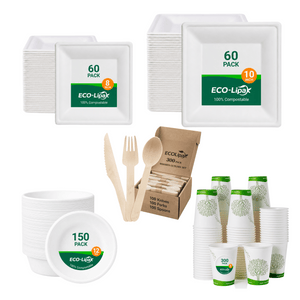
Quick Answer: A set with 250 six-inch plates and 200 ten-inch plates can serve 200 guests one dinner plate and one smaller plate each, with 50 extra six-inch plates. For a safer 10% event buffer, plan on about 180 guests. The 10-inch count is the limiting number, so events expecting a full 200 people should add backup dinner plates.
Key Takeaways
- The set contains 450 natural square sugarcane plates: 250 six-inch and 200 ten-inch plates.
- Ten-inch dinner plates determine guest capacity because there are fewer of them.
- For 150 guests, the set leaves a comfortable reserve of 100 small plates and 50 dinner plates before service losses.
- For 180 guests, it closely matches a 10% buffer: 198 of each size are needed.
- For 200 guests, add dinner-plate backup if the event is self-service, has seconds, or includes staff meals.
Event plate planning is rarely just "two plates per person." Plate size, menu sequence, buffet behavior, staff meals, and dropped plates all change the count. The ECO-Lipak 6- and 10-inch square compostable plate set combines 250 smaller plates with 200 dinner plates. That mix is useful, but it should be matched to the guest count before the cartons reach the venue.
What the 6- and 10-Inch Plates Are For
| Plate size | Pack count | Best menu role | Common planning mistake |
|---|---|---|---|
| 6 inch | 250 | Dessert, appetizer, bread, cake, small snacks | Using it for a loaded entree that needs more surface area |
| 10 inch | 200 | Main course, buffet meal, BBQ, catered lunch | Counting exactly one per guest with no reserve |
The six-inch plate is not simply a spare dinner plate. It gives the event a separate surface for cake, appetizers, or a second service moment. The ten-inch plate carries the main meal. When both are used as intended, the set supports a clean two-course flow without asking guests to keep a sauce-covered dinner plate for dessert.

Guest Coverage With a Practical Buffer
For most catered events, use this formula:
Guest count x 1.10 = target count for each required plate size
The 10% reserve accounts for damaged plates, seconds, unexpected attendees, vendor meals, and plates taken for food staging. Formal plated service may operate with a smaller reserve because staff control distribution. A self-serve buffet usually needs more breathing room.
| Expected guests | Target with 10% buffer | 6-inch result | 10-inch result | Planning call |
|---|---|---|---|---|
| 150 | 165 of each size | 85 left | 35 left | Comfortable for a two-course event |
| 180 | 198 of each size | 52 left | 2 left | Good fit, but dinner-plate reserve is tight |
| 200 | 220 of each size | 30 left | 20 short | Add at least 20 dinner plates |
| 225 | 248 of each size | 2 left | 48 short | Add a separate dinner-plate pack |
Without a reserve, the pack technically serves 200 two-plate settings and leaves 50 six-inch plates. With a 10% reserve, the practical two-size capacity is 181 guests. Rounding down to 180 gives the service team a cleaner number to manage.
Three Event Scenarios
1. A 150-Guest Wedding Buffet
Each guest receives a ten-inch dinner plate and a six-inch cake plate. The pack leaves 50 dinner plates and 100 cake plates before service begins, so there is room for vendors, late RSVPs, dropped plates, and a second dessert round. One set is comfortably sized.
2. A 180-Person Corporate Lunch
The main meal uses ten-inch plates and cookies or fruit use six-inch plates. A 10% buffer requires 198 of each size, almost exactly matching the 200 dinner plates. Keep the dinner plates behind the service line instead of placing the whole stack at an unattended buffet.
3. A 200-Guest Community Event
The set covers the RSVP count but not a standard safety margin. Add a small pack of ten-inch plates, especially when guests may return for seconds. The extra 50 six-inch plates already create a useful reserve for snacks and dessert.
Cost per Plate and Cost per Guest
At the current listed price of $87.99, the 450-plate set averages about $0.20 per plate. If it is used for 200 guests, the pack cost is about $0.44 per guest for access to one dinner plate and one smaller plate, with 50 small plates left. At 180 guests, the pack cost is about $0.49 per guest and includes a more responsible service reserve.
Cost per guest is more useful than cost per plate because it reflects the actual event plan. A slightly higher per-guest number can be the better purchase if it prevents an emergency order, mismatched plate colors, or staff rationing during dinner.
Match the Plate Count to the Menu
- One-course lunch: Ten-inch plates set capacity; six-inch plates can be held for future service.
- Dinner plus dessert: Count one of each size per guest, then add the service buffer.
- Appetizer, dinner, and dessert: Some guests may use two small plates, so the 250-count six-inch stack becomes the pressure point above 113 guests with a 10% buffer.
- Open-house grazing: Plate reuse is unpredictable. Plan a larger small-plate ratio because guests return to stations throughout the event.
For events needing different combinations, compare the broader compostable plate collection and complete the count by size rather than by total pieces alone.

A Simple Event-Day Plate Workflow
- Set aside the full reserve before opening the buffet.
- Stage only the first wave of dinner plates at the food line.
- Place six-inch plates at the course they serve, not beside the entrees.
- Keep vendor and staff meals in the count from the beginning.
- At cleanup, separate food scraps and serviceware according to the receiving facility's rules.
BPI states that its certification program verifies products against compostability standards, but facility acceptance still matters. Review BPI's certification information and confirm the local organics program before labeling an event bin. The FTC Green Guides summary also explains why compostable claims should be qualified when suitable facilities are not widely available.
Presentation and Service Fit
The natural square shape gives separate courses a coordinated look without requiring every plate to be the same size. It works especially well for casual weddings, office events, school functions, outdoor meals, and buffet service where a rigid plate helps guests move between stations.
For an event that needs cups, bowls, or cutlery in the same order, evaluate a coordinated set rather than adding unrelated pack counts at the last minute. ECO-Lipak's brand and materials overview provides context for the tableware range, while the guest-count math should still be done item by item.
Frequently Asked Questions
Will this plate set serve exactly 200 guests?
Yes, if every guest uses one six-inch and one ten-inch plate and no reserve is needed. For a normal event buffer, it is better suited to about 180 guests.
How many extra ten-inch plates should I buy for 200 guests?
Buy at least 20 extra for a 10% buffer. Add more if the buffet allows seconds on a fresh plate or if staff and vendor meals were not included in the RSVP count.
What food fits a six-inch plate?
It works best for cake, dessert, bread, fruit, appetizers, and small snacks. It is usually too small for a full buffet entree.
What food fits a ten-inch plate?
It fits a main course with sides, BBQ service, catered lunches, and most buffet meals.
Should I put every plate on the buffet at once?
No. Hold the reserve behind the line and replenish in waves. This reduces unnecessary plate use and protects the backup count.