Quick Answer: For a buffet meal with a main and two sides, a round three-compartment compostable plate keeps portions organized without asking guests to balance several dishes. Start with a 9-inch plate for moderate servings and a 10-inch plate when the main or sides need more room. Neither size is a substitute for a bowl of soup: keep free liquid to a minimum, test the actual menu, and check whether your local organics program accepts food-soiled molded-fiber plates.
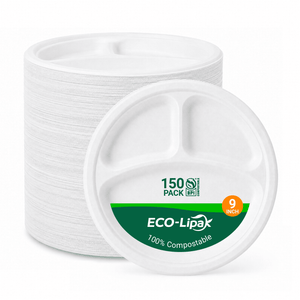
A plate that looks fine beside an empty buffet can feel crowded once pasta, vegetables, and dessert all land on it. The useful buying question is not simply whether a plate is "heavy duty." It is whether its shape gives the menu enough separation and whether the pack size matches the event. ECO-Lipak's round sugarcane three-compartment plates come in white and natural colors, with 9- and 10-inch options. The three molded wells make a practical difference when one part of dinner has a little sauce and another part should stay crisp.
Key Takeaways
- Choose by plated food, not by diameter alone; do a full-menu test before buying a carton.
- Three sections help separate a sauced main from dry sides, but they are not sealed barriers.
- ECO-Lipak currently offers white 9- and 10-inch plates in 150-count boxes or 600-count cartons; natural plates come in 125-count boxes or 500-count cartons.
- For five small components, consider a five-compartment plate; for soup or broth, use a bowl instead.
- Compostable is a material and end-of-life claim, not permission to put every plate in every green bin.
9 vs 10 Inches: The Menu Decides
| Buying situation | First plate to test | Why | Check before ordering |
|---|---|---|---|
| Lunch with a modest main and two sides | 9-inch, three compartments | Enough structure without an oversized plate | Plate one full serving with utensils and carry it across the room |
| Dinner with pasta, protein, or generous sides | 10-inch, three compartments | Extra overall area can reduce crowding | Test sauce depth, rim strength, and stacking at the service point |
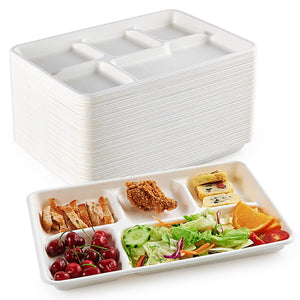
| Five distinct tasting portions | 10 x 8.25-inch five-compartment plate | More separation, smaller individual wells | Only the 10 x 8.25-inch version is currently available |
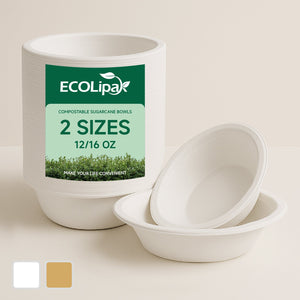
| Broth, chili, or a very wet main | 12- or 16-oz wide-side sugarcane bowl | A bowl suits free liquid better | Test the filled bowl with the actual serving temperature |
The inch number describes the plate's overall diameter, not the capacity of each compartment. A wide entrée well can still be too shallow for a ladle of liquid. Ask the catering team to plate one realistic serving, wait several minutes, then lift it from the edge with one hand. If the food runs over a divider, change the portion or vessel; a larger diameter alone may not solve it. ECO-Lipak also offers five-compartment sugarcane plates when the menu needs more separation, but that is a different service pattern, not an automatic upgrade.

Three Real Service Scenarios
1. A catered lunch with one sauced main
Put the entrée in the large lower well and dry sides in the two smaller wells. If the sauce is meant to coat the entrée, portion it before it reaches the buffet rather than letting a guest flood the plate. Use the 9-inch format for lighter lunches, then compare a 10-inch sample if staff find themselves piling food above the rim. The right choice depends on the actual scoop size and the walk from buffet to seat.
2. An outdoor community dinner
Picnic tables, standing guests, and uneven ground make one stable plate more useful than several small dishes. A three-compartment plate gives salad and fruit a place away from pasta or barbecue. The photo below shows that separation in a real event setting. If the menu includes a ladle of chili, offer a wide-side sugarcane bowl alongside the plate instead of treating the plate as a soup bowl.
3. A volunteer-run buffet with uncertain turnout
Standardize on one size after a meal test, then calculate a reserve. For example, 180 expected guests at 1.1 plates per guest is 198 plates; a 150-count white box is short, while a 600-count carton is far more than this single event needs. A 125-count natural box plus another 125-count box would cover the example with room for breakage, though actual ordering should reflect the final guest count and any existing stock. Keep a small sleeve at each station so staff do not open all boxes at once.

Pack Counts and a Simple Cost Check
On ECO-Lipak's current product page, white plates are listed as 150 per box or 600 per carton for either 9 or 10 inches. Natural plates are listed as 125 per box or 500 per carton. These are not interchangeable counts. Before comparing prices, calculate cost per usable plate, include shipping, and account for the menu's likely plate count. A lower case price can be poor value if half the carton sits unused or if the plate is too small for your entrée.
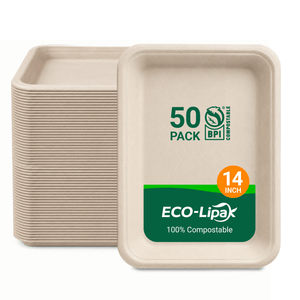
When a platter is shared rather than carried by each guest, a 14-inch sugarcane food tray may be more appropriate. Do not solve every serving problem with a larger individual plate. It is often cleaner to pair a correctly sized plate with one serving tray or bowl for a specific item.
What Compostable Does and Does Not Tell You
The plate is sold as BPI-certified sugarcane fiber, but buyers should still check the exact item in the BPI product catalog if certification is part of their purchasing policy. The US EPA's food-serviceware guidance advises buying commercially compostable foodware only when a local program is available, accepts the specific product type, and collection service is arranged. That means an event can have an excellent plate but still need a different waste plan.
Ask the hauler whether molded-fiber plates with food residue are accepted. If not, use the disposal method that the local program requires and avoid claims that the plates will disappear in a landfill. The FTC's compostable-claims guidance in 16 CFR 260.7 calls for evidence and qualification when facilities are not widely available. A short sign at the clearing station should tell guests exactly where this plate goes at this venue.
Before You Place the Order
Run a ten-minute plate test with the heaviest realistic meal, not a decorative sample. Check each compartment's usable space, the stability of a carried full plate, whether sauce crosses a divider after five minutes, and the serving line's stack height. Then buy the smallest pack plan that covers guests, staff meals, and a modest reserve. The product page is the place to confirm today's available colors, case counts, and price: shop the current three-compartment plate options.
Frequently Asked Questions
Are three-compartment compostable plates good for hot food?
ECO-Lipak describes these sugarcane plates as suitable for hot and cold food. For a specific catering menu, test a full hot serving and its hold time rather than assuming every food behaves alike.
Will a divider stop gravy from reaching another food?
It can reduce mixing during normal service, but a molded divider is not a sealed wall. Use a bowl or separate sauce cup when the meal includes a lot of free liquid.
Should I buy 9-inch or 10-inch plates?
Test the 9-inch plate first for a moderate main plus sides and the 10-inch plate when that same meal feels crowded. Compare the actual filled plate, not just the listed diameter.
Can these plates go in my compost bin?
Only if your local collection or composting program accepts this specific foodware. Certification and local acceptance are separate questions.
How many plates should I order per guest?
For a single-meal event, start near one plate per guest and add a measured reserve for seconds, staff, and breakage. Events with multiple meal periods need a separate count for each period.