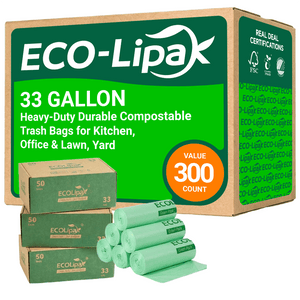
Quick Answer: A small venue should buy 33-gallon compostable trash bags by actual liner changes, not guest count alone. ECO-Lipak currently offers 33-gallon bags in a 50-count box, a 150-count carton and a dedicated 300-count wholesale carton. Test one bag in the venue's own bin, record how many liners are changed over a representative week, then choose a pack that covers demand through the next delivery with a modest reserve. Compostable does not mean every waste stream or local collector will accept the bag.
Key Takeaways
- Check bin shape and rim fit before buying a 300-count case; a gallon label is not a fit guarantee.
- For 33-gallon bags, the current choices include 50 per box, 150 per carton and 300 per wholesale carton.
- Count changes by station and event, then order for lead time plus a sensible reserve.
- Confirm with the collector whether the bag and its contents belong in the organics stream.
Start with the bins, not the case price
A reception hall may own six wheeled 33-gallon bins but use them very differently. One drinks station fills quickly during an event; a lobby bin might last most of the day. The buyer's first task is to list every bin that needs a 33-gallon liner, its actual internal dimensions, and how the filled bag is lifted out. A tall narrow container and a wider square one can both be advertised as 33 gallons while asking different things of a liner. Test the bag over the rim, put a normal load in it and remove it using the staff's usual method. If the bag slips, stretches excessively or cannot be tied with the intended fill level, resolve fit before ordering by the carton.
The 300-count 33-gallon wholesale carton is the high-volume option. The broader ECO-Lipak compostable trash bag range currently includes 33-gallon 50-count and 150-count variants. Those are useful for a trial, a seasonal venue or a smaller storage room. The dedicated 300-count listing describes a plant-based, certified industrial-compostable bag with a star-seal bottom, but no label replaces a real fill-and-lift test. Do not promise a bag will hold a particular weight without testing the venue's mix of wet and dry waste.

Calculate weekly use before choosing 50, 150 or 300
Use this simple buying equation: liners needed before the next delivery equal average daily changes multiplied by days of supply, plus an allowance for unusually busy service. For example, if four venue stations each use one liner on three ordinary days, and each station uses two liners on two event days, weekly demand is 12 plus 16, or 28 bags. If the next order can arrive in seven days, a 50-count box comfortably covers that week; a 150-count carton covers roughly five similar weeks before reserve. A 300-count carton may make sense for a venue with predictable recurring use and dry, organized storage. It is not automatically better for a one-off booking.
| Current 33-gallon option | When it fits | Buying check |
|---|---|---|
| 50 bags per box | Fit trial or one busy week | Enough for 28 expected changes plus a reserve |
| 150 bags per carton | Steady small-venue operation | About five 28-bag weeks before reserve |
| 300 bags per wholesale carton | Repeat events or multi-station venue | Storage and usage should justify the larger commitment |
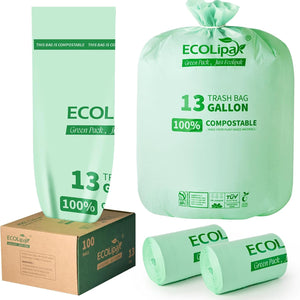
The example is a planning model, not a consumption claim. A food-heavy event can change the rate quickly. Keep a two-week tally by bin and service type; separating weekday and event usage prevents the busiest night from distorting the whole month's order. Set the reorder point at expected changes during supplier lead time plus a reserve. If the venue uses 28 bags per week, lead time is one week and a 20-bag reserve is enough for the site's risk, reorder near 48 usable bags. Recount stock in open rolls, not just sealed cartons. If the venue also uses smaller office bins, buy the 13-gallon wholesale size for those rather than forcing a 33-gallon liner into every station.
Three venue situations that change the order
Weekend wedding space
A wedding venue may have almost no midweek traffic, then three catered functions in four days. Count room resets, bar service and kitchen cleanup separately. A 50-count box can be a useful first purchase if the bin fit is untested; once the crew has measured actual consumption for several events, a 150- or 300-count carton may reduce repeat ordering. Keep a few spare liners at each service station so staff are not walking back to the storeroom during a rush.
Community hall with mixed activities
One hall might host a lecture, a birthday party and a food market in the same week. The lecture's paper waste and the food market's wet leftovers are not equivalent loads. Put clear sorting signs at the stations and confirm with the waste hauler which material belongs in each stream. Do not use a green bag as a substitute for separation instructions. A bag marked compostable is not a license to mix glass, plastic and food scraps in an organics cart.
Outdoor market with larger collection bins
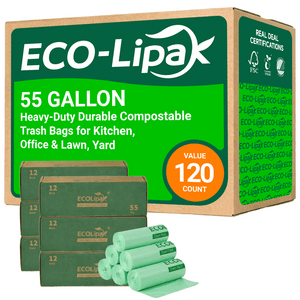
If a market's central collection bin is truly larger than 33 gallons, stretching a 33-gallon liner over it is the wrong economy. The 55-gallon wholesale option serves a different container. Use the 33-gallon bags at smaller individual stations, and test the 55-gallon size at central collection points. This keeps staff from overfilling a smaller liner because it happens to be on hand.

What the compostable claim does and does not tell you
The 300-count product listing identifies BPI and industrial-composting certification claims. Verify the exact SKU and packaging documentation when a venue's procurement policy requires proof. More importantly, ask the receiving compost facility whether it accepts this bag with the venue's actual waste; acceptance rules differ by operator. The U.S. EPA composting overview is a helpful starting point for understanding that collection and processing determine the end-of-life route. Avoid promising that a used bag will break down in a backyard pile, a landfill or every municipal program. The practical purchase is the one that fits the bin, survives the normal shift and enters a confirmed local collection route.
Frequently Asked Questions
How many 33-gallon bags should a small venue order first?
After a physical fit test, a 50-count box is a reasonable trial for a venue expecting fewer than 50 liner changes before its next delivery. Use your own tally to decide whether a carton is justified.
Is a 300-count carton cheaper per bag?
It may have a lower unit price, but calculate the current listed price per bag, shipping and storage cost at checkout. Prices and promotions can change.
Will every 33-gallon bag fit every 33-gallon bin?
No. Rim width, depth and removal method vary. Test a filled liner in the actual bin before a case buy.
Can compostable liners go into ordinary recycling?
Do not assume so. Follow the local collector's instructions for the specific material and waste stream.
When should we reorder?
Reorder when usable stock reaches expected demand during lead time plus the reserve your venue needs for busy events.