Quick Answer: Use 9 oz clear cold cups for tastings, juice pours, and compact refreshments; 12 oz cups for standard iced tea, lemonade, water, and office drinks; and 16 oz cups for ice-heavy beverages, smoothies, or longer events. The best menu usually uses one primary size and one secondary size instead of stocking all three equally. Test the finished drink with its normal ice and garnish before ordering by the carton.
Key Takeaways
- Cup size should follow the finished drink, including ice, foam, fruit, and garnish.
- A 9 oz cup suits controlled pours; 12 oz is a flexible middle size; 16 oz gives ice-heavy drinks more room.
- Choose one primary size for the highest-volume drink and keep a smaller secondary quantity for a distinct menu need.
- Run a filled-cup test before a large order because nominal ounces do not show how the drink presents in service.
- Order and disposal decisions should consider local collection options, not only material labels.
A beverage station can look simple on paper: cups, ice, drinks, and a few garnishes. In practice, the cup size changes portion cost, refill frequency, guest handling, and how quickly the station runs out of stock. A 16 oz cup filled mostly with a modest juice pour can look underfilled. A 9 oz cup packed with ice and citrus may leave too little room for the beverage.
The useful question is not "Which cup is best?" It is "Which cup makes this finished drink easy to serve consistently?" That answer comes from the menu, not from the guest count alone.

9 oz vs 12 oz vs 16 oz at a Glance
| Cup size | Good starting uses | Watch for |
|---|---|---|
| 9 oz | Tastings, juice, punch, water stations, short meetings, children's portions | Ice and garnish can consume too much of the available volume |
| 12 oz | Iced tea, lemonade, sparkling water, office refreshments, standard cafe pours | May be too large for samples and too small for very ice-heavy drinks |
| 16 oz | Iced coffee, smoothies, layered drinks, outdoor events, drinks with generous ice | Can increase beverage and ice use if staff fill by cup height rather than a recipe |
These are menu-planning starting points, not rigid rules. A dense smoothie and a sparkling water occupy the same nominal cup very differently. The shape and amount of ice also matter. Crushed ice settles differently from large cubes, while fruit slices and foam need headspace.
Start With the Finished Drink
Build one real serving before selecting the cup. Use the same beverage recipe, ice scoop, garnish, straw or lid, and fill line planned for service. Then check four things: does the cup look properly filled, can it be carried without spilling, is there enough headspace, and does the portion match the intended cost?
For batch drinks, mark a consistent fill line or standardize the serving tool. A larger cup does not have to mean a larger beverage portion, but an untrained team may naturally pour higher. That small difference becomes meaningful across hundreds of drinks.
Three Menu Scenarios
Tasting table or short reception: A 9 oz cup can keep portions controlled while leaving enough room for a small amount of ice. It also reduces the chance that guests abandon half-finished drinks when they are sampling several options. Keep water in the same size only if refills are easy.
Office lunch or cafe counter: A 12 oz cup is often the most flexible working size for lemonade, iced tea, water, or a simple iced coffee. If one specialty drink needs more room, add 16 oz as the secondary size instead of stocking three equal piles.
Outdoor event: A 16 oz cup gives ice-heavy drinks more working room and may reduce immediate return trips to the dispenser. However, heat, melt rate, and long carrying distances can still affect the experience. Stage smaller cup stacks at the front and keep reserve cartons protected backstage.

Choose a Primary Size and a Secondary Size
Most operations do not need equal quantities of 9 oz, 12 oz, and 16 oz cups. Assign the highest-volume drink a primary cup. Use a secondary size only when another menu item has a clearly different portion or presentation need. This keeps the service counter easier to read and reduces half-open cartons after the event.
| Menu pattern | Primary size | Secondary size |
|---|---|---|
| Samples plus water | 9 oz for samples | 12 oz for self-serve water |
| Office iced tea and lemonade | 12 oz for most drinks | 9 oz only if controlled juice portions are offered |
| Iced coffee and smoothies | 16 oz for specialty drinks | 12 oz for water or lighter refreshments |
How to Plan Cartons Without Guessing
- Forecast servings by drink. Separate water, tea, coffee, juice, and specialty drinks rather than multiplying every choice by every guest.
- Assign one cup size to each drink. Use the completed beverage test, not the empty cup.
- Add a measured reserve. Base it on prior overage, damage, and refill behavior. Do not apply an arbitrary buffer forever.
- Round to the actual pack format. ECO-Lipak clear cold cups are offered in 1,000-count cartons, so the carton is the purchasing unit.
- Record unopened stock and leftovers. That note makes the next order more accurate.
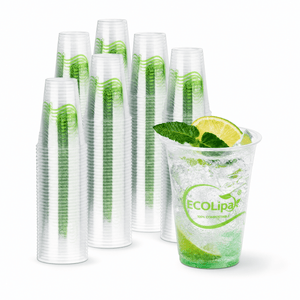
ECO-Lipak's clear PLA cold cups are available in 9 oz, 12 oz, and 16 oz sizes, with 1,000 cups per carton. The transparent ribbed format lets guests see the drink and garnish, which is useful for cold beverage stations and catered service. Compare the full cup collection when hot drinks, lined paper cups, or a different service format is also on the menu.
Material Claims and End-of-Service Planning
Clear PLA cups are intended for cold beverages. Compostable claims should be read together with certification details and local acceptance. The EPA's foodservice ware guidance recommends considering reusable options first and checking whether a local collection program and commercial composting facility accept the specific item. A compostable cup should not automatically be placed in recycling.
The FTC Green Guides summary also explains why environmental claims need clear qualifications. For a practical station, label the available waste streams according to the hauler's real rules. ECO-Lipak's resource list provides more material and disposal reading.
FAQ
What size cold cup is best for lemonade?
A 12 oz cup is a useful starting point for a standard lemonade serving. Move to 16 oz when the recipe uses generous ice or fruit, and test the finished drink before ordering.
Is a 9 oz cup too small for an event?
Not for tastings, juice pours, short receptions, or easy-refill water stations. It may feel small for long outdoor events or drinks with substantial ice.
Should I offer all three cup sizes?
Usually not. One primary size and one clearly justified secondary size are easier to stock and explain than three equal stacks.
Can clear PLA cold cups hold hot coffee?
No. Use drinkware designed and specified for hot beverages. Clear PLA cold cups should be kept for cold service.
Do compostable cold cups go in recycling?
Do not assume they do. Follow the accepted streams provided by the local hauler or facility, and keep compostable ware out of recycling unless the program explicitly instructs otherwise.