Quick Answer: Buy bamboo cutlery for the food you actually serve, not just for the word "bamboo" on a carton. For salads, noodles and grilled food, test a full fork-knife-spoon setting against real portions, then decide whether every guest needs a set or only a spoon or knife. ECO-Lipak currently has complete bamboo sets, separate knives and separate spoons available; the fork-only variants are unavailable, so plan around the current selector rather than an assumed bulk fork carton.
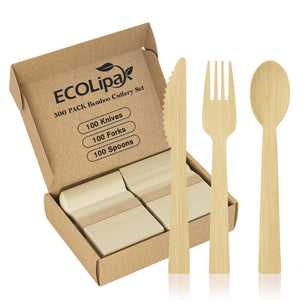
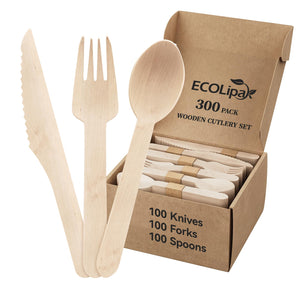
Menus make utensils behave differently. A crisp salad asks the fork to pick up leaves without turning them into a wrestling match. Sauced noodles expose whether a utensil feels comfortable in the hand. A grilled vegetable or tender protein asks the knife to cut, but not to replace a kitchen knife. That is why a sample meal tells a foodservice buyer more than a generic "heavy-duty" label. ECO-Lipak's pale natural bamboo fork, knife and spoon range is sold as complete place settings and selected single-piece packs; the products shown here match the current listing.
Key Takeaways
- Run a three-dish trial before choosing a bulk case: salad, sauced starch, and the firmest food on the menu.
- A complete setting prevents a missing-utensil complaint, but a spoon-only or knife-only station may use fewer pieces for a narrow menu.
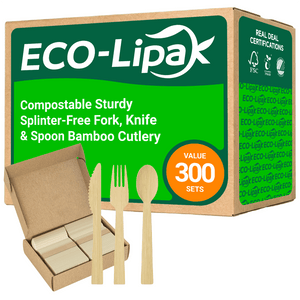
- ECO-Lipak currently lists 100- and 300-setting bamboo packs, knives in 300 or 900, and spoons in 300 or 900; single bamboo fork packs are not currently available.
- Do not assume every composting facility accepts bamboo utensils. Confirm the exact collection rules before putting them in an organics bin.
- Compare current product variants and delivered cost per useful utensil, not carton price alone.
Match the Utensil to the Menu
| Service menu | First bamboo option to test | What the test should reveal | Likely alternative |
|---|---|---|---|
| Salad and grain bowls | Complete bamboo setting or fork from a set | Fork pickup, comfort, and whether guests also need a spoon | Wooden forks if you only need forks |
| Sauced noodles or rice | Bamboo fork and spoon in a complete setting | Whether sauce and food weight affect grip or pickup | CPLA setting if a different feel works better |
| Grilled vegetables and tender protein | Bamboo knife from a set, with fork | How easily one serving can be cut without excessive force | Pre-cut food or another suitable utensil |
| Soup or soft dessert | Separate bamboo spoon pack | Whether the bowl shape and serving temperature feel appropriate | Another spoon material after a menu test |
A bamboo knife can handle a tender item more comfortably when the kitchen slices firm foods beforehand. It is not a steak knife. Similarly, a fork that lifts salad well may feel different with a dense noodle dish. Keep the trial practical: serve a normal portion, let it sit for the usual waiting time, then eat it with the proposed utensils while standing and seated. Note any breakage, rough edges, or awkward handling before ordering a case.

Three Service Scenarios
1. A build-your-own salad counter
Guests may take only a fork for a dry salad, while a grain bowl with dressing can call for a spoon too. A complete set avoids staff explaining which utensil belongs where, but it also puts a knife into every order even when no one needs one. Test one week of menu mix before switching to separate dispensers. Because ECO-Lipak's standalone bamboo fork packs are currently unavailable, a manager needing only forks should check the available wooden fork variants or plan complete bamboo settings rather than writing an out-of-stock bamboo SKU into the purchasing list.
2. A noodle lunch with side dishes
Start with a complete bamboo setting. A spoon is useful for a soft side or sauce, while a fork handles the noodles. Put one full tray through the real service line, including pickup and carrying time. If most meals leave the knife untouched, count it as avoidable material and compare a fork-and-spoon workflow where stock permits. Do not describe a set as a 300-piece carton: 300 sets represent 300 place settings, not 300 individual utensils.
3. An outdoor barbecue station
Set the food to a reasonable cut size, then test the bamboo knife against the firmest item guests will actually receive. For thick meat or a tough crust, pre-cutting at service may be safer and less frustrating than promising that a disposable knife will cut everything. Keep forks, knives and spoons in clear separate trays at the end of the food line; this helps guests take only what they need. The image below shows the utensils next to a real menu rather than floating alone on a white background.

Sets, Single Pieces and the Actual Pack Math
The current standard bamboo cutlery page lists 100 sets per box or 300 sets per carton, knives in 300- or 900-piece packs, and spoons in 300- or 900-piece packs. Fork-only packs are displayed but unavailable. The wholesale bamboo cutlery page currently shows 300 complete sets, 900 knives, or 900 spoons as available options, while 900 standalone forks are unavailable there too. Availability can change; verify the variant before making a purchase order.
For 240 lunch guests, one complete utensil setting each plus a 10% reserve means 264 settings. One 300-setting carton covers that plan. If the menu requires spoons only, 264 spoons fit a 300-piece box. If you order 300 complete settings for a spoon-only meal, you will have bought two additional utensils per person without a service need. Use the bamboo cutlery collection to compare current options; for a broader material comparison, the cutlery collection is the better starting page.
Materials and End-of-Service Handling
The visible bamboo grain and pale finish are part of the product's appearance, not proof of a disposal route. Ask the hauler or composting facility whether used bamboo utensils are accepted. The US EPA's food-serviceware guidance advises purchasing commercially compostable foodware only where an appropriate local program accepts it and collection service is in place. Do not send used bamboo utensils to plastic recycling simply because they were handed out with food packaging.
When certifications or material declarations matter to an institutional buyer, request the exact documents for the SKU and consult ECO-Lipak's resource library. A product description saying "compostable" does not mean every location has a compatible program. If your venue lacks one, state the actual disposal instructions plainly at the waste station. The FTC compostable-claims guidance is a useful reference when reviewing how such claims should be substantiated and qualified.
Buying Decision in One Pass
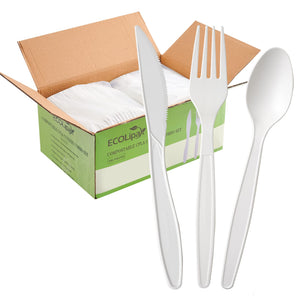
Write down the three dishes that create the most demanding utensil use. Buy a small available pack, test it with those dishes, then count exactly which utensil each order needs. Only after the test should you convert demand into boxes or cartons. If hot meals or a different utensil feel call for another option, compare the available CPLA cutlery settings by the same menu test. The best result is the smallest stock plan that still gives guests a usable utensil for every dish.
Frequently Asked Questions
Can I buy bamboo forks by themselves today?
The current ECO-Lipak fork-only bamboo variants are unavailable. Complete bamboo settings are available; check the selector again before ordering because stock can change.
Are 300 bamboo sets the same as 300 utensils?
No. A 300-set carton represents 300 place settings. A 900-piece knife or spoon carton contains one utensil type, not 900 full settings.
Will a bamboo knife cut every barbecue food?
No disposable knife should be assumed to handle every cut. Test the real menu, and pre-cut firm foods when needed.
Should I hand out full sets for a salad bar?
Only if the menu makes the extra pieces useful or the service flow requires a single packet. Compare actual utensil take-rate with the ease of distributing complete settings.
Can used bamboo utensils go into my compost bin?
Only if your local program accepts this item. Material origin and local compost acceptance are separate questions.