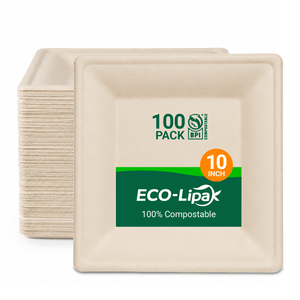
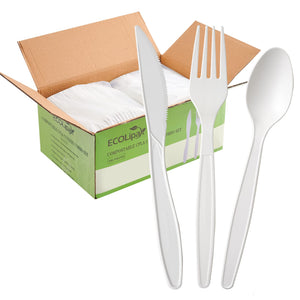
Quick Answer: For a two-course party, use a 10-inch square plate for the main meal and a 6-inch square plate for dessert or a small starter. ECO-Lipak's natural sugarcane set contains 200 large and 250 small plates, so it fits best when dinner service needs no more than 200 plates and the extra 50 small plates can cover seconds, snacks or a dessert table. Count courses, not just guests, before ordering.
Key Takeaways
- A 6-inch plate is a dessert or appetizer surface, not a substitute for a full dinner plate.
- The set's 250 small / 200 large ratio is useful only when your service pattern matches it.
- For messy or heavily sauced food, run a loaded-plate test at the actual buffet before committing to a large order.
- Compostability is a collection question as well as a material question; check the local program before planning the cleanup bins.
Why two sizes can make a buffet feel easier
A single plate size sounds simpler until guests reach the dessert table. A full-size dinner plate makes a cookie look lonely; a small plate makes a rice-and-vegetable lunch unstable. The natural 6-inch and 10-inch square plate set pairs a smaller snack plate with a larger dinner plate. Both are shallow, square molded-fiber plates with softly rounded corners. The small plate is still a plate, not a bowl, and the larger one is not divided into compartments.
This is a service-plan choice more than a style choice. The two sizes give guests a clean plate for each course and help a host place serving stations in a sensible order. A dessert plate can sit at the pastry end, while dinner plates wait at the entree line. If you run one mixed table, put the two sizes in clearly separate stacks; otherwise guests may start dinner on the smaller plate and return for another.
For a broader selection of finishes and pack counts, compare the square plates collection. The set makes particular sense when you want a coordinated natural color and have a fairly predictable dinner-to-dessert ratio. If the menu needs a deeper edge, a deep plate may be a better fit than either shallow square size.

Pick the plate by food, not by the label on the stack
| Service moment | 6-inch square plate | 10-inch square plate | Check at the table |
|---|---|---|---|
| Passed appetizer | Good for two or three compact bites | Usually more plate than needed | Can guests hold it while standing? |
| Buffet dinner | Too small for most complete meals | Better for an entree plus sides | Leave a clean rim around saucy food. |
| Cake or pastry | Good starting point | Useful only for a plated dessert assortment | Test cake slice and fork together. |
| Shared snack station | Helps prevent overloading | Useful for a larger grazing plate | Decide whether guests return for seconds. |
Those are planning judgments, not measured load ratings. Actual food weight, oil, sauce, serving temperature and how long guests carry a plate all matter. At a rehearsal lunch, place the heaviest typical meal on a 10-inch plate, lift it with one hand, and walk a short distance. Try the messy item you are genuinely serving, not a dry substitute. If the rim flexes or sauce reaches the edge, change the portion, serving method or plate shape.
For dessert, the useful test is different: place a normal cake slice, fork and any fruit garnish on the 6-inch plate. Can a guest carry it without touching the food? If not, move that dessert to the larger plate or serve the topping separately. A general plate-size guide can help if you are also considering 7- or 9-inch round plates, but it cannot replace this two-course service test.
Use the 250 / 200 mix as a planning tool
The current set listing specifies 250 six-inch plates plus 200 ten-inch plates. Treat the two counts independently. For a 150-guest dinner with one main and one dessert per person, you would use 150 large and 150 small plates before allowance for seconds or damage. That leaves 50 large and 100 small plates. For a 200-guest dinner, the large-plate allocation is exact, with no spare; consider a separate backup pack if guests may return to the buffet. For a 100-person tasting with three small-plate rounds, one set is short 50 small plates even though 200 large plates remain untouched.
A quick working formula is expected guests × plates per guest for that course + a measured buffer. Use a buffer based on the event rather than a universal percentage. A seated plated meal may need fewer extras than an open-house buffet where guests leave plates at several stations. Ask the caterer how many plates were consumed at a comparable event. That historical count is more useful than a generic party calculator.
If your demand is uneven, consider single-size square plate packs instead of buying another fixed-ratio set. A round plate may also be easier for an established round-plate dispenser or charger; the round sugarcane plate range is the more direct comparison. Check live variant availability before making a bulk plan.

Three service setups worth rehearsing
Community potluck
Place the 10-inch stack at the hot-food line and the 6-inch stack by sweets. If guests mingle for several hours, keep a small reserve under each station. A host can then top up the stack without making the table look crowded. The two-size arrangement works when the meal and dessert are separate moments.
Outdoor family picnic
Wind, uneven tables and standing guests make carryability more important than the number printed on the package. Try a test plate loaded with the actual picnic menu. If a saucy barbecue portion slips toward the rim, reduce the serving size or offer a bowl for that dish. Keep dessert plates under cover until needed so they stay clean.
Catered reception with passed bites
The 6-inch plate can support a few appetizers or a cake slice, but passed bites may not need a plate at all. The 10-inch size is more suited to a later self-service dinner. Count these as different service rounds. If the reception has 200 dinner guests and a chef plans seconds, the fixed 200-count dinner supply offers no reserve.
Material and cleanup: verify before promising anything
The product listing describes molded sugarcane fiber and says the plates are BPI certified. For a procurement file, verify the exact item in the BPI product directory rather than treating a general brand statement as proof for every variant. BPI explains that its standard directory covers commercial compostability, while home-compost certification is specifically marked. Do not describe these plates as accepted by every home compost pile.
Ask your hauler whether it accepts food-soiled fiber foodservice ware. The EPA's foodservice guidance recommends purchasing commercially compostable ware only when a local program accepts that product type and collection is arranged. Put a clear sign at the return station and avoid mixing the plates into a paper-recycling bin. The compostable certification guide is useful for procurement questions, but the local facility makes the final acceptance decision.
When to buy the set
Choose the fixed-ratio set when a main meal and a smaller second course are both on the plan, the natural square look suits the table, and the 200 / 250 counts leave an appropriate reserve. Buy sizes separately when dessert uptake is low, when the appetizer service needs many more small plates, or when you need a deep vessel for soup. The purchase question is not simply "Are two sizes better?" It is "Will this exact mix move through our stations without a shortage or a stack left unused?"
Frequently Asked Questions
Are 6-inch square plates big enough for dinner?
Usually no. They are a practical starting point for cake, small snacks or a few appetizers. Test your actual entree on the 10-inch plate instead.
How many plates come in this set?
The current product variant lists 250 six-inch plates and 200 ten-inch plates. Check the live product page before ordering because bundles and availability can change.
Can I use the 10-inch plate for saucy meals?
Yes for many meals, but do a loaded-food test and leave rim clearance. For very liquid food, choose a bowl or deeper plate rather than relying on a shallow dinner plate.
Do both sizes need separate bins at cleanup?
No separate size bins are needed if the same local compost program accepts both. The important separation is between accepted compostables, recycling and landfill waste.
Will the set work for 200 dinner guests?
It covers one large plate per guest on paper, with no dinner-plate reserve. If seconds or breakage are likely, add a backup pack of large plates.