Quick Answer: Square bamboo plates can work well on a narrow table when you match the plate to the meal and leave room for glasses, cutlery, and shared dishes. Start with the plate edges parallel to the table: turning a square plate into a diamond usually increases its front-to-back footprint. Mock up one complete place setting before choosing between 7-inch and 10-inch plates.
Key Takeaways
- A smaller plate creates more open table space, but only helps if the meal still fits comfortably.
- Measure the usable tabletop, including any space occupied by a runner, serving dishes, or decorations.
- Square plates are not automatically more space-efficient than round plates of the same stated width.
- Move shared food to a sideboard before shrinking a dinner portion to fit a dessert-sized plate.
- Check the selected pack quantity separately from the size; a set name does not mean every piece is a dinner plate.
A table can look generous while it is empty and crowded as soon as the water glasses arrive. The extra side bowl, bread plate, and centerpiece each seem small on their own. Together, they can leave very little space to put down a fork.
With a narrow dining table, a useful starting point is the meal itself. Set out the things a guest will actually use, then choose the decorative details that still fit. Bamboo's pale grain brings texture to the setting without needing a large arrangement in the middle.
Choose the Meal Before the Plate Size
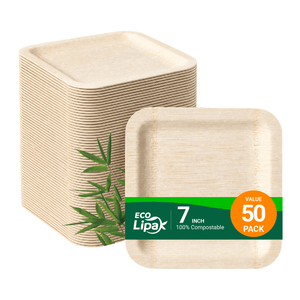
ECO-Lipak's square bamboo plates are listed in 7-inch and 10-inch sizes. Their shallow shape and rounded corners matter when you are deciding how the food will sit: the stated outside size is not the same as a flat eating area that extends all the way to the edge.
A 7-inch plate is a sensible size to trial for a pastry, a modest snack, or a small first course. A 10-inch plate is the more useful starting point for a meal with several components. These are menu-planning suggestions, not fixed serving-capacity claims. Plate the actual food before ordering for everyone.
| Meal or setting | Size to trial first | What to check |
|---|---|---|
| Cake and coffee | 7-inch | Room for the slice, garnish, and fork without putting the cup on the plate. |
| One small starter | 7-inch | Whether sauce stays inside the eating area and leaves a clear rim. |
| A seated main course | 10-inch | Portion fit, space to cut food, and reach to the water glass. |
| Family-style dinner | 10-inch | Where the serving dishes will go after plates and glasses are in place. |
If neither size suits the meal, change the service plan or compare shapes in the square plate collection. Do not make guests balance a crowded plate just to preserve an empty-looking table.

Why Plate Orientation Changes the Fit
Rotating a square plate does not make it smaller. For an ideal square, the width across opposite corners is about 1.414 times the side length. A 10-inch square therefore spans about 14.1 inches when turned 45 degrees; a 7-inch square spans about 9.9 inches. Rounded corners and the actual product shape change the exact result, so treat those numbers as a geometry illustration, not measured dimensions of these plates.
Here is another planning example. Imagine a tabletop 30 inches wide, with two settings directly opposite each other. Allowing an illustrative 1-inch gap between each plate and the nearest table edge gives:
- Two edge-parallel 7-inch plates: 30 minus 7 minus 7 minus 2 leaves 14 inches between the plates.
- Two edge-parallel 10-inch plates: 30 minus 10 minus 10 minus 2 leaves 8 inches between the plates.
Those remaining inches are not all free serving space. Glasses, hands, cutlery, bowl rims, and the bases of decorations may need some of it. The 1-inch allowance is an example, not a dining standard or comfort guarantee. Measure your table and test the real setting from a seated position.
Also check space along the table. A plate that fits between the two long edges can still crowd the person sitting next to it. Leave room to sit down, move a chair, and use utensils without catching a neighboring glass.
Build One Complete Setting
- Place the chosen plate where it will actually be used, with its edges parallel to the table.
- Add the real glass, napkin, and utensils. Use their full footprint, not a folded-paper approximation of everything.
- Plate one normal portion. Check cutting space, sauce placement, and whether the rim stays usable.
- Set an opposite place setting and a neighboring one. Test the tightest part of the table.
- Add shared dishes last. Move anything awkward to a sideboard or serve that course separately.
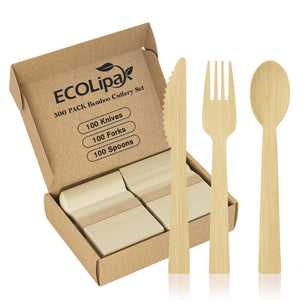
For the utensil trial, use the same style you plan to provide, such as bamboo forks, knives, and spoons. A photograph can show a tidy arrangement, but it cannot tell you how a knife handles the actual entree. Keep a practical alternative available if the menu needs different utensils.
Three Small-Space Hosting Plans
An Apartment Dinner With One Shared Table
Start with a 10-inch plate for a main course and put serving dishes on a kitchen counter or sideboard. Bring food to the table in manageable rounds, or let guests fill their plates before sitting down. Put a water pitcher where it can be reached without passing it over everyone's food. Skip the individual bread plate unless the meal genuinely needs it.
A Book-Club Dessert and Coffee Evening
Try a 7-inch plate for the dessert and give the mug its own stable place on the table. Put spare plates and refills at a separate station so guests do not have to pass a stack around. A small plate saves useful room here because the menu is small, not because every gathering should use the smallest available plate.
A Covered-Patio Supper
Use a menu-appropriate plate and keep uncovered spare stock inside until needed. Check that the tabletop is stable and that glasses are not perched beside an edge or in a walkway. Instead of a wide centerpiece, leave a clear area for one shared dish at a time. If wind or weather makes the setup impractical, move the meal; plate material does not solve an exposed dining location.

Order for Courses, Not Just Seats
Count each course that needs a fresh plate. Twelve guests receiving a main course and a separate dessert need 24 plates before any allowance you choose for serving changes or accidental drops. If the courses use different sizes, keep two separate totals. Do not assume the same used disposable plate should be washed and returned to service.
The current square bamboo plate listing includes 50-piece box and 300-piece carton variants for both sizes, alongside set options. Confirm the chosen variant carefully. For a small dinner, a larger carton may leave more stock than you can comfortably store; for repeated events, it may match an established usage pattern. Browse the bamboo collection only after the size and quantity decisions are clear.
For material documentation, use the resource library and check information for the exact item. A natural appearance is not proof that a product is accepted in local compost collection.
Keep the Cleanup Plan Proportionate
If you already have durable dishes and a workable washing routine, a small dinner may not need disposable plates. The EPA's food-service guidance prefers reusable foodware where an effective collection, washing, and return system is in place. When you choose single-use pieces, buy a sensible quantity and check local acceptance before directing them to composting. “Bamboo” alone is not a disposal instruction.
FAQ
Do square bamboo plates save more space than round plates?
Not automatically. Compare actual outside dimensions, rim shape, orientation, and the full setting. A square plate and a round plate with the same stated width do not give you identical usable layouts.
Can a 7-inch bamboo plate work for dinner?
Sometimes, for a genuinely small course. For a full meal with multiple components, trial a 10-inch plate first rather than crowding food onto a smaller one.
Should I turn square plates diagonally on a narrow table?
Only after checking the fit. A diamond orientation increases the front-to-back span of an ideal square, so aligning the edges with the table is the simpler starting point.
Can I add a side bowl beside every plate?
Yes, if the complete setting fits comfortably. Add the bowl during the mockup; its rim, utensil, and contents need real space. Otherwise, serve that course separately.
Can I wash these disposable bamboo plates for the next event?
Do not assume they are reusable tableware. Follow the exact product instructions, and choose durable dishes when repeated washing and reuse are part of your plan.