The North American eco-friendly tableware market presents huge opportunities. This market is projected to reach $25.3 billion by 2033. Key trends shaping this market include strict regulations, strong consumer demand for sustainability, and rapid innovation in materials and technology. Businesses must understand these market trends to lead the evolving eco tableware market. The market for eco-friendly tableware, including items like compostable plates, is expanding. The intersection of these trends creates a dynamic market that values sustainability and eco-friendly tableware innovation. Strong demand for sustainability in this tableware market shows clear market opportunities.
Key Takeaways
New rules against plastic and people wanting green products make the eco-friendly tableware market grow fast.
New materials like sugarcane and smart ways to make things help create better eco-friendly tableware.
It can be hard to find materials and get products certified, but selling special eco-friendly items can make money.
Governments and companies are putting money into green ideas, which helps businesses that make eco-friendly tableware.
Brands that use certified eco-friendly products, like Ecolipak, build trust with customers.
Key Drivers Shaping the 2026 Eco Tableware Market
The eco-friendly tableware market is growing fast. Several key trends are driving this change. These trends create major opportunities for businesses. The entire market, valued at an estimated $48.41 billion in 2025, shows the scale of these opportunities. Understanding these drivers is essential for any company wanting to succeed in the sustainable packaging industry. The main forces are new rules, changing consumer behavior trends, and the growing importance of corporate sustainability.
Global Plastic Bans: The Regulatory Push
Governments worldwide are creating strict rules against single-use plastics. This regulatory push is a major driver in the eco tableware market. These laws force businesses to find eco-friendly alternatives for their tableware. This trend creates a strong demand for biodegradable and compostable products.
Many regions have already taken significant action. These trends show a clear global move away from plastic tableware.
Europe (EU): The EU's Single-Use Plastics Directive bans plastic cutlery, plates, and expanded polystyrene food containers.
Canada: Canada prohibits the sale of single-use plastic cutlery and foodservice ware.
United Kingdom: England has banned plastic plates, bowls, and cutlery to protect the environment.
These trends are accelerating the shift toward sustainable tableware solutions.
Consumer Demand: The Shift to Green Purchasing
Consumer preferences are changing. People now have greater environmental awareness. This awareness directly impacts their buying decisions. A recent study shows that 78% of consumers believe sustainability is important. Furthermore, 55% are willing to pay more for eco-friendly brands. This shift creates a powerful demand for eco-friendly tableware. The US biodegradable tableware market is a great example of these trends. This market is expected to grow from $2.67 billion in 2024 to $3.89 billion by 2030. This growth highlights the rising demand for sustainable tableware.
Corporate Sustainability and Brand Value
Companies now see sustainability as a core part of their brand identity. Adopting eco-friendly practices, like using biodegradable tableware, helps businesses build a positive image. This focus on sustainability attracts customers and can improve brand loyalty. The eco-friendly tableware market offers companies a way to show their commitment to sustainability. As environmental awareness grows, brands that use eco-friendly tableware can stand out in a competitive market. These trends in corporate responsibility are shaping the future of the eco-friendly tableware market and creating new opportunities for growth.
Technological Innovations Defining the Future
Technological innovations are the engine driving the eco-friendly tableware market forward. These advancements make sustainable products better and more accessible. The market is seeing a wave of sustainable innovation. These trends are changing how eco-friendly tableware is made and used, pushing the boundaries of sustainability and performance. The focus on technological innovations ensures the market can meet growing demand responsibly.
Material Innovation: From Bagasse to Edibles
The foundation of the eco-friendly tableware market is material innovation. Sugarcane bagasse is a prime example of successful compostable materials. Brands like Ecolipak use this renewable resource to create high-quality tableware.
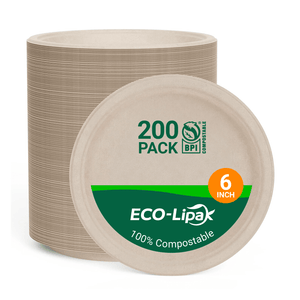
Ecolipak's BPI-certified Compostable Sugarcane Plates showcase this innovation. They are heavy-duty, microwave-safe, and made from a renewable resource. This provides a practical, eco-friendly alternative to plastic tableware.
The market continues to evolve with new trends. Companies are now developing tableware from seaweed biopolymers. Some innovation even leads to edible packaging, creating zero-waste solutions. This constant push for new compostable materials is a key feature of the market, promoting greater sustainability and circularity. This sustainable innovation is key for the market.
Manufacturing Efficiency: Automation and AI
Automation and AI are transforming the production of eco-friendly tableware. These technological innovations allow manufacturers to scale up efficiently. AI-powered systems optimize material usage and reduce waste. Smart robotics handle molding and quality control with high precision. This ensures product consistency for all tableware. These trends in manufacturing are vital for the market. This technology helps companies meet rising demand without harming the environment. Responsible scaling is a direct result of this innovation, which is crucial for long-term sustainability. These technological innovations are shaping the future of the market.
Performance Enhancements: Durability and Heat Resistance
Modern eco-friendly tableware now matches or exceeds the performance of traditional options. Sustainable innovation has led to significant improvements in durability and heat resistance. For instance, bagasse tableware is more robust than paper. It handles hot, wet, and oily foods without becoming soggy or leaking. This makes the tableware a reliable and reusable choice for many occasions, enhancing circularity. The goal is to create reusable products that support sustainable refills. This focus on performance builds consumer trust in the eco-friendly tableware market. Better performance makes the switch to sustainability easier for everyone. This tableware is designed to be reusable, promoting circularity. The market offers reusable options that support sustainable refills and circularity.
Navigating the Eco-Friendly Tableware Market
The eco-friendly tableware market offers significant growth potential. Businesses must also understand its challenges and opportunities. Strategic navigation is key to success in this dynamic market. Companies that understand the landscape can find a strong position. This section explores the main hurdles and openings that will define the market in 2026.
Challenge: Supply Chains and Material Costs
A major challenge in the eco-friendly tableware market is managing supply chains and material costs. Nearly 44% of manufacturers report that maintaining a consistent supply of raw materials is difficult. Demand for materials like bamboo and sugarcane bagasse strains supply chains. About 41% of firms face problems sourcing local compostable inputs, which increases import costs. These issues create longer lead times and unstable profits for many businesses in the market.
Sustainable materials like PLA and bagasse can be 20–30% more expensive than plastic. Several factors drive these high costs.
High Production Costs: Bio-based materials have high costs for planting, harvesting, and processing. Corn starch prices, for example, directly affect the cost of PLA.
Complex Manufacturing: Making these materials involves complex steps like fermentation and polymerization. These processes use a lot of energy and require expensive equipment.
Small Production Scale: The current production volume for many eco-friendly materials is still low. This prevents companies from achieving economies of scale that would lower costs.
Supply Instability: The supply of agricultural products can change with the seasons and climate. These trends create price fluctuations for the raw materials used in eco-friendly tableware.
Opportunity: Niche and Premium Markets
Despite cost challenges, significant opportunities exist in niche and premium markets. Growing consumer awareness of sustainability fuels demand for luxury eco-friendly tableware. High-end hotels, fine dining restaurants, and caterers invest in unique tableware to improve the guest experience. This trend allows brands to create premium products that combine luxury with environmental responsibility. For example, some brands offer elegant wooden cutlery, while others earn sustainability awards for their ethically sourced porcelain.
The edible cutlery market is another fast-growing niche. This market offers a zero-waste solution and a unique dining experience. The market for this innovative tableware is expanding rapidly.
Metric |
Value |
|---|---|
Global Edible Cutlery Market Value (2024) |
USD 43,500 million |
Projected Market Value (2030) |
USD 83,586.95 million |
Compound Annual Growth Rate (CAGR) (2025-2030) |
11.50% |
North America Market Share |
~37% |
These trends show that specialized, high-value products present major opportunities for growth in the overall eco tableware market.
Challenge: Complex Certification and Compliance
Navigating the world of certifications is a major challenge. Products must meet strict standards to be labeled as genuinely compostable. This complexity creates confusion for both businesses and consumers.
A product's compostability is not a simple claim. It must be verified through rigorous, independent testing to ensure it breaks down safely without harming the environment.
Different regions have different standards. This makes global sales difficult. The two main standards are ASTM D6400 in the United States and EN 13432 in Europe.
Criteria |
ASTM D6400 (U.S.) |
EN 13432 (EU) |
|---|---|---|
Region |
United States |
European Union |
Scope |
Plastics |
Packaging materials |
Disintegration Test |
84 days |
90 days |
Certification Bodies |
BPI |
TÜV Austria, DIN CERTCO |
The Biodegradable Products Institute (BPI) provides certification in the U.S. based on ASTM D6400. This certification proves a product is compostable. Another challenge comes from "hybrid" products. These items mix natural fibers with encapsulated plastics. They complicate regulations and can mislead consumers, damaging trust in the eco-friendly market. These trends require clear and honest labeling.
Opportunity: Policy Incentives and Green Investment
Policy incentives and green investments create powerful opportunities. Governments and corporations are directing funds toward sustainability. This support helps businesses overcome cost and supply chain hurdles. The European Union has a strong regulatory framework that promotes green development. While North American policies differ, private investment is growing. For instance, major companies like Coca-Cola have launched venture capital funds to support sustainable packaging innovation.
This focus on certified sustainability allows trusted brands to stand out. Companies like Ecolipak build strong customer relationships by offering genuinely compostable products. Their BPI-certified tableware meets strict standards, giving consumers confidence. Customer stories often praise the sturdiness and eco-friendly nature of Ecolipak's products. This shows that investing in compliance and quality turns a challenge into a market advantage. By embracing certified sustainability, businesses can attract investment, build loyalty, and lead in the growing eco-friendly tableware market.
The 2026 eco-friendly tableware market shows a clear convergence. Regulation, consumer demand, and technological innovation shape this market. This dynamic market creates opportunities. Businesses can turn compliance challenges into an advantage. Brands like Ecolipak build trust with certified, high-quality eco-friendly tableware. This market rewards such innovation. Success in this growing market requires strategic innovation. Companies must invest in eco-friendly solutions and material innovation to meet market demand. The future of the eco-friendly tableware market belongs to leaders in eco-friendly innovation. This market presents many opportunities for eco-friendly tableware.
Green Pack, Go for ECOLipak.
FAQ
What are the main forces driving the eco-tableware market?
Three key forces shape the eco-friendly tableware market.
Strict government bans on single-use plastics.
Growing consumer demand for sustainable products.
New innovations in materials and manufacturing technology.
These factors together create strong momentum for green alternatives.
What are the best materials for eco-friendly plates?
Sugarcane bagasse is an excellent material for eco-friendly plates. It is a renewable resource that is both sturdy and fully compostable. Brands like Ecolipak use sugarcane to create durable, microwave-safe plates that offer a reliable alternative to plastic without harming the planet.
Why are certifications like BPI important?
Certifications provide proof of a product's environmental claims.
The BPI (Biodegradable Products Institute) certification confirms that a product is truly compostable in industrial facilities. This helps consumers identify genuinely sustainable options and builds trust in a brand's commitment to eco-friendly practices.
Can eco-friendly plates handle hot or oily foods?
Yes, high-quality eco-friendly plates perform very well. Products made from materials like sugarcane bagasse are designed for durability. They are strong, leak-resistant, and can safely hold hot, wet, or oily foods without becoming weak or soggy, making them perfect for any meal.