Quick Answer: ECO-Lipak builds an event tableware set around service jobs, not a false one-piece-per-guest promise. Small plates, dinner plates, bowls, cups, and cutlery move at different rates during a reception. A useful set gives each station a practical starting quantity, then lets the host compare those counts with the menu, beverage rounds, and guest flow before ordering.
Key Takeaways
- A tableware set is a component bundle, not automatically a guest-count guarantee.
- Appetizer plates, dinner plates, bowls, cups, and cutlery should be forecast separately.
- Beverage rounds often make cup demand higher than dinner-plate demand.
- Stage each component where it is used instead of opening the full bundle at one table.
- Count clean leftovers by component after the event so the next order starts from evidence.
Most event bundles are described by a large total piece count. That number is easy to compare, but it can hide the question that actually matters: what is each piece supposed to do?
A wedding reception may need one dinner plate for every meal guest, a smaller plate for only part of the appetizer or dessert service, and more than one cup per person across water, coffee, and another beverage. Bowls may serve soup, salad, dessert, or no course at all. Treating every component as if it serves the same number of guests creates either a shortage at one station or unopened stock at another.

What Is in the White Multi-Course Set?
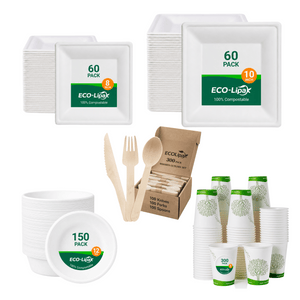
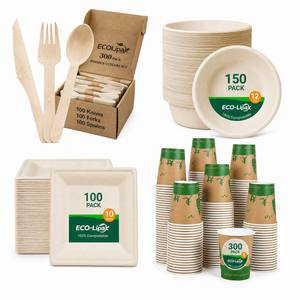
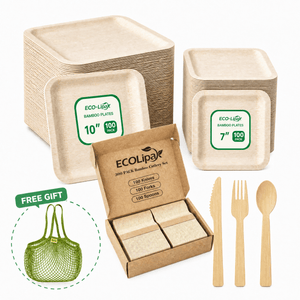
The ECO-Lipak White Multi-Course Tableware Set combines five service components in one bundle:
| Component | Included quantity | Useful starting job |
|---|---|---|
| 8-inch white square plates | 60 | Appetizers, salads, or dessert |
| 10-inch white square plates | 60 | Main course |
| 12 oz white bowls | 150 | Soup, grain bowls, salad, sides, or dessert |
| 8 oz white paper cups | 300 | Coffee, tea, juice, water, or tasting pours |
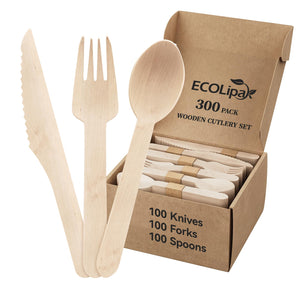
| Wooden cutlery sets | 100 sets | Fork, knife, and spoon for a plated or buffet meal |
Those quantities do not mean the set serves 300 guests. They describe the contents. The host still needs to map each item to the event. For example, 300 cups may support several drink rounds at a smaller reception, while 60 dinner plates set a much lower starting point for a single main-course service.
Why We Start With the Service Flow
Our product planning starts with the route a guest follows. Will appetizers be passed, plated, or picked up at a station? Is the main course seated or buffet style? Does dessert use the small plate, a bowl, or a handheld format? Are water cups refilled, or does each beverage round use a new cup?
The answers turn a mixed bundle into a workable plan. They also reveal when the host should add a separate case of one component instead of buying a second full set.
| Service decision | Component affected most | Question to settle |
|---|---|---|
| Passed appetizers | 8-inch plates | Will guests need a plate, or are bites truly handheld? |
| Buffet main course | 10-inch plates and cutlery | Will staff stage reserves at the buffet entrance? |
| Soup or grain-bowl course | 12 oz bowls and spoons | Is the bowl replacing the dinner plate or adding another course? |
| Multiple beverage rounds | 8 oz cups | Can guests refill one cup, or does each station issue a fresh one? |
| Plated dessert | 8-inch plates or bowls | Which format matches the actual dessert? |
A Five-Step Bundle Check
- Write the menu by course. Include appetizers, main dishes, soup, salad, dessert, late snacks, and beverages.
- Assign one serving item to each course. Do not count a small plate unless the menu actually uses it.
- Forecast participation by station. Not every guest takes coffee, dessert, soup, or a second drink.
- Compare required counts with bundle counts. Buy extra components only where the menu creates a gap.
- Add a reserve based on the venue. Transport, handling, guest self-service, and prior breakage should shape the reserve.
For a 60-person dinner, the 60 large plates align exactly with the expected main-course count, so there is no handling reserve inside the set. The host could add separate dinner plates, reduce the planned attendance, or use another service format. At the same event, 300 cups could be more than enough if drinks are refilled. The component-level view makes both facts visible.
How We Stage a Set at an Event
Open only the working quantity needed at each station. Keep reserve sleeves or cartons protected in a dry back-of-house area. Put large plates at the buffet entrance, bowls only where the bowl course begins, and cups at the beverage station. Separating the stock makes shortages easier to spot and reduces casual mixing between courses.
For buffet food, the FDA's safe buffet guidance recommends replacing serving dishes with fresh ones instead of adding new food to a dish already in use. That food-safety practice is separate from tableware planning, but it reinforces the same operational habit: stage clean reserves and rotate them deliberately.

What We Record After Service
After the event, count clean unopened or protected leftovers separately: small plates, dinner plates, bowls, cups, forks, knives, and spoons. Note whether any shortage came from true guest demand, accidental double-taking, transport damage, or poor placement. A two-line note such as "cups over by 80; dinner plates short by 6" is more useful than recording only that the event used most of the set.
This is also why ECO-Lipak offers individual components alongside sets. Browse tableware sets for coordinated bundles, then use the tableware collection to fill a specific component gap. The EPA's foodservice ware guidance recommends reusable service ware first where practical and checking local recovery options when disposable items are used. Material and disposal instructions still apply to each component.
FAQ
How many guests does this tableware set serve?
There is no single guest number because the component counts differ. The set includes 60 small plates, 60 dinner plates, 150 bowls, 300 cups, and 100 cutlery sets. Match each count to the menu and service plan.
Why are there more cups than plates?
Events often include several beverage rounds or stations. Cup demand can therefore be higher than dinner-plate demand, especially when refills do not reuse the same cup.
Do I need extra dinner plates for a 60-person event?
Yes, if all 60 guests need a dinner plate and you want a handling reserve. The 60 included dinner plates cover the exact planned count but no damage or unexpected guest.
Are cup lids included?
No. The set includes 300 white 8 oz paper cups, but cup lids are not included.
Should I open every component before the reception?
No. Stage a clean working quantity at each service point and keep protected reserves nearby. This improves stock control and makes leftovers easier to count.