Quick Answer: Calculate 14-inch catering trays from tested portions, not guest count alone. For each menu item, divide expected portions by the number that fits on one tested tray, round up, then add one unopened reserve tray for every fast-moving item. A 120-guest buffet serving vegetables to about 75% of guests needs 90 portions; if a realistic tray test holds 15 portions, plan six filled trays plus one reserve.
Key Takeaways
- Tray quantity depends on menu participation, portion size, and refill style, not only total attendance.
- Run a full-food test because sandwiches, fruit, roasted vegetables, and pastries occupy a tray differently.
- Small replacement trays are safer and fresher than repeatedly adding new food to a partly used tray.
- Keep one unused handling reserve for fast-moving items, transport damage, or an unexpected refill.
- A 14-inch tray is serving ware, not a substitute for temperature-control equipment.
A catering team can know the guest count and still order the wrong number of trays. The missing variable is usually portions per tray. Fifty sandwich halves may fit differently from fifty whole sandwiches. A loose pile of croissants uses more surface area than tightly arranged brownie squares. Roasted vegetables settle into the tray, while fruit needs enough room to avoid crushing.
The practical answer is to test one finished tray with the same food, garnish, tongs, and arrangement planned for service. That test turns a vague “large tray” into a useful operating number. Once the team knows how many portions one tray presents well, the order becomes straightforward.

The Catering Tray Formula
Required trays for one menu item = expected portions / tested portions per tray, rounded up, plus reserve trays.
| Planning input | How to estimate it | Why it changes tray count |
|---|---|---|
| Expected participation | Guest count multiplied by the share likely to take the item | Not every guest chooses every side or dessert |
| Portion size | Use the actual scoop, sandwich cut, pastry, or fruit serving | Larger portions reduce how many servings fit |
| Tested tray yield | Build one complete 14-inch tray and count presentable portions | Food shape and spacing are more useful than volume guesses |
| Refill plan | Decide whether trays are replaced whole or refilled backstage | Whole-tray rotation needs more staged trays |
| Reserve | Add one unused tray for each fast-moving item or transport route | Covers damage, spills, and an unplanned refill |
Worked Example: A 120-Guest Lunch
Suppose a lunch has four tray-based menu items: sandwich halves, roasted vegetables, fruit, and pastries. The team tests the exact menu and records these yields:
| Menu item | Expected portions | Tested portions per tray | Working quantity |
|---|---|---|---|
| Sandwich halves | 180 halves | 24 halves | 8 filled trays plus 1 reserve |
| Roasted vegetables | 90 portions | 15 portions | 6 filled trays plus 1 reserve |
| Fruit | 96 portions | 16 portions | 6 filled trays plus 1 reserve |
| Pastries | 72 pieces | 18 pieces | 4 filled trays plus 1 reserve |
This example requires 24 filled trays and four unused reserves, for 28 trays total. The numbers are not universal capacities. They are the result of one event's menu test. A different sandwich cut, garnish, or portion tool could change the yield substantially.
Why Tray Rotation Matters
The FDA's safe buffet guidance recommends preparing smaller platters and replacing serving dishes with fresh ones rather than adding new food to an already used dish. That service rule is useful for tray planning: keep the next full tray cold or hot as required, then swap it into the buffet when the current tray runs low.

Rotation also improves appearance. A fresh sandwich tray looks intentional, while a large tray with three pieces sliding around the corners does not. For slow-moving items, use fewer portions per tray and refill more often. For high-demand staples, stage a full replacement before the first tray reaches its last few portions.
Three Service Patterns
Office lunch: Forecast participation by menu item. If many guests choose either sandwiches or grain bowls, do not order a full tray serving for every guest in both categories. Use attendance history from previous lunches where possible.
Wedding or reception: Build smaller display quantities and keep replacements protected backstage. Dessert and fruit may move in waves after speeches or the main meal, so the refill schedule matters as much as the total count.
Community potluck: Leave more reserve capacity because donated dishes and guest arrivals are less predictable. Assign trays by item rather than placing an open stack on the buffet where they may be used for unrelated cleanup.
How The 14-Inch ECO-Lipak Tray Fits
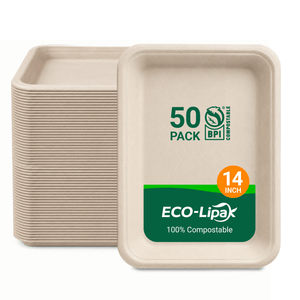
ECO-Lipak's 14-inch sugarcane food trays are available in white or natural fiber and in 50- or 100-count box options. The broad rectangular format works well for sandwiches, fruit, pastries, roasted vegetables, appetizers, and staged buffet sides. It is a serving and presentation tray, so liquids and long heat holding still need suitable equipment and a menu test.
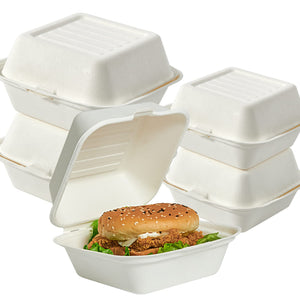
For individual meals, compare round sugarcane plates or three-compartment plates. Meals that need closure and transport are better matched to sugarcane clamshell boxes. This keeps a serving tray from being forced into a job it was not designed to do.
A Five-Step Order Check
- List each tray-based menu item. Separate sandwiches, fruit, vegetables, pastries, and appetizers.
- Forecast participation. Estimate how many guests will choose each item instead of assigning every item to every guest.
- Build one complete test tray. Count realistic portions using the planned arrangement and serving utensil.
- Round up by item. Never round down a partial tray requirement.
- Add reserves and record leftovers. Note unused trays and remaining food so the next event starts from evidence.
For broader foodservice-ware purchasing, the EPA recommends considering reuse first and checking whether local facilities accept certified commercially compostable ware before planning that recovery route. See the EPA food service ware guidance, browse ECO-Lipak's tray collection, and use the resource list for related material and disposal guidance.
FAQ
How many 14-inch trays do I need for 100 guests?
There is no single guest-only number. Estimate portions for each menu item, divide by the tested portions that fit on one tray, round up, and add reserves for fast-moving foods.
Should I put all buffet food out at once?
No. Smaller staged quantities with fresh replacement trays can improve food safety and presentation. Keep backup food at the required hot or cold temperature.
How many reserve trays should a caterer order?
Start with one unused reserve for each fast-moving item or transport route. Adjust after recording damage and leftover stock from real events.
Can a 14-inch sugarcane tray hold hot food?
It can serve many hot foods, but it is not temperature-control equipment. Test the menu and use suitable warming equipment where food must be held hot.
Is a large tray always more efficient?
No. A large tray can make a slow-moving item sit too long or look depleted. Smaller staged quantities may produce a cleaner buffet and less unnecessary exposure.