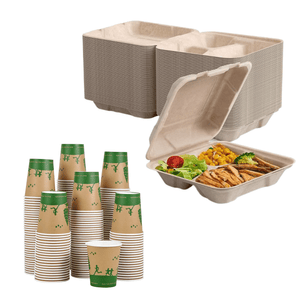
Quick Answer: A takeout packaging set with 200 food boxes and 300 hot cups covers no more than 200 boxed meals, but it can support as many as 300 drinks. That is a 1.5-to-1 cup-to-box ratio, not 300 complete meal sets. It makes the most sense for a cafe, caterer, or food truck whose beverage demand runs higher than its boxed-meal demand.
Key Takeaways
- The bundle contains 200 natural sugarcane clamshell boxes and 300 short hot-drink cups.
- Plan the two components separately: meal orders consume boxes, while beverage orders consume cups.
- The extra 100 cups can cover drink-only orders, refills, or the next service period.
- Run a real menu and closure test before relying on any box for saucy, oily, or unusually heavy food.
- The boxes and PLA-lined cups do not automatically belong in the same disposal stream; confirm local acceptance.
Bundles are convenient, but only when their counts match the way a business actually sells. The useful question is not “How many pieces are in the set?” It is “How many orders can each component complete?” For the ECO-Lipak takeout boxes and hot drink cups bundle, the answer begins with two separate inventory lines: 200 boxes and 300 cups.
What Is Included in This Takeout Packaging Set?
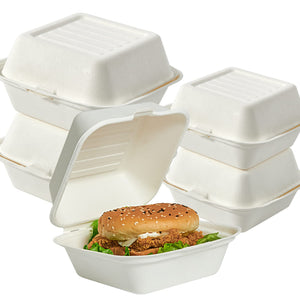
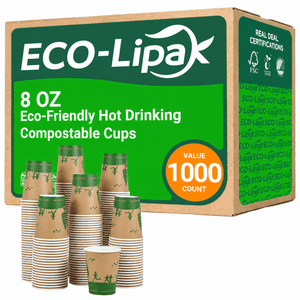
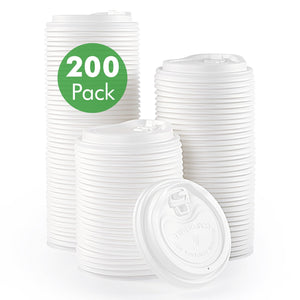
The set combines natural, molded-sugarcane clamshells with kraft-colored, PLA-lined paper cups. The box listing describes an 8-by-8-inch heavy-duty design with a double-lock closure, microwave and freezer suitability, BPI certification, and BPA-free construction. The 8 oz cups have a rolled rim and are intended for hot drinks. Lids are not listed as part of this bundle, so lid sourcing and fit should be treated as a separate purchase decision.
| Component | Quantity | What It Completes | Planning Limit |
|---|---|---|---|
| Sugarcane clamshell box | 200 | One boxed meal | 200 meal orders |
| 8 oz hot-drink cup | 300 | One hot beverage | 300 drink servings |
| Count relationship | 1.5 cups per box | Meals plus drink-only sales | Not 300 complete sets |
At the listed price of $99.99 on September 14, 2026, the combined average is about $0.20 per packaging piece. That number is only a quick inventory benchmark. It is not a true cost per meal because a box and a cup do different jobs, and some orders will use one without the other. Always check the current product price before placing an order.

Calculate Coverage From Beverage Attachment
Start with your expected boxed-meal count. Then estimate the share of those customers who will also buy a hot drink. Finally, add drink-only orders. A simple planning formula is:
Cups needed = boxed meals × beverage attachment rate + drink-only orders + reserve.
| Service Pattern | Box Plan | Cup Plan | What Remains From the Bundle |
|---|---|---|---|
| Breakfast cafe | 200 breakfast boxes | 200 meal drinks + 50 drink-only orders | 0 boxes, 50 cups |
| Lunch counter | 200 lunch boxes | 150 drinks at 75% attachment | 0 boxes, 150 cups |
| Small catering pickup | 160 boxed meals | 160 drinks + 24-cup reserve | 40 boxes, 116 cups |
| Coffee-forward pop-up | 100 boxed snacks | 300 hot drinks | 100 boxes, 0 cups |
These are planning examples, not universal demand forecasts. Your point-of-sale history is better than a generic ratio. Pull four comparable service days, count boxes and cups separately, and divide cup use by box use. If the result is close to 1.5, this bundle is naturally balanced for your operation. If it is closer to 0.7, cups will accumulate. If it is above 1.5, order an additional cup carton before the bundle runs out.
Three Situations Where the 200 + 300 Mix Works
1. A breakfast cafe with strong coffee sales
Breakfast sandwiches and coffee often move together, but the counter also serves customers who buy only a drink. The 100-cup difference can absorb those beverage-only tickets. Keep cups near the brewer and clamshells at the hot-food pass so staff do not treat them as pre-paired sets.
2. A caterer serving boxed meals and a beverage station
For a 160-person meeting, 160 boxes leave 40 as a reserve or for a second small order. A cup count of 184, including a 15% beverage reserve, still leaves 116 cups. That remainder can support setup staff, late additions, or the next coffee service if it is stored clean and dry.
3. A food truck that sells coffee beyond meal hours
A truck may use boxes during lunch but continue selling coffee before and after the meal rush. The uneven count can be an advantage because it mirrors two dayparts. The key is to track depletion separately and set a reorder point for each item instead of waiting for the entire bundle to disappear.
Test the Box With Your Actual Menu
“Leak-resistant” is not a substitute for a kitchen trial. Fill one box with the hottest, heaviest, and oiliest menu combination you expect to sell. Close both locks, hold it for the normal pickup wait, carry it in the same bag used for customers, and check the base, corners, hinge, and closure. Repeat after a short transport simulation. A dry salad and a saucy curry impose very different demands.
The box listing states that the clamshells are microwave and freezer safe, but staff should still follow the product instructions and reheating limits. For more format choices, compare the takeout container collection rather than forcing every menu into one footprint.

Do Not Assume Any Lid Fits the 8 oz Cup
Measure or confirm the cup rim diameter before buying lids. A lid described for 10, 12, 16, or 20 oz cups may not fit an 8 oz cup even when the materials look similar. Order a small sample if possible, press around the full rim, tip a water-filled cup over a sink, and test the assembled cup at the beverage temperature used in service. The hot cup collection can help you compare other cup formats, but the product listing remains the source of truth for dimensions and included components.
Receiving, Storage, and Reorder Workflow
- Count cartons and confirm that the bundle contains the expected 200 boxes and 300 cups.
- Inspect a sample box for closure alignment and a sample cup for rim damage.
- Store both components off the floor in a clean, dry area, with older stock in front.
- Record separate starting counts for boxes and cups.
- Set reorder points from lead time: average daily use × supplier lead days + reserve.
- Review remaining counts after each service period instead of estimating by carton appearance.
Disposal instructions also need to be component-specific. The boxes are listed as BPI certified, while the cups are paper with a PLA lining. Composting programs decide what feedstocks they accept, and the U.S. EPA notes that accepted materials vary by facility. The FTC Green Guides also explain why compostable claims may need qualification when appropriate facilities are not widely available. Ask your hauler before printing disposal directions for customers.
Frequently Asked Questions
Does this bundle make 300 complete takeout sets?
No. It contains 200 food boxes and 300 cups, so boxes limit complete meal-and-drink combinations to 200. The remaining 100 cups can serve drink-only orders or later service.
Are lids included with the 300 cups?
The product configuration lists 200 to-go boxes plus 300 cups and does not list lids. Treat lids as a separate item and verify the exact rim fit before ordering.
What size are the food boxes and cups?
The referenced bundle uses natural 8-by-8-inch sugarcane clamshells and short 8 oz hot-drink cups. Confirm the live variant details on the product page in case the assortment changes.
How many boxes should I reserve?
A 10% to 15% reserve is a useful starting point for attendance changes or damaged pieces, but historical demand and event certainty should set the final number.
Can boxes and cups go into the same compost bin?
Not automatically. Certification, lining material, food residue, and local facility acceptance all matter. Confirm both components with the receiving compost program.