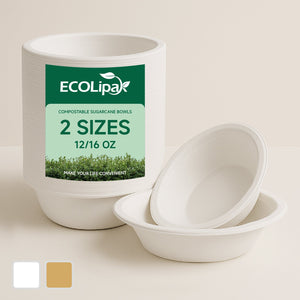
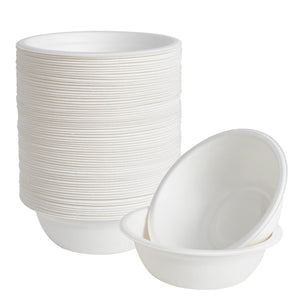
Quick Answer: Wide-rim sugarcane bowls work best when a meal needs the openness of a plate and the spill control of a bowl. They give salads, grain bowls, soup-and-sandwich lunches, and build-your-own bars room for toppings without forcing guests to stack food vertically. Choose the size from the finished portion, test the wettest menu item, and plan roughly 1.1 bowls per expected guest when one bowl is the main serving piece.
Key Takeaways
- A wide rim improves carrying and presentation, while the center well helps contain dressing, broth, and loose toppings.
- Menu volume matters more than the number of ingredients: test one complete serving before ordering.
- Wide bowls suit composed lunches and self-serve bars; deeper bowls are usually better for large portions of thin soup.
- For a one-bowl buffet, start with a 10% quantity buffer and adjust from actual breakage and second-serving data.
- Food safety still depends on time and temperature control, not on the material or shape of the bowl.
Lunch bars are appealing because each guest can build a meal that fits their appetite. The hard part is choosing serviceware that can handle very different combinations. One person takes greens, grilled vegetables, and a light vinaigrette. Another builds a heavy rice bowl with beans, sauce, and protein. A third chooses soup with bread resting on the rim. A flat plate can let saucy food travel; a narrow, deep bowl can hide toppings and feel awkward for a salad.
A wide-rim bowl sits between those formats. The center well contains the meal, while the open profile makes ingredients easy to see and reach. The rim also creates a natural place to steady the bowl while walking from the buffet to a table. That makes the format useful for office lunches, casual celebrations, soup stations, and relaxed outdoor meals where guests may eat away from a formal place setting.

Wide-Rim Bowl Or Deep Bowl?
| Menu | Better starting shape | What to test |
|---|---|---|
| Leafy or chopped salad | Wide-rim bowl | Room to toss without spilling over the edge |
| Grain bowl with several toppings | Wide-rim bowl | Finished weight and sauce pooling in the center |
| Chili, stew, or thick chowder | Either, based on portion | Carry comfort and the depth needed for a full ladle |
| Thin broth or large soup portion | Deeper bowl | Slosh control from service line to seat |
| Fruit, dessert, or snack assortment | Wide-rim bowl | Portion appearance and utensil access |
| Soup plus half sandwich | Wide-rim bowl for modest soup portions | Whether the bread stays clear of the broth |
The table is a starting point, not a universal rule. Portion size, ingredient density, serving temperature, and travel distance all matter. A bowl that works at a seated lunch may feel too open at a standing reception. Likewise, a deep bowl that carries broth beautifully may make a colorful salad look cramped. Build one representative serving with the exact ladle, scoop, and toppings your team will use.
A Practical Menu-Fit Test
- Build the heaviest likely serving. Use dense grains, protein, sauce, and toppings rather than testing with dry ingredients alone.
- Let hot or wet food sit. Observe the bowl for the realistic service window, including the time between plating and eating.
- Carry it on the actual route. Walk from buffet to table, including doors, stairs, or outdoor surfaces.
- Use the planned utensil. Confirm that guests can cut, scoop, and mix without pushing food over the rim.
- Check disposal locally. Ask the collector whether food-soiled molded fiber is accepted in the available organics stream.

How Many Bowls Should You Order?
For a lunch where every guest receives one main bowl, use a simple starting formula: expected guests x 1.10. A 120-person office lunch would begin at 132 bowls. The extra 12 cover handling damage, unexpected attendees, and a limited number of second servings. For a controlled plated meal, the buffer may be smaller. For a public event with uncertain attendance, it may need to be larger.
Do not add a large buffer automatically. After the event, count unopened sleeves and note how many bowls were damaged or used for seconds. That turns the next order into a measured forecast. If the menu offers both a bowl station and a plate station, forecast each from expected participation rather than ordering both formats for every guest.
Three Good Use Cases
Office grain-bowl lunch: Arrange grains first, vegetables and protein next, and sauces last. The open surface helps guests see their choices, while the center well catches dressing. Pair the bowl with a sturdy fork rather than automatically offering a full cutlery kit.
Cool-weather soup bar: Use the wide format for chili, stew, or a modest serving of creamy soup with toppings. For thin broth or a long walk to seating, compare it with a deeper sugarcane bowl before making the final choice.
Outdoor salad buffet: Pre-portion dense ingredients and keep dressing near the end of the line. The U.S. FDA's buffet food-safety guidance recommends keeping hot foods hot, cold foods cold, and replacing serving dishes rather than continually topping them off. A compostable bowl does not change those food-handling rules.
Material And End-Of-Use Planning
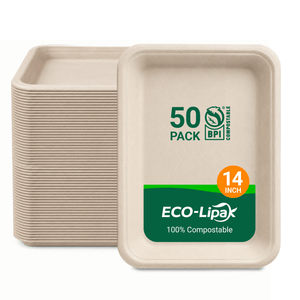
ECO-Lipak's wide-rim sugarcane bowls use molded plant fiber to create a rigid one-piece format. Buyers can compare them with sugarcane food trays and sugarcane plates when deciding how much spill control the menu needs. The EPA's sustainable food service ware guidance recommends evaluating source reduction, reuse, material attributes, and local recovery options together.
That last point matters. “Plant fiber” does not tell a guest which bin to use. If a commercial compost stream accepts the bowl, label that route with a picture of the exact item. If no suitable collection exists, be honest about the local disposal outcome and focus on right-sizing the order. More material guidance is available in ECO-Lipak's resource list.
FAQ
Are wide-rim sugarcane bowls good for soup?
They can work well for chili, stew, chowder, and moderate soup portions. Test thin broth and long carry routes because a deeper bowl may offer better slosh control.
What is the advantage of a wide rim?
The rim gives guests a stable place to hold the bowl and provides an open surface for toppings. It also makes salads and composed bowls easier to eat than a narrow, deep shape.
Can a wide-rim bowl replace a plate?
For grain bowls, salads, pasta, desserts, and saucy lunches, often yes. Flat, dry foods or meals that need separate compartments may still be better on a plate or tray.
How many extra bowls should a buffet order?
A 10% starting buffer is practical for many one-bowl events. Use a smaller or larger percentage when attendance certainty, second servings, transport, or handling losses justify it.
Can food-soiled sugarcane bowls be recycled?
Do not assume so. Food residue and molded fiber rules vary. Ask the local organics collector whether it accepts the item; otherwise follow local disposal guidance.