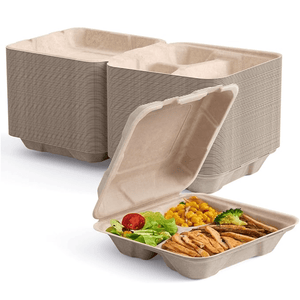
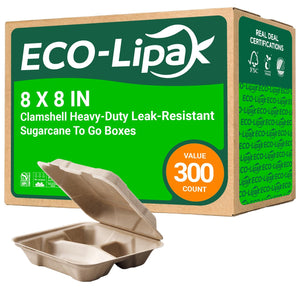
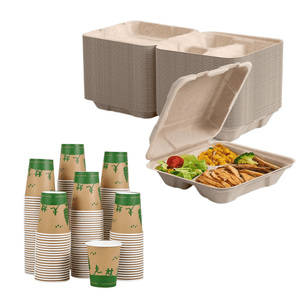
Quick Answer: An 8x8 three-compartment sugarcane takeout box is a good candidate for a rice-and-sauce meal when the large section holds the main dish and the two smaller sections keep wetter and crisper sides apart. Test the actual menu for headspace, divider spillover, a secure lid, and a normal carry time before buying a carton. ECO-Lipak's main listing currently offers natural 50/box or 300/carton and white 50/box; do not assume every color has the same case count.
A divided clamshell looks tidy when it is empty. The harder question comes ten minutes after a busy counter closes it: Is the salad still separate from the warm rice? Has sauce crept over the divider? Can a customer open the box without tipping the sides into the main course? The 8x8 sugarcane compartment clamshell has one large and two smaller molded sections, an attached lid, and front locking tabs. Those features are useful, but the menu and carry route decide whether they work together.
Key Takeaways
- Use the large compartment for the entree and the smaller two for foods that should remain separate until eating.
- Keep free-flowing dressing or broth in a separate sealed portion cup; molded dividers are not liquid-tight walls.
- Leave room below the lid and check both front locking tabs on every sample box.
- Start with a 50-box while testing a new menu. Natural 300/carton becomes sensible after the pack test and weekly order count are stable.
- Check the exact product and the local composting route before making disposal claims to customers.
Start With the Meal, Not the Box Label
“8x8” gives the approximate closed-box footprint; it does not tell you how much of a particular rice bowl fits in each section. A mound of fluffy rice is different from a flat sandwich, and a glazed protein behaves differently from a dry slaw. For a realistic trial, plate the busiest combination meal exactly as staff would during lunch. Put rice and roasted vegetables in the large compartment, a moderate serving of saucy protein in one small compartment, and a cool side in the other. Add the lid without pressing food down to make the locks catch.
The product is described as heavy-duty and leak-resistant, with a double-lock closure. That is not a promise that thin soup or excess dressing will stay in its own section during a bike delivery. If the sauce has a free liquid layer, use a lidded sauce cup or change the menu arrangement. A box that closes without force and arrives with the components still recognizable is a better buying signal than a dramatic “waterproof” claim.

A Ten-Minute Pack-and-Carry Test
- Fill three sample boxes at normal service speed with the real meal and serving utensils.
- Check that the food sits below the rim, the hinge is not strained, and both front tabs close cleanly.
- Place each closed box in the bag or pickup stack your team actually uses. Do not assume a box behaves the same when stacked under another hot meal.
- Walk one sample for your normal pickup route and leave another for a typical delivery wait. Keep food under appropriate temperature control throughout.
- Open the boxes. Look for divider spillover, a soggy underside, crushed salad, lid contact with toppings, and a closure that has lifted.
Record the result by menu item. A dry lunch that passes does not validate a soup special. Repeat the test when portions, sauces, delivery bags, or carrier routes change. For more general comparisons, the plain-versus-divided 8-inch clamshell guide explains the format choice; this article is about packing a wet-and-dry combo inside one divided box.
Which Food Goes Where?
| Menu component | Placement to trial | Failure to watch | Adjustment |
|---|---|---|---|
| Rice, noodles, roasted vegetables | Large section | Mound touches lid or pushes over divider | Flatten the portion or reduce volume |
| Glazed tofu, chicken, or beans | One small section | Free sauce crosses a divider | Drain excess or pack sauce separately |
| Slaw, pickles, fruit, or greens | Other small section | Steam softens crisp food | Cool hot components appropriately and test hold time |
| Thin dressing, broth, dipping sauce | Separate sealed cup | Liquid leaks despite dividers | Do not rely on the clamshell for free liquid |
This is a menu-fit table, not a claim that every food belongs in the same arrangement. If customers mix the foods immediately, a plain clamshell from the compostable to-go box collection may be simpler. If separation is central to the order, the divided format earns its shelf space by reducing extra small containers and packing decisions.
Three Real Service Scenarios
Small cafe testing a new lunch bowl
A cafe expects 20 to 30 combo orders a week but has not tested the sauce. It starts with the white or natural 50-box variant, packs the top two recipes, and checks a normal walk from counter to pickup shelf. A large carton would tie up storage before the menu proves it fits. The main product page lists the currently available color and pack combinations.
Meal-prep kitchen with a repeating rice-and-side menu
A weekly menu produces roughly 180 matching takeout meals. Once several recipe batches pass the carry test, a natural 300-count carton can cover a cycle and a reserve. Staff should still spot-check closure and food contact during packing. A 300-count case is a purchasing format, not evidence of longer holding performance.
Office catering with two colors and mixed menus
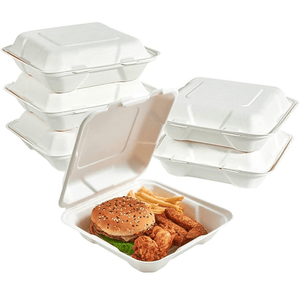
A caterer may prefer white boxes for a guest-facing lunch and natural boxes for a routine staff meal. The wholesale divided-box listing currently shows natural 300/carton and white 200/carton, while the main retail listing offers white 50/box. Verify the live variant rather than writing “300 white boxes” on an order sheet by habit. For a menu with soup, a separate sealed container may be better than the divided clamshell.

Order Quantity and Disposal Are Separate Decisions
Estimate order count from meals that actually use this box, not total tickets. Multiply expected daily qualifying meals by days until the next delivery, then add a small reserve for menu changes, damaged boxes, and sudden rushes. Store unused cartons clean and dry, away from the sink and from pressure that can deform the lids. A 50-box is an inexpensive way to expose menu-fit problems; a carton is the next step only after the test passes.
Separately, verify the disposal route. The product page describes the molded sugarcane-fiber box as BPI certified, but a compostability claim does not make every local organics program accept used foodservice ware. The U.S. EPA's foodservice guidance says certified compostable items should be purchased for composting only where a local commercial program accepts the relevant product type and collection is in place. Check the certification guide for what documentation to request, then confirm with the actual hauler. Do not place used clamshells in ordinary paper recycling by assumption.
Frequently Asked Questions
Are three-compartment takeout boxes leak-proof between sections?
No. Molded dividers separate ordinary foods, but free liquid can cross during movement. Put thin sauce or broth in a sealed cup and test the complete order.
Is an 8x8 clamshell large enough for rice, protein, and a side?
Often, but the answer depends on your portion and lid headspace. Pack the largest usual meal and confirm both locks close without pressing on food.
Should a new cafe buy 50 or 300 divided boxes?
Begin with 50 while testing menu fit and true weekly use. Move to natural 300/carton after repeated meals arrive in good condition and storage is available.
Does the white option come in a 300-count carton?
Do not assume that. The main listing currently offers white 50/box; a separate wholesale listing currently offers white 200/carton. Check live variants before ordering.
Can customers compost the used box at home?
Do not promise home compostability. Verify the exact certification and ask the local collector whether used molded-fiber foodservice boxes are accepted.