Quick Answer: For a Halloween dessert bar, choose 1 oz sugarcane portion cups for a small sauce or sprinkle, 2 oz for a standard topping sample, and 4 oz for a mini dessert or a larger fruit serving. Set each ingredient out separately, count one cup per expected serving rather than one per guest, and keep ingredient information visible. These open cups are for a supervised party food station, not for packing loose trick-or-treat candy.
Key Takeaways
- The 1, 2 and 4 oz variants solve different serving jobs; the smallest is not a substitute for a dessert bowl.
- For a self-serve bar, forecast cups by visits to the station, not simply by headcount.
- Keep sauces and toppings in separate cups with dedicated serving utensils and clear ingredient information.
- The current ECO-Lipak small-pack options include 500 one-ounce cups or 200 two- and four-ounce cups per box; check the live variant before ordering.
Build a Halloween dessert bar around the food
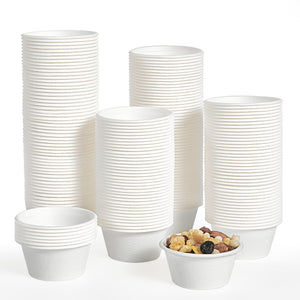
A Halloween table can become crowded quickly: a bowl of apple slices, a caramel dip, small toppings, cookies and drinks all compete for the same space. The point of a little portion cup is not to make every bite tiny. It is to give each topping a clear place and help guests carry a small sample without dipping a used spoon into a shared bowl. ECO-Lipak's white molded-fiber souffle cups come in 1, 2 and 4 oz sizes. They are round, open cups with a visible fiber texture, not clear drink cups or lidded takeaway tubs.
Start by listing the menu. A teaspoon of chocolate sauce, a scoop of sprinkles and a small apple sample do not need the same vessel. Pick the cup after you decide how many spoonfuls guests should take and whether the food is wet, dry, sticky or fragile. For very liquid sauce, do a short hold test with the real recipe and room temperature. The product description calls the cups leak-resistant, but that is not a license to assume every sauce can sit out indefinitely without softening the cup.
The souffle-cup collection is the main shopping route for a mixed-size station. If your setup will serve drinks as well, keep beverage cups in a separate zone; the clear cold-cup range is a different product for that job. Using a cold drink cup as a topping scoop makes the portion hard to control.

Match the cup to the serving job
| Cup size | Good starting use | Current small pack | Check before service |
|---|---|---|---|
| 1 oz | A little sauce, sprinkles or a tasting bite | 500 per box | Can a guest scoop it without touching the rim? |
| 2 oz | Most topping portions or a small candy sample | 200 per box | Is there room to add a spoon without spilling? |
| 4 oz | Mini pudding, fruit portion or layered dessert | 200 per box | Will the dessert hold its shape at the station? |
Those are menu-planning examples, not measured fill lines. Ounces describe nominal capacity, not a recommended amount of sauce for every food. Fill a few samples at the intended level and let them stand for the length of a typical serving period. If the rim gets messy, lower the fill level, use a spoon with a smaller bowl or move the food to a larger cup. A stacked sample that looks impressive in a photo may be awkward for a child to carry across a room.
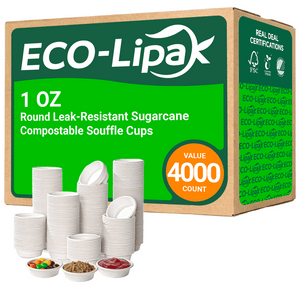
For large events, the wholesale portion-cup cartons list 4,000 one-ounce cups or 1,600 two- or four-ounce cups. That scale suits a caterer, not a single neighborhood party. A 200-count box may still be ample for a 60-person gathering if only one station uses the cups. The correct buy is the one that fits your actual rounds of serving.
Count station visits, not just guests
Suppose 80 people attend and you expect 60 to visit the topping bar. If each visitor takes two separate toppings in little cups, baseline demand is 120 cups. If 40 guests also take a mini dessert, that adds 40 four-ounce cups, for 160 total cups across sizes. Do not buy 160 of each size. Divide the estimate by food job: perhaps 80 one-ounce cups for sauce, 40 two-ounce cups for dry toppings, and 40 four-ounce cups for dessert, then add a modest reserve for spills and repeat visits. Use a comparable party's actual consumption if you have it.
For a school or community event with several waves of guests, keep a refill box behind the station. Refill small trays rather than putting every cup out at once. This reduces clutter and makes it easier to replace a tray if a serving utensil is dropped or an ingredient spills. A host can watch what moves fastest and replenish only that size. At a small house party, pre-fill a few cups, then leave the rest unfilled until needed so toppings stay fresher and less food is wasted.

Three station formats that work
Neighborhood family party
Put a base dessert such as plain yogurt or a small cupcake at one end, then set out toppings in individual labeled bowls with a dedicated spoon for each. Give adults and children space to move in one direction. One-ounce sauce cups keep sticky toppings from spreading across a shared plate. Keep packaged trick-or-treat candy elsewhere so parents can inspect wrappers and ingredient labels before children eat them.
Office costume social
Office guests often graze between conversations. Two-ounce cups can hold a controlled serving of dry candy or fruit, while four-ounce cups suit a mini mousse or pudding. Place napkins at the pickup point and a waste station nearby. If people carry desserts back to desks, check that the cup and spoon can be carried together without tipping. Do not assume an open cup is suitable for transit in a bag.
Catered school or community dessert bar
Use a fixed serving sequence and pre-portion foods when lines are expected. That speeds service and helps staff keep ingredients separate. For a nut-containing topping or a dairy-based dessert, display accurate ingredient information and follow the venue's allergy policy. Separate cups and spoons reduce accidental mixing during service but do not make a food allergen-free. Staff should know which foods need refrigeration and replenish cold items in batches.
Food safety and cleanup are part of the layout
For an indoor dessert bar, keep original ingredient packaging or a reliable ingredient list available and do not claim a shared station is allergy-safe. Time matters too: the EPA's food-waste prevention advice says not to leave perishable food at room temperature for more than two hours. That matters for dairy-based dips and other foods that cannot sit out all evening. Refill small amounts from chilled storage rather than putting the full batch out.
The product page describes these sugarcane-fiber cups as compostable. That does not mean every local green bin accepts foodservice ware. The EPA recommends checking local facility acceptance before buying and collecting compostable ware. For buyer documentation, compare the claimed certification with item-level evidence using ECO-Lipak's certification guide and the relevant certification directory. If the local program does not take these cups, label the party's disposal bins accordingly rather than encouraging wishful sorting.
Make the station inviting without making it complicated
A few pumpkins and orange napkins are enough to signal Halloween; the food should remain easy to identify. Put the 1 oz cups by sauces, the 2 oz cups by dry toppings, and the 4 oz cups by finished mini desserts. A small beverage napkin stack helps with spills, but keep any ingredient labels above the food, not under a cup where sauce can hide them. Before guests arrive, walk the line holding a filled cup and spoon. If that simple test feels awkward, change the layout while the table is still empty.
Frequently Asked Questions
Should I use 1 oz or 2 oz cups for Halloween toppings?
Use 1 oz for a small sauce or sprinkle portion and 2 oz when guests need a larger scoop or room for a spoon. Test the actual topping before ordering.
Are 4 oz cups suitable for mini desserts?
Yes, they can work for a small pudding, fruit cup or layered dessert. Fill a sample and test how it holds during the service period.
Can these open cups be used for trick-or-treat bags?
No. They are open serving cups for a supervised food station, not tamper-evident packaging for loose candy given to children.
How many cups do I need for 80 guests?
Estimate how many guests will visit each station and how many separate portions each will take. For example, 60 visitors taking two toppings plus 40 mini desserts implies about 160 cups across sizes, before a reserve.
Do compostable cups go in every community compost bin?
No. Confirm the local facility accepts the exact foodservice-ware material and set up the party bins to match its rules.