Quick Answer: Wash a reusable cotton grocery bag after shopping, follow its care label for the wash method, and let the entire bag dry before putting it away. Empty the mesh, inspect the handles, and keep used bags separate from clean ones. ECO-Lipak's cotton mesh tote is listed as machine washable, but its product page does not specify a wash temperature or tumble-dryer setting; confirm those details before choosing a hot cycle or heated drying.
Key Takeaways
- A bag that looks clean can still need washing after carrying groceries.
- Machine washable does not automatically mean suitable for every temperature or dryer setting.
- Check the thick handle joins and bottom edge for moisture before folding.
- An open-mesh tote cannot contain leaks or keep chilled food cold.
- A clean, dry reserve makes it easier to wash the working bag without missing the next errand.
The grocery trip ends at the refrigerator, but the bag's job is not quite finished. Receipts lodge in the mesh. A damp produce container leaves moisture at the bottom. The handles have spent the afternoon in your hand, on a checkout counter, and perhaps over a chair.
A short reset after unpacking is easier than discovering a musty bag when you are already leaving for the store. Give the tote a used-bag spot, a washing routine, and somewhere to dry completely. It does not need its own elaborate cleaning station.
What to Check Before Washing a Cotton Mesh Bag
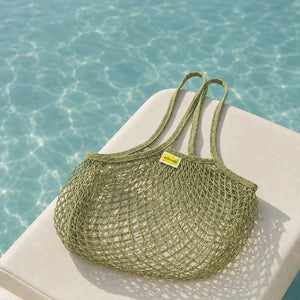
Start with the care label, not a setting suggested for a different cotton product. Dyes, stitching, labels, and handle construction can affect care instructions. The ECO-Lipak reusable cotton mesh grocery bag has an open string weave and long woven handles, with 1-pack and 3-pack options. It is described as machine washable. That is useful information, but it is not a complete laundry specification.
The USDA recommends washing reusable grocery bags after each use with hot water and soap in its grocery-shopping food safety guidance. Check that your bag's care instructions support the cleaning method you need. If the temperature or method is unclear, ask the supplier rather than assuming a delicate rinse is equivalent to the recommended wash.

| Check | What to look for | Next step |
|---|---|---|
| Contents | Receipts, loose stems, crumbs, or items caught in the net | Empty the bag fully before washing |
| Care instructions | Wash method, water temperature, drying restrictions | Use the stated method; confirm missing details |
| Handle joins | Loose stitching or a partly detached handle | Remove from carrying duty until repaired or replaced |
| Mesh openings | Broken strands or an opening larger than the surrounding weave | Check whether small groceries could slip through |
| Spills | Food residue or leaked liquid | Keep away from clean bags and food-prep surfaces |
A Wash-and-Dry Routine That Fits an Ordinary Week
- Unpack promptly. Put perishables away first, then empty the tote. Do not leave damp packaging inside overnight.
- Set the used bag aside. Keep it out of the drawer or basket holding clean grocery bags.
- Inspect before washing. Remove debris and check the mesh and handle joins while the empty bag is easy to examine.
- Wash as directed. Follow the bag and detergent instructions. Where compatible with the care directions, a laundry wash bag can help keep long handles from tangling with other items.
- Open it out to dry. If air drying is permitted, spread the empty tote over a clean rack with space around the body and handles. Do not fold it into a tight damp bundle.
- Return it only when dry. Check the denser woven sections, not just the open mesh, before returning it to storage.
There is no dependable one-hour drying promise. Room humidity, airflow, how much water remains, and the thickness of the woven sections all matter. In a small apartment, a compact drying rack can do the job without making the kitchen counter a permanent laundry surface.
Do not use a microwave, oven, hair dryer, or a radiator as a shortcut. These are not the washing or drying methods specified on the product page. A sunny window is a convenient place for airflow and visibility, not a substitute for washing.
Three Situations Worth Planning For
After the farmers market
Empty the tote as soon as you get home. Separate loose plant debris from receipts and packaging before washing. Keep delicate produce in an appropriate container during transport; the mesh openings are not a protective barrier for small berries. The tote carries the shopping, while produce preparation follows its own routine.
After a mixed supermarket trip
Use separate, appropriate carriers for raw meat and ready-to-eat groceries. The USDA advises keeping raw meat, poultry, and seafood separate to prevent their juices reaching other foods. A cotton string bag is not leakproof, so do not rely on the weave to contain a leaking package. An insulated carrier has a different job from an everyday mesh tote.
After a beach or non-food errand
Empty sand and damp towels before bringing the bag into the laundry routine. Do not return it directly to food-carrying duty simply because it has aired out. Keep a dedicated non-food bag for household cleaners; changing what you carry should not turn one tote into an all-purpose container with no reset between jobs.

How Many Bags Do You Actually Need?
Start with the number you use on a normal trip, then allow for washing and drying time. One bag may be enough for occasional dry-goods errands. If you shop again before the first bag is ready, a reserve is useful. A three-bag rotation can mean one in use, one drying, and one ready, but it is a planning option, not a reason to buy bags you will never use.
Place the dry reserve where you remember it: a clean drawer near the door or a dedicated hook away from shoes and wet coats. Put used bags somewhere visibly different. This small distinction makes the routine easier to maintain than trying to remember which bag was washed last.
The EPA's household waste-reduction guidance encourages caring for belongings and carrying reusable cloth bags. For a tote, a manageable rotation keeps the bags you own in service. Browse everyday household essentials when something genuinely needs replacing, or visit the ECO-Lipak resource library for related care and material guides.
FAQ
Can I put a cotton mesh grocery bag in the washing machine?
Yes, if its care instructions allow machine washing. ECO-Lipak lists its cotton mesh tote as machine washable, but the product page does not specify a temperature or cycle. Confirm those details before selecting a setting.
How often should I wash a reusable grocery bag?
After each grocery use is the USDA's recommendation. Do not wait for visible stains or an unpleasant smell before adding the bag to your cleaning routine.
Can I tumble-dry the ECO-Lipak mesh tote?
Do not assume so. The current product page does not provide a tumble-dryer setting. Check the care label or ask the supplier; keep a dry spare available while the washed bag dries by an approved method.
Does breathable mesh keep groceries refrigerated?
No. Open mesh allows airflow but provides no refrigeration and does not contain leaks. Use an appropriate insulated carrier for food that needs temperature control.
When should a cotton shopping bag be replaced?
Remove it from grocery use if a handle is failing, the mesh is broken, or it cannot be adequately cleaned. Repair it only when the repair can restore dependable carrying function; do not test a damaged handle with a heavy load.