Quick Answer: For a pop-up coffee bar, buy PHA-lined paper cups by drink size and expected orders, not by a single headline carton price. ECO-Lipak's current 8 oz, 12 oz and 16 oz options contain 400, 270 and 240 cups per box respectively. Start with the sizes your menu actually sells, add a modest service buffer, and reorder when the next event would consume your remaining stock.
Key Takeaways
- One mixed menu does not require an equal number of every cup size; use your forecasted drink mix.
- Check the actual variant before buying: 8 oz is 400 per box, 12 oz is 270, and 16 oz is 240.
- Set a reorder trigger in cups, not just in unopened boxes, so partial boxes are counted.
- A PHA liner does not itself prove that a cup is accepted by a local composting program; verify the finished product and collection route.
What changes when the coffee bar is temporary?
A permanent cafe can learn its average daily cup use. A pop-up at a market, lobby, gallery or weekend festival has a different problem: demand arrives in short bursts and storage space is usually scarce. You need enough cups to serve the peak without bringing an unnecessary stack of cartons home. The practical purchase question is therefore: which sizes will the menu use, how many drinks could reasonably sell, and what reserve will cover spills, remakes and late orders?
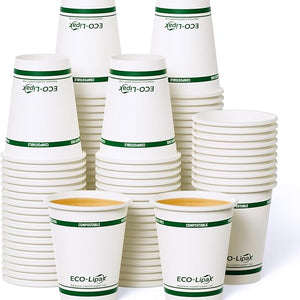
For this guide, the main option is ECO-Lipak's PHA-lined paper cups in 8, 12 and 16 oz sizes. They are plain white tapered paper cups with rolled rims and a green band, suitable for hot and cold beverage service according to the product listing. Unlike a conventional plastic cold cup, they are opaque paper. They are sold as different box counts by size, so comparing boxes alone is misleading.

Translate the menu into an order
Write your forecast on the same sheet as your menu. Suppose a two-day pop-up expects 450 paid drinks: 25% small, 55% regular, and 20% large. That is about 113 small, 248 regular and 90 large drinks. A 10% working buffer brings the planning numbers to about 125, 273 and 99 cups. This is a planning illustration, not a promise of sales or a universal waste allowance. A tasting-heavy bar may need more small cups; an iced-drink stand in warm weather may need more large ones.
| Menu size | Example planned use, including buffer | Current ECO-Lipak box | Initial buy for this example |
|---|---|---|---|
| 8 oz, tasting or compact hot drinks | 125 cups | 400 cups | 1 box |
| 12 oz, regular coffee or tea | 273 cups | 270 cups | 2 boxes, or adjust menu mix |
| 16 oz, larger drinks | 99 cups | 240 cups | 1 box |
The 12 oz line shows why carton arithmetic matters. A 270-count box misses a 273-cup plan by only three cups; buying a second box creates a sizeable carryover. If this is one isolated event, you could lower the service forecast, source a smaller compatible pack, or accept the second box as stock for the next booking. Do not pretend an unopened second box is a small buffer. The right choice depends on whether another event is already on the calendar.
If your menu is mostly regular coffee, visit the hot beverage cups collection to compare the broader assortment. A separate 12 oz cup-and-lid pack may suit a walk-up operation that needs a matching lid option; its listed box and carton configurations differ from this PHA cup. Do not assume lids are included with the PHA cup or that a lid from another range fits without checking diameter and a physical sample.
Three pop-up situations worth planning differently
Market stall with espresso and filter coffee
Start with the smallest cup used for espresso-based servings and the regular cup used for drip coffee. If the bar has no large drink on its menu, do not buy a 16 oz box simply to appear prepared. Keep one working sleeve at the machine and the rest away from steam and splash zones. This makes the stock count easier at closing time.
Office lobby with back-to-back meetings
Meeting breaks can create a concentrated 20-minute rush. Place the high-volume 12 oz size closest to the barista, but keep a clearly separated stack of 8 oz cups for smaller orders. If most drinks leave the lobby, test the complete cup-and-lid combination before committing to a case. A secure lid is a fit issue, not a material label issue.
Outdoor weekend event with cold drinks
Cold brew and iced tea may shift the mix toward 16 oz. Reforecast from actual ticket data after day one, rather than automatically ordering the same mix for the next market. Protect paper cups from rain and direct moisture. A liner is designed to hold beverages inside the cup; it does not make outside storage waterproof.

How to set a reorder point
Count loose cups as well as sealed sleeves. A useful trigger is forecast cups for the next booked event plus a service buffer, minus confirmed usable on-hand cups. If a Saturday booking needs 200 regular cups and you choose a 20-cup buffer, a remaining count of 175 means you need at least 45 more cups. The commercial decision is whether to buy another 270-count box now, combine the next event's demand, or choose another pack format. Record the decision on the event sheet so the next buyer understands why stock was carried over.
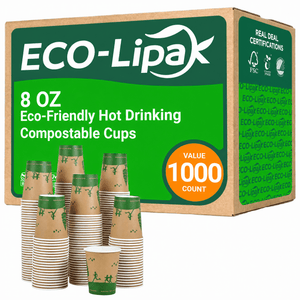
When comparing suppliers, divide landed box cost by the number of cups, then add any costs that actually change the order: delivery, lid purchases, damaged-cup allowance and storage. The currently listed variant counts are more important than a generic “bulk” label. For a larger recurring operation, compare 1,000-count kraft PLA-lined cup cartons and white PLA-lined cup cartons on their own specifications. A PLA-lined cup is not the same item as a PHA-lined cup; check the material, use temperature, collection rules and case quantity separately.
Handle the material claim with care
“PHA-lined” describes the cup construction on this product page; it is not a blanket permission to put used cups in every compost bin. Food contamination rules, certification scope and local facility acceptance vary. Before printing disposal signs, ask your hauler which finished cups and lids it accepts. The U.S. EPA's composting guidance is a useful reminder that collection and processing pathways matter. For standards context, ECO-Lipak's compostable certification guide explains what buyers should verify rather than relying on a broad adjective.
Purchase the cup that fits the service first. Then make disposal instructions specific to the exact cup, lid and local route. That keeps a sustainability claim from becoming a sorting mistake at the end of the event.
Frequently Asked Questions
How many PHA-lined cups should a 450-drink pop-up buy?
Estimate cups by the menu's size mix, then add a modest service buffer and round each size to its actual box count. In the 25/55/20 example above, one 400-count 8 oz box, two 270-count 12 oz boxes and one 240-count 16 oz box cover the illustrated plan, but they leave carryover stock.
Are 8, 12 and 16 oz boxes the same quantity?
No. The current ECO-Lipak listing shows 400 cups for 8 oz, 270 for 12 oz and 240 for 16 oz. Recheck the selected variant when ordering because pack configurations can change.
Can these cups serve both hot and cold drinks?
The product listing presents this PHA-lined range for hot and cold beverages. Test your actual serving temperature, hold time and handling workflow with a sample before buying for a high-volume service.
Do PHA-lined cups come with lids?
Do not assume so. The listed PHA cup variants are cup boxes. If lids are essential, verify compatible dimensions or compare a separately listed cup-and-lid set.
Can every used PHA-lined cup go in a compost bin?
No. Local compost program rules and the finished product's certification or acceptance determine the correct route. Ask the collector before telling guests where to put cups.