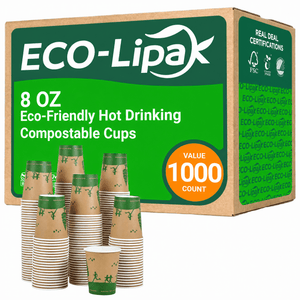
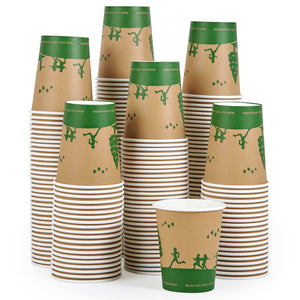
Quick Answer: For a new coffee cart, buy cups against a forecast of drinks sold, not against the number of drinks on the menu. Map each drink to an 8, 12 or 16 oz cup, estimate the share of orders in each size, then calculate a reorder point from daily use and supplier lead time. ECO-Lipak's natural kraft PLA-lined paper cups come in 1,000-count cartons for each of those three sizes. A cart selling 70 drinks a day does not automatically need three cartons every week; it needs a measured size mix and enough reserve to survive a busy weekend.
Key Takeaways
- Start with a seven-day drink estimate and assign one cup size to each menu item before buying.
- Use 8 oz for short drinks, 12 oz for the default coffee and 16 oz only where the recipe actually calls for it.
- At 1,000 cups per carton per size, slow-moving sizes can tie up space and cash; model the mix first.
- Set a reorder trigger in units: expected use during lead time plus a small service buffer.
- Test lids, sleeves and hot-drink handling separately. A cup listing does not mean a lid is included or guaranteed to fit.
Opening week is when a tiny coffee operation learns the difference between an attractive menu and a workable station. A street cart may run out of 12 oz cups while unopened 16 oz cartons sit under the counter. A market stall might sell twice as many short coffees as expected on a cold Saturday. Neither problem is fixed by ordering every size in equal quantities.
This plan is for a cart, kiosk, bakery coffee corner or other small business that wants to buy natural kraft PLA-lined cups by the carton and keep the first month flexible. The math below is a planning example, not a prediction of your shop's demand.

Build a Cup Map From the Menu
Write the finished serving size next to every drink before choosing stock. A double espresso or small flat white may fit an 8 oz offer; a regular brewed coffee may be 12 oz; a larger latte or long iced-style drink may call for 16 oz. These are menu decisions, not universal size rules. Measure your actual recipe in the intended cup, allowing headspace for safe handoff. Do not translate an ounce label into an exact fill line without a test pour.
| Opening-week assumption | 8 oz | 12 oz | 16 oz |
|---|---|---|---|
| Share of 70 drinks per day | 20% | 60% | 20% |
| Expected cups per day | 14 | 42 | 14 |
| Expected cups over 30 days | 420 | 1,260 | 420 |
| Cartons at 1,000 each, before reserve | 1 | 2 | 1 |
Under that illustrative mix, 12 oz moves fastest and needs attention first. The initial order would leave unused stock in the other sizes, which is normal for carton buying. If shelf space is tight, compare a smaller-count option such as nature-color hot cups in box sizes before committing to another full carton. Compare the actual unit price, freight and storage cost; the cheaper unit is not always the cheaper launch.
Turn the Forecast Into a Reorder Point
Suppose the 12 oz cup sells 42 per day, the next delivery takes five operating days, and you want two extra days of buffer. A straightforward trigger is 42 x (5 + 2) = 294 cups. When usable 12 oz stock falls to roughly 294, place the next order. Count open sleeves and committed event orders, not only sealed cartons. Recalculate after the first two weeks from actual point-of-sale counts.
For 8 oz and 16 oz in the same example, the trigger would be 14 x seven days, or 98 cups per size. If a wholesale carton is the only purchase option, the trigger still tells you when to reorder, even if the minimum purchase is much larger than the immediate need. Track one simple line per size: starting stock, cups received, cups used, damaged cups and ending stock. A growing gap between expected and observed use often points to waste, staff using the wrong size or a menu mix that has shifted.

Three Small-Business Scenarios
The weekday commuter cart
Most orders arrive in a short morning rush. Make the 12 oz size the default on the menu only if your sales support it, then keep its working sleeve within reach. Store reserve cartons away from splash and steam. At close, count the 12 oz sleeve first because it drives tomorrow's service risk.
The weekend market stall
Two high-volume days can consume more cups than five quiet weekdays. Forecast by trading day, not calendar day. If a market event is expected to add 180 drinks, include those cups in stock already committed before calculating whether another carton is needed. Keep the drink-size menu short enough for one person to serve accurately.
The bakery adding coffee
A bakery may not yet know whether its customers buy short coffees with pastry or larger takeout drinks. Start with a clear size map and record actual sales for two weeks. A smaller box of a less-used size may protect space while the main kraft cup size is purchased wholesale. The goal is not to forecast perfectly; it is to learn cheaply.
Check the Whole Hot-Drink System
These kraft paper cups have a PLA lining. That does not make them plastic-free, home-compostable or accepted by every local composting service. Ask your waste provider what it accepts and check any certification claims against the exact SKU. The US EPA's foodservice ware guidance gives buyers a useful framework for evaluating claims rather than relying on a single green-sounding label.
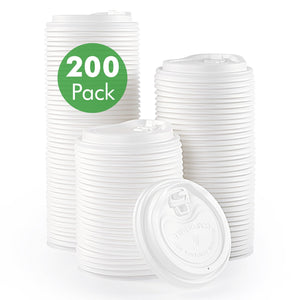
Lids are a separate fit decision. ECO-Lipak's 3.54-inch CPLA lids are sold separately; order a test quantity and verify rim fit, seal and hot-drink handling with your exact cup size before a full purchase. If you need a bundled 12 oz format, compare the 12 oz cup-and-lid option on its own terms. Its cup and lid counts differ by variant, so read the selected variant rather than assuming a one-to-one count.
Finally, check that a filled cup fits your carrier, that the sleeve is comfortable to hold and that your staff know the safe fill level. An 8 oz menu item served in a 12 oz cup may look underfilled; a 16 oz drink poured to the rim is more likely to spill. These are service issues as much as packaging issues.
What to Buy First
For the illustrative 70-drink cart, the opening order of one 8 oz carton, two 12 oz cartons and one 16 oz carton is a ceiling imposed by carton sizes, not a recommendation to use all 4,000 cups in month one. Before placing it, check cash tied up in the slower sizes, storage volume, delivery lead time and whether a smaller-count alternative makes more sense. Once you have two weeks of sales, update the mix and reorder only the sizes crossing their trigger.
For adjacent planning, browse ECO-Lipak's hot beverage cup collection. The existing kraft cup size and carton guide compares the three sizes themselves; this first-month plan is about demand, reserve stock and timing.
Frequently Asked Questions
How many paper cups should a new coffee cart buy?
Forecast drinks by size for 30 operating days, then round each size up to the available pack count. For the 70-drink example with a 20/60/20 size mix, month-one demand is about 420 small, 1,260 regular and 420 large cups before a service buffer.
Should a small cart stock all three cup sizes?
Only if the menu and customer demand justify them. A two-size menu may be easier for a new team to stock and serve. Add a third size after measuring requests and recipe fit.
Are lids included with the kraft cup cartons?
No lid should be assumed from the cup listing. Buy lids separately and test the exact rim fit and travel performance before selling lidded drinks.
What does PLA-lined mean for disposal?
It means the paper cup has a plant-derived PLA lining. It does not guarantee home composting or local collection acceptance; check the exact product claim and your area's waste program.
When should the cart reorder the 12 oz cups?
Use average daily 12 oz sales multiplied by delivery days plus your buffer days. In the example, 42 cups daily and seven days of coverage give a trigger near 294 usable cups.