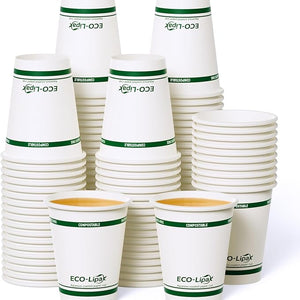
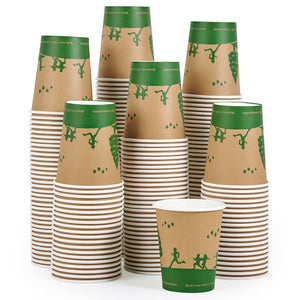
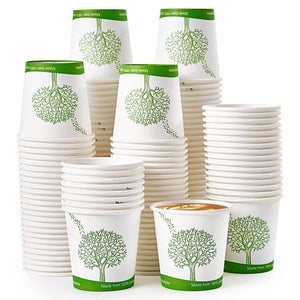
Quick Answer: PHA-lined paper cups can simplify a beverage station when the exact cup listing covers both hot and cold drinks, but the liner name does not choose the size, prove lid compatibility, or determine the local disposal route. Match 8, 12, and 16 oz cups to finished recipes, test those drinks for the full serving period, and convert forecast servings into the actual box count before ordering.
Key Takeaways
- PHA identifies the lining material; it is not a universal temperature, microwave, composting, or lid-fit instruction.
- ECO-Lipak's current PHA-lined range lists 8 oz/400, 12 oz/270, and 16 oz/240 per box.
- Choose cup size from the finished drink, including ice, foam, milk, and headspace.
- Test hot and cold recipes separately even when they use the same cup range.
- Confirm what a local compost program accepts before labeling a collection bin.
A cafe may serve short coffee in the morning, tea through lunch, and iced drinks in the afternoon. Using one visually consistent cup family can make the counter easier to stock. It can also create a quiet mistake: staff may assume that one material label means every size, lid, recipe, and disposal instruction is interchangeable.
The useful innovation is not simply a new acronym on a cup. It is a more disciplined way to connect the cup specification, beverage menu, stock room, and collection system.
What PHA-Lined Tells You, and What It Does Not
The ECO-Lipak PHA-lined paper cup listing identifies a paper cup with a PHA liner and describes it for hot and cold beverages. The liner is the layer that helps the paper body contain liquid. That product-level statement is the right starting point for this range.
A lining name alone does not establish an operating limit. It does not tell a buyer how long an extra-hot drink should sit, whether a specific lid fits, or whether a used cup belongs in a home compost pile. Those decisions need the exact product instructions, supporting documents, compatible accessories, and local collection rules.
The FTC's Green Guides summary explains why compostable and broad environmental claims need evidence and appropriate qualifications. Rather than turning “PHA” into a sweeping promise, keep each claim tied to the exact cup and the disposal system available where it will be used.
Compare the Three Current Box Variants
| Cup variant | Current box count | Menu starting point | Trial question |
|---|---|---|---|
| 8 oz | 400 cups | Short coffee, tea, or a modest tasting pour | Does the finished recipe leave practical carrying space? |
| 12 oz | 270 cups | Standard coffee, tea, or a moderate cold drink | Does milk, foam, or ice change the expected fill? |
| 16 oz | 240 cups | Larger hot or cold drinks | Can the filled cup be carried and served as planned? |
Those menu examples are starting points, not capacity guarantees for every recipe. A 12 oz cup does not mean 12 oz of brewed liquid plus foam and headspace. For a cold drink, ice occupies part of the cup. Build the actual recipe in the selected cup and record the fill line staff should use.
The box counts also move in the opposite direction from cup size. One box contains 400 of the 8 oz size, but 240 of the 16 oz size. “One box per drink” is therefore not a stock rule.

Run a Three-Part Menu Trial
- Prepare the exact drink. Use the normal brew, ice, milk, garnish, and serving temperature. Do not test with plain water and assume the result covers the menu.
- Observe the full service window. Check filling, carrying, drinking, and the time a cup typically remains with a customer. Follow the product's documented limits.
- Test the complete system. If service needs a lid, sleeve, straw, tray, or cup holder, verify that specific combination. Similar-looking diameters are not proof of fit.
A short coffee counter, a conference refreshment station, and an outdoor iced-drink bar put different demands on the same cup. The first may prioritize speed and a compact pour. The second needs predictable refills over several breaks. The third must account for ice, condensation around the service area, and secure transport from prep to pickup.
Do not use the cup as a microwave or reheating container unless the exact instructions explicitly allow it. “Suitable for hot drinks” is not the same statement as “microwave safe.”
Turn Seven Days of Drinks Into Boxes
Start with a seven-day sales or service forecast by size. Add a reserve that reflects known uncertainty, then round up to complete boxes:
Boxes needed = ceiling of [forecast servings x (1 + chosen reserve rate) divided by cups per box].
Write the reserve as a rate you can explain. Ten percent may be a reasonable planning example for a stable menu; it is not a universal industry requirement.
- 320 short drinks plus a 10% reserve = 352 cups. One 400-count box of 8 oz cups covers that plan and leaves 48.
- 225 medium drinks plus a 10% reserve = 247.5, rounded to 248. One 270-count box of 12 oz cups leaves 22.
- 200 large drinks plus a 10% reserve = 220. One 240-count box of 16 oz cups leaves 20.
For a mixed station, calculate each size separately. A surplus of 8 oz cups cannot cover a shortage of 16 oz cups without changing the menu. Browse the paper cup collection only after the recipe and volume are clear enough to compare like-for-like options.

Three Service Scenarios
Morning Cafe With Two Core Drinks
Trial 8 oz for the short drink and 12 oz for the standard drink. Keep the cups in separate dispenser rows and make the recipes visible to staff. If both drinks use lids, test each size with the intended lid before opening event stock.
Office Conference With Scheduled Breaks
Forecast cups by break, not only by attendee. One person may take a drink at two sessions. Refill the front station in small batches and keep the rest protected so an early rush does not expose all reserve stock.
Afternoon Hot-and-Cold Counter
Build the hot and iced versions separately. A 16 oz iced recipe may include substantial ice, while the hot version may need different headspace or handling accessories. Sharing a cup size does not mean the two recipes share every service instruction.
Plan the End of Service Before the First Pour
The EPA's food-service ware guidance prioritizes reusables when an effective collection, washing, and return system exists. When certified compostable foodware is selected, EPA says a suitable local program, acceptance of the exact product type, and clear collection are part of the decision.
Ask the hauler or facility about cups and their liners, not just “compostables.” Keep nonaccepted lids, straws, sleeves, and contaminants out of the stream. For product documents, start with the ECO-Lipak resource library and match evidence to the exact item.
FAQ
What does PHA-lined mean on a paper cup?
It means the paper cup uses a PHA liner. It does not, by itself, state the cup's temperature limit, lid compatibility, certification, or accepted disposal route.
Can the same PHA-lined cups serve hot and cold drinks?
The ECO-Lipak listing describes this range for both. Test each actual drink and follow the exact product instructions rather than applying that statement to every PHA-lined cup on the market.
Do standard lids fit PHA-lined paper cups?
Do not assume so. Match the lid's stated diameter and cup compatibility, then perform a physical fit and carrying test.
Can PHA-lined cups go in a microwave?
Only if the exact cup instructions explicitly permit microwave use. Hot-drink suitability alone is not microwave authorization.
Can used PHA-lined cups go in a compost bin?
Only when the exact product and any attached components meet the receiving program's rules. Confirm local acceptance and label bins for the specific accepted items.