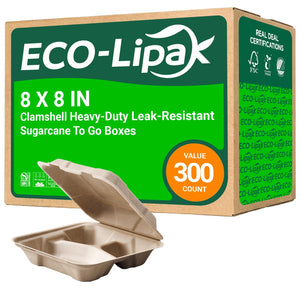
Quick Answer: Choose natural 8x8 three-compartment sugarcane clamshells when case efficiency and a kraft-colored presentation matter; choose white when a brighter plate-like presentation matters and a 200-count carton better matches your storage or weekly use. ECO-Lipak currently lists natural boxes at 300 per carton and white boxes at 200 per carton. Test one complete hot meal, the closed-box hold time, and the delivery route before buying by color or unit price alone.
Key Takeaways
- Both variants use the same practical 8x8-inch, three-compartment format for one entree and two sides.
- The natural carton contains 300 boxes; the white carton contains 200, so case price is not a fair comparison by itself.
- At prices listed on September 17, 2026, natural is about $0.30 per box and white is about $0.45 per box before freight and tax.
- Menu moisture, closure performance, storage space, and weekly turns matter more than color.
- BPI certification addresses commercial compostability; local acceptance still determines the correct disposal instruction.
A bulk takeout-container decision usually begins with the wrong number: carton price. A restaurant may see two nearly equal case prices and assume the choices cost the same. Here, the carton counts differ by 100 pieces. The useful comparison is cost per usable packed order, including damaged boxes, overfilled meals, storage, and the labor needed to keep the line supplied.
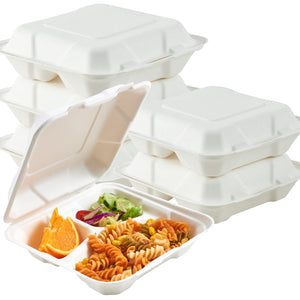
The ECO-Lipak wholesale 8x8 compartment clamshell is a square molded-sugarcane box with one large compartment and two smaller sections. The listing describes it as heavy-duty, leak-resistant, microwave- and freezer-safe, with white and natural variants for commercial food service. It is a divided clamshell, not a flat five-compartment cafeteria tray and not a single-compartment sandwich box.
White vs Natural: Case Math
| Variant | Carton Count | Listed Price | Approx. Unit Cost | Best Starting Fit |
|---|---|---|---|---|
| Natural | 300 | $90.99 | $0.30 | Higher weekly volume and fewer case changes |
| White | 200 | $89.99 | $0.45 | Lower storage commitment and brighter presentation |
Prices above were visible on September 17, 2026 and can change. They exclude shipping, tax, spoilage, and labor. Recalculate by dividing the live case price by the live carton count. Then add your damage allowance. A nominal 30-cent container becomes roughly 31 cents when three percent of stock is lost to crushed rims, poor storage, or line errors.

Calculate Cases From Packed Orders
Boxes needed = weekly packed meals x service weeks x (1 + waste rate). Divide that result by the carton count and round up. Keep a separate emergency reserve instead of hiding a large guess inside every order.
| Operation | Four-Week Demand | With 5% Reserve | Natural 300/Carton | White 200/Carton |
|---|---|---|---|---|
| Small cafe, 60 meals/week | 240 | 252 | 1 carton | 2 cartons |
| Meal-prep kitchen, 175/week | 700 | 735 | 3 cartons | 4 cartons |
| Caterer, 300 boxed meals | 300 | 315 | 2 cartons | 2 cartons |
The small cafe may prefer one natural carton because it covers the full month with a modest buffer. A white carton still may be right if white presentation is part of the brand, but two cartons use more cash and shelf space. For the caterer, two cartons are required either way, so presentation, remaining stock, and the next booked event become the deciding factors.
Three Real Buying Scenarios
1. A lunch counter packing rice plates
Put rice and protein in the large compartment and two drier sides in the smaller sections. Pack ten meals at normal speed, close each lid, stack them two high, and hold for the typical pickup window. Check whether steam softens the rim and whether sauce migrates across dividers. If the menu is very wet, a divided clamshell may still need a separate sauce cup.
2. A meal-prep business using cold storage
Load the exact chilled meal, refrigerate it for the normal hold period, and test the customer reheating instruction with the product label in hand. Do not convert a general microwave-safe statement into an unlimited time or temperature promise. Confirm that the lid opens cleanly after chilling and that the base supports the meal when carried from one corner.
3. A caterer choosing presentation
White gives the visual impression of a clean plate; natural makes the plant-fiber material more obvious. Photograph both under the venue lighting with the same food. For corporate boxed lunches, the less expensive natural case may free budget for labels or cutlery. For a bright wedding brunch, white may better fit the table even at a higher current unit cost.

Run a 30-Minute Receiving and Pack Test
- Measure the shelf and record how many full cartons fit without crushing.
- Inspect 20 boxes from different parts of the sample case for warped rims or stuck pieces.
- Pack your heaviest entree and two wettest sides at service temperature.
- Close, stack, carry, and hold the boxes for the longest normal delivery time.
- Open each box and score leaks, divider crossover, lid closure, base flex, and presentation.
- Record actual weekly use and set a reorder point from lead time plus reserve stock.
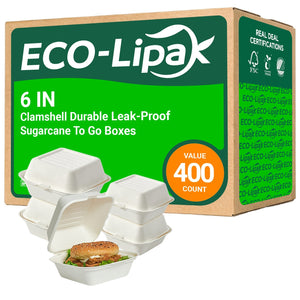
Buyers comparing a broader size range can review the takeout container collection. A six-inch box can reduce unused space for snacks, while a larger 9x6 format may suit long entrees. The 8x8 divided format earns its shelf space when a substantial share of the menu consistently needs three separated zones.
Compostability Is a Purchasing and Operations Decision
BPI explains its certification program for products intended for commercial composting. Certification does not guarantee that every city, hauler, or composting facility accepts every certified foodservice item. Before printing disposal language, ask the receiving program whether molded-fiber clamshells with food residue are accepted.
The U.S. EPA waste-management hierarchy places source reduction and reuse ahead of composting and disposal. For takeout operations where reuse is not practical, right-sizing the container and preventing food waste still matter. Pair the packaging purchase with clear sorting signs and a confirmed collection route.
Frequently Asked Questions
How many boxes are in each wholesale carton?
The current listing shows 300 natural boxes or 200 white boxes per carton. Confirm the selected variant before ordering.
What is the current cost per box?
Using September 17, 2026 list prices, natural is about $0.30 per box and white is about $0.45 before freight and tax.
Are these boxes single-compartment?
No. The referenced 8x8 clamshell has three sections: one larger entree compartment and two smaller side compartments.
Can they hold hot and cold food?
The product listing describes hot, cold, microwave, and freezer use. Test your recipe and follow the current package guidance for temperature and time limits.
Can the clamshells go in a home compost bin?
Do not assume so. Confirm the certification shown on the product and follow the rules of the local composting program that will receive the box.