Quick Answer: For a food truck, buy 2 oz sauce cups with lids by the number of orders that actually need a separate condiment. ECO-Lipak currently sells 200 matched cup-and-lid sets in one pack. Count one set for each sauce-bearing order, add a small working buffer for spills and replacement lids, and test the closed cup in the real takeout box before relying on it for delivery.
Key Takeaways
- The current lidded product is one 2 oz size and 200 matched sets, not an assortment of sizes.
- Forecast sauces by menu item; not every food truck ticket requires a sauce cup.
- Test the lid on a filled cup during normal handling, and keep cups upright in the takeout box.
- The product description distinguishes the cup's compostability claim from the lid's disposal instructions; check them separately.
When a lid is worth buying
A sauce served beside a seated guest may not need a lid. A sauce going through a crowded pickup counter, into a paper bag, and then into a car usually does. The extra component protects the meal from a small spill, but it also adds packing time. Before buying a bulk case, decide which menu items benefit from a separate, closed condiment. Dips for fries, dressing for a salad and salsa for a bowl may qualify; a sandwich already dressed at assembly may not.
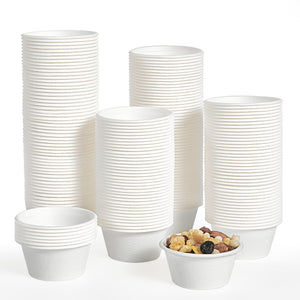
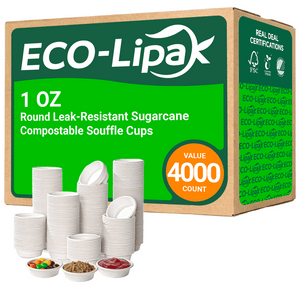
The ECO-Lipak 2 oz sugarcane portion cup with lid is a small round white molded-fiber cup with an opaque fitted lid. The current listing offers 200 sets. Treat that as 200 cups plus their matching lids, not 200 cups and an extra 200 standalone lids available for other vessels. Its size is intended for individual sauces, dips and small samples. If the menu needs a 4 oz dressing, changing the fill level of a 2 oz cup will not solve the capacity problem.

Turn tickets into a 200-set order
Suppose a food truck sells 85 meals a day across four service days. About 40% of orders receive a separate sauce. That is 34 lidded sauce cups a day, or 136 for the four-day run. A 10% working allowance brings the plan to about 150 sets, so one 200-set pack covers the run with roughly 50 sets left for the next booking. If 70% of orders need sauce, the same schedule calls for about 238 sets before buffer; one pack is not enough. The percentage should come from your own menu and ticket history, not a general rule.
| Service pattern | Expected lidded sauces | With 10% working buffer | 200-set purchase |
|---|---|---|---|
| One 80-order event, half need sauce | 40 | 44 | One pack leaves carryover |
| Four days, 85 orders/day, 40% need sauce | 136 | 150 | One pack covers the run |
| Four days, 85 orders/day, 70% need sauce | 238 | 262 | Two packs or different supply plan |
A buffer is for a realistic service risk, not a reason to overbuy indefinitely. Count sealed sets and loose working stock separately at close. Reorder when expected use before the next delivery plus the buffer exceeds usable sets on hand. For a new menu, try one pack and record actual consumption. For a recurring food truck route, consider whether a larger unlidded wholesale portion-cup format fits a different, on-site service workflow. Do not assume the new lidded cup's lid fits a separate unlidded range.
Three real food-truck cases
Burger and fries with dipping sauce
One 2 oz cup can carry an individual dip, but a customer buying two sauce flavors needs two sets unless one sauce is applied directly to the food. Put the closed cup upright beside the fries, not beneath a hot sandwich. Close the takeout box and gently tilt it as a customer might. If the lid shifts, change the packing method before ordering more cups.
Salad bowl with dressing on the side
A separate cup protects crisp greens until the customer is ready to eat. Check whether 2 oz is actually the recipe portion; some substantial salads need more dressing. A labelled or menu-specific sauce count helps staff avoid packing the wrong dressing. Pair the cup with the appropriate takeout container, but do not overstate leak resistance. Test the whole meal, not only an empty cup.
Event tasting station
At a supervised station, an open 1 oz or 2 oz cup may be enough and a lid may be unnecessary. If cups are prepared in advance or guests carry them away, a lid becomes useful. Compare the unlidded 1, 2 and 4 oz sugarcane cups for samples with different fill volumes. The right pack depends on whether the sauce travels and how much is actually served.

Material and disposal checks
The product listing describes the sugarcane cups as certified compostable where commercially accepted, but it specifically tells buyers to check the lid's material and disposal instructions on the packaging. Do not apply the cup's certification language automatically to the lid. Ask the local waste collector whether it accepts the exact used cup and lid. The U.S. EPA composting overview explains why local processing options matter, while ECO-Lipak's certification guide gives buyers a framework for checking finished products.
Operationally, buy the cup because it fits the 2 oz sauce, closes reliably in your packing test and supports the real order volume. Treat the environmental claim as a separate verification step. That is more useful than assuming any white fiber cup and lid can travel without leaks or go in any compost bin.
Frequently Asked Questions
Does one pack include lids?
Yes. The current product is sold as 200 cup-and-lid sets. Recheck the selected variant at checkout.
How many sets should I buy for 150 sauce orders?
One 200-set pack covers 150 planned cups and leaves 50 for replacements or the next service, assuming every order takes one set.
Is 2 oz enough for salad dressing?
Sometimes, but use your actual recipe portion to decide. If the serving exceeds 2 oz, choose a larger cup rather than overfilling.
Are the lids guaranteed leakproof in a delivery bag?
No. Test the filled, closed cup with the real meal and normal handling. Pack it upright.
Are cup and lid both accepted for composting?
Do not assume so. The listing distinguishes the cup claim from the lid instructions, and local collection rules decide acceptance.