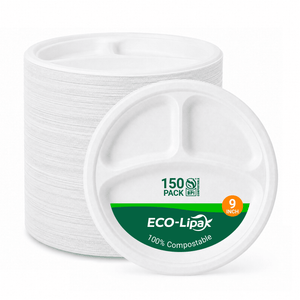
Quick Answer: Buy three-compartment plates for an office lunch only after testing the actual meal in a 9- or 10-inch round plate. ECO-Lipak's molded sugarcane range currently offers white 9- and 10-inch plates in 150-count boxes or 600-count cartons, and natural versions in 125-count boxes or 500-count cartons. A first-time caterer can test the smaller box; a recurring lunch program can calculate weekly meals and reorder from the carton. The purchase choice is size, color and expected servings, not the word compostable alone.
Key Takeaways
- Confirm the selected variant: white packs use 150/600 counts; natural packs use 125/500 counts for the current 9- and 10-inch options.
- Three compartments work when one main and two sides need meaningful separation, not when a menu needs five distinct portions.
- Trial the heaviest, wettest lunch before committing to a bulk carton.
- Count plated meals and a modest reserve; do not assume one plate per employee if attendance varies.
- These are open plates, not lidded takeout boxes. Test any separately sourced cover or carrier.
People searching for where to buy compostable three-compartment plates often already know the kind of lunch they want to serve. They need a trustworthy route from menu to SKU: which diameter, how many pieces, what a realistic test looks like and where to reorder. The ECO-Lipak three-compartment sugarcane plate listing is the direct product page; use its live variant selector before checkout because color and pack count change together.

Choose 9 or 10 Inches From the Meal
A 9-inch plate may suit a controlled lunch with a protein, starch and side. A 10-inch plate gives a larger entree or saucier food more working room. Neither size is automatically stronger simply because the diameter is larger. Test the finished plate with the actual food, utensils and carry distance. Keep sauce below the divider height; a divider is not a sealed wall.
| Current variant | Trial box | Bulk carton | When to test it |
|---|---|---|---|
| White 9 or 10 inch | 150 plates | 600 plates | Office meals with a consistent white presentation |
| Natural 9 or 10 inch | 125 plates | 500 plates | Service where natural fiber color matches the menu |
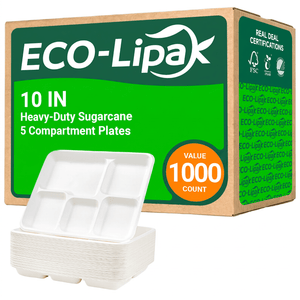
That table reflects the current available variants, not a guarantee of future stock. Price, shipping and availability should be checked on the selected SKU. A color change may affect your presentation, but it should not be treated as proof of a different disposal outcome. If the menu is a single sandwich with chips, a plain round sugarcane plate may be simpler. If five separate courses are truly needed, compare five-compartment wholesale plates rather than overfilling three sections.
Box or Carton: Work Backward From Attendance
Suppose a 45-person office serves lunch three times a week and 80% of staff attend each service. That is 36 plated meals per lunch, or 108 plates a week before guests and waste. A 150-count white box covers a little over one week. A 600-count white carton covers about five and a half weeks. If the office serves lunch only once a month, a carton may sit in storage too long to be convenient. If the caterer serves several offices, carton buying may make sense sooner.
Use this formula: expected plates = expected attendees x plate-taking rate x service dates + a deliberate reserve. Do not apply a generic ten-percent reserve automatically. A reliable RSVP list may need less; a self-serve buffet with walk-ins may need more. Keep a small record of plates actually used and damaged at each event, then revise the forecast. The most useful number for the next order is observed use per service, not an industry average.

Three Buying Scenarios
A cafe catering its first office lunch
Choose a 125- or 150-count box for the selected color and size, then test the menu at full temperature. Ask one staff member to carry the plate from the serving point to a seat. Check rim grip, sagging, food spill and whether the main portion crowds the sides. A trial is cheaper than discovering a poor fit after a 500- or 600-count carton arrives.
A recurring corporate lunch program
Attendance is predictable enough to plan multiple services. A bulk carton reduces reordering work if the size and menu have already passed the test. Set a reorder point from meals scheduled during the supplier lead time plus an agreed buffer. Keep open sleeves dry and clean; count usable stock rather than only sealed cartons.
A school or community buffet
Guests may carry food farther and may take seconds. Check the served portion and the walking route. A three-compartment plate can separate main and sides, but it does not prevent allergen cross-contact or replace food-handling procedures. If the meal requires a bowl for soup, count that separately instead of assuming the plate solves every course.
Set the Reorder Point
If a caterer uses 108 plates per week, delivery lead time is one week and it wants one additional week's cushion, reorder when usable stock falls near 216 plates. A white 600-count carton can then cover several weeks of repeat service. For natural 500-count cartons, the same trigger applies if demand is identical, but fewer plates arrive in each case. Include booked one-off events before calculating the next purchase. The exact reorder day depends on real delivery timing, so verify it with the seller.
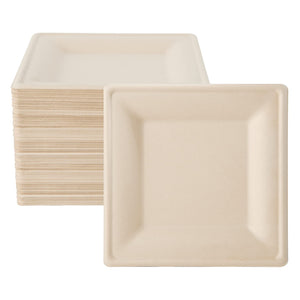
Compare cost per served meal, not only price per plate. If a plate is too small and staff use an extra dish, that second piece belongs in the comparison. If a larger plate leaves unused space but fits the menu safely, evaluate the total tradeoff rather than chasing the lowest piece price. A square plate option may be better when the food arrangement or tabletop space differs.
Material and Disposal Check
These plates are molded sugarcane fiber. Check the exact product's certification and confirm whether the receiving local composting program accepts food-soiled molded-fiber ware. The US EPA foodservice ware guidance helps buyers evaluate claims and disposal routes. Do not claim that every guest can put the plate in any curbside compost bin.
Browse ECO-Lipak's heavy-duty plate collection for alternatives. The earlier three-compartment selection guide covers general fit; this article focuses on the office-lunch purchase decision and available counts.
Frequently Asked Questions
Where can I buy compostable three-compartment plates?
ECO-Lipak's product page offers current white and natural molded sugarcane three-compartment variants. Choose diameter, color and pack count on the live listing.
How many plates are in a box or carton?
Current white 9- and 10-inch options have 150-count boxes and 600-count cartons; natural options have 125-count boxes and 500-count cartons.
Should an office caterer buy 9 or 10 inches?
Test the actual full meal in both sizes. Use the smaller size only if it leaves safe food spacing and a comfortable carry rim.
Do three-compartment plates include lids?
Do not assume a lid is included. They are open plates; verify a separate cover or carrier if takeout is required.
Are these plates accepted in every compost program?
No. Check the exact product and local facility acceptance before giving disposal instructions.