Quick Answer: Choose 4 oz white paper cups for espresso, tastings, and samples; 8 oz for short coffee or tea; 12 oz for the most flexible everyday hot-drink menu; and 16 oz for large drinks with milk, foam, or ice. In ECO-Lipak's current wholesale range, a 1,000-count carton costs $47.99 for 4 oz, $86.99 for 8 oz, $132.99 for 12 oz, and $139.99 for 16 oz. Start with the drink recipe and lid system, then compare unit cost, carton space, and weekly use.
Key Takeaways
- One cup size should correspond to a measured beverage recipe, not simply a menu label such as small or regular.
- Four-ounce cups have the lowest current unit cost, but they are designed for samples or compact drinks rather than standard coffee orders.
- Twelve-ounce cups are often the most flexible starting size; 16 oz needs a deliberate large-drink menu to avoid unnecessary product and ingredient cost.
- Lid fit follows rim diameter and profile, not ounce capacity alone. Test the exact cup-and-lid pair before ordering cartons.
- PLA-lined paper cups require a verified commercial composting route where accepted; do not direct them into paper recycling by assumption.
Wholesale buyers can lose money in two opposite ways: carrying too many cup sizes or forcing every drink into one size. Too many sizes create half-used cartons, matching-lid mistakes, and crowded storage. One size can make espresso service look wasteful, leave no room for a latte recipe, or encourage staff to overpour. The practical answer is a short cup ladder built from real recipes and order data.
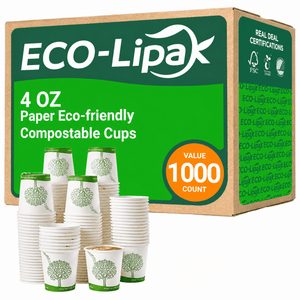
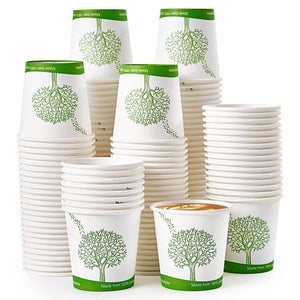
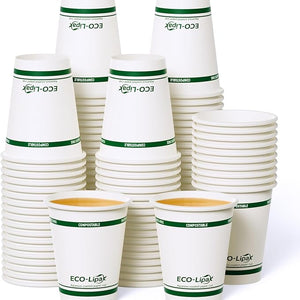
The ECO-Lipak wholesale white PLA-lined paper cup range currently includes 4, 8, 12, and 16 oz options. The cups are white with a green tree design. They are paper cups with a PLA lining, not uncoated paper and not clear cold-drink cups.
Wholesale Size and Cost Comparison
| Size | Wholesale Count | Listed Price | Approx. Cost Each | Best Starting Use |
|---|---|---|---|---|
| 4 oz | 1,000/carton | $47.99 | $0.048 | Espresso, tastings, samples |
| 8 oz | 1,000/carton | $86.99 | $0.087 | Short coffee, tea, kids' drinks |
| 12 oz | 1,000/carton | $132.99 | $0.133 | Standard coffee, tea, and lattes |
| 16 oz | 1,000/carton | $139.99 | $0.140 | Large drinks and foam-heavy recipes |
Prices above were visible on September 20, 2026 and can change. They exclude shipping, tax, lids, sleeves, beverage ingredients, and loss. The 4 oz size is also listed in a 2,000-count carton at $89.99, or about 4.5 cents per cup. The 8 oz size has an 1,800-count carton at $149.99, or about 8.3 cents per cup. Larger counts improve current unit cost modestly, but only if the operation has reliable turnover and dry storage.

Build the Cup Ladder From Recipes
Pour each menu recipe into a measuring pitcher before testing it in the cup. Leave room for milk, foam, toppings, and a properly seated lid. A nominal 12 oz beverage should not require staff to fill liquid to the rim. The correct cup has enough headspace to close, carry, and hand off without spills.
- List every drink and its finished liquid volume.
- Add the normal foam, ice, garnish, or topping allowance.
- Test the recipe in the two closest cup sizes.
- Install the intended lid and carry the drink along the real customer route.
- Record waste, spills, overpouring, and customer requests for a different size.
- Keep only sizes that solve a repeated menu need.
A four-size program is not automatically better. A bakery may need 4, 8, and 12 oz but have no large drinks. A commuter cafe may make 12 and 16 oz the core range and keep 4 oz only for samples. A conference caterer may standardize on 8 and 12 oz to simplify mobile service.
Three Real Buying Scenarios
1. A bakery adding espresso and coffee samples
The bakery serves espresso and occasional seasonal tastings. A 4 oz cup prevents a two-ounce sample from looking lost inside a standard cup. At 120 uses per week, a 1,000-count carton covers roughly eight weeks before reserve stock. The buyer should confirm that this turnover fits the storage plan before choosing the 2,000-count carton for a lower unit price.
2. An office coffee bar with one daily size
An office wants fewer supply errors and mostly serves drip coffee and tea. The team tests 8 and 12 oz. If employees regularly add milk and leave room at the top, 12 oz may prevent overfilling. If the dispenser is calibrated for a smaller pour, 8 oz can reduce abandoned coffee. The final choice should follow actual dispense volume rather than preference surveys alone.
3. A cafe offering regular and large lattes
The cafe can use 12 oz for its regular latte and 16 oz for its large. Staff should cost the extra milk and syrup alongside the seven-tenths-of-a-cent difference between the current cup prices. Packaging cost is only one part of the menu margin. A higher-priced drink must cover the full recipe, lid, sleeve, labor, and waste.

Calculate Cartons and Reorder Points
Monthly cups needed = average daily drinks x operating days x (1 + reserve rate). Divide that result by the carton count and round up. Then subtract usable stock already on hand.
| Daily Use | 30-Day Demand | With 5% Reserve | 1,000-Count Cartons |
|---|---|---|---|
| 25 cups | 750 | 788 | 1 |
| 60 cups | 1,800 | 1,890 | 2 |
| 140 cups | 4,200 | 4,410 | 5 |
For a reorder point, multiply average daily use by supplier lead-time days, then add reserve stock. If a cafe uses 80 twelve-ounce cups per day, lead time is seven days, and reserve is four days, reorder at about 880 cups. That is close to one full carton, making stock checks simple.
Check Lids, Sleeves, and Storage Before Ordering
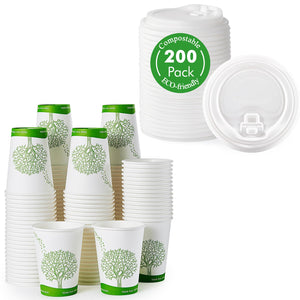
Ounce size is not a lid specification. Measure or confirm the rim diameter for every cup and test the exact lid. Press around the full rim, carry a filled cup, and check for sections that lift. The compostable cup collection can help buyers compare cups and coordinated formats, but the received cup-and-lid combination still needs a physical fit test.
Measure shelf depth and carton footprint. Store paper cups covered, dry, and away from heat or moisture. Keep sleeves in their original size lane and use older stock first. A small working sleeve at the counter is easier to control than multiple open sleeves.
What PLA Lining Means for Disposal
PLA lining helps a paper cup resist liquid, but it also means the cup is not simply plain paper. BPI explains that certified compostable products are evaluated against commercial composting standards. Certification and local acceptance are separate questions: verify the exact item, then ask the receiving composting program whether it accepts lined paper cups with beverage residue.
The FTC summary of the Green Guides recommends qualifying compostable claims when appropriate facilities are not widely available. Use clear sorting language such as “Commercial compost where accepted” only when it matches the purchased product and local route.
Wholesale Cup Purchase Checklist
- Map every size to a measured beverage recipe.
- Calculate live cost per cup from carton count and current price.
- Test rim fit with the exact lid before ordering cartons.
- Check cup, lid, and sleeve storage as one system.
- Set a reorder point from actual daily use and lead time.
- Confirm the disposal route before printing environmental claims.
Frequently Asked Questions
Which paper cup size is best for regular coffee?
Twelve ounces is a flexible starting point for many standard coffees and teas, but the best size is the one that fits the measured recipe with safe headspace.
What is the current wholesale cost per cup?
At September 20, 2026 prices, the 1,000-count options are about 4.8 cents for 4 oz, 8.7 cents for 8 oz, 13.3 cents for 12 oz, and 14 cents for 16 oz before shipping and tax.
Do all 12 oz paper cup lids fit every 12 oz cup?
No. Fit depends on rim diameter and profile, not ounce capacity. Test the exact cup-and-lid combination.
Can PLA-lined paper cups go in paper recycling?
Do not assume so. The lining can make the cup incompatible with a paper recycler. Follow the instructions of the local receiving program.
Should a small business buy the largest carton?
Only when demand, storage, and cash flow support it. A slightly lower unit price is not a saving if cups are damaged, misplaced, or held without a clear turnover plan.