Quick Answer: A 32 oz sugarcane bowl can work well for family-style takeout when one order needs a generous shared component, but 32 oz is a nominal container volume, not a guaranteed serving count. Pack the actual recipe, leave practical headspace, test the lid and journey, then calculate complete 70-count boxes from the number of bowls used per order.
Key Takeaways
- Choose a 32 oz bowl for the food's volume and movement, not because the number automatically equals a family portion.
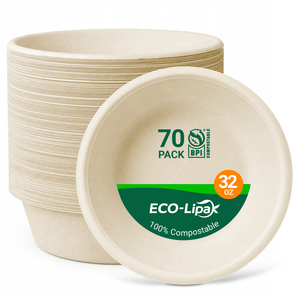
- ECO-Lipak's current sale listing contains one natural 32 oz, 70-per-box variant.
- Count bowls per family bundle, add a stated reserve, and round up to complete boxes.
- Test the finished food, lid, carrying bag, and expected hold time together.
- Keep hot and cold items in separate trials, even when they use the same bowl.
Family-style takeout is different from an individual grain bowl. The customer may open several containers at once, place them in the middle of a table, and serve portions over time. That makes capacity important, but it also makes stability, headspace, lid fit, and the shape of the full bundle important.
A deep bowl can make shared salads, grains, roasted vegetables, pasta, or dry sides easier to pack. It can also be the wrong choice for a shallow composed dish that needs a wide presentation surface. The healthy habit here is simple: let the menu determine the container, then let the forecast determine the box count.
What the 32 oz Listing Actually Says
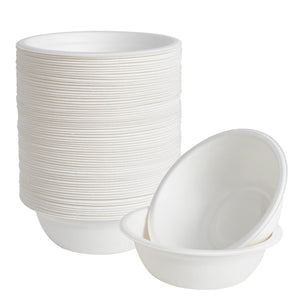
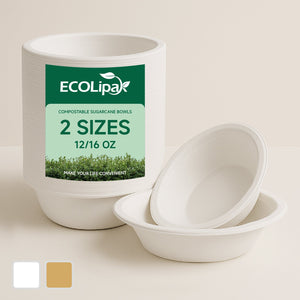
The 32 oz natural sugarcane bowl is currently offered as 70 bowls per box. The broader 12 to 32 oz sugarcane bowl range also lists natural 32 oz bowls at 70 per box and 560 per carton, alongside smaller capacities.
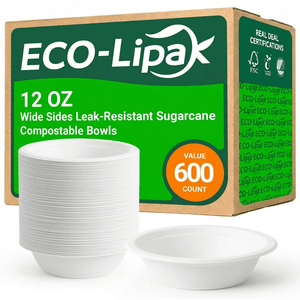
That distinction matters. A kitchen trialing a new family bundle may prefer 70 units. A stable, high-volume program may compare the carton option. Availability and sale pricing can change, so this article does not assume a promotion will continue or that today's variant will always be the right ordering format.
| Menu component | Why 32 oz may help | What to test | Possible alternative |
|---|---|---|---|
| Shared grain entree | Depth supports a generous mixed portion | Settling, sauce distribution, and serving access | Smaller individual bowls |
| Family salad | Room for leaves and toppings without tight compression | Lid clearance and dressing strategy | Wide-rim bowl for a shallower presentation |
| Roasted vegetable side | One container can replace several small portions | Steam, hold time, and movement in transit | Multiple 12 or 16 oz bowls |
| Pasta or cold noodle dish | Useful for a shareable component | Actual packed weight and utensil access | Clamshell when a flatter layer works better |
Do not publish a fixed “serves four” statement based only on ounces. Recipes have different densities, and diners have different needs. Define the target portion by the food's measured weight or kitchen scoop standard, then verify how that portion sits in the bowl.

Build a Family-Bundle Pack Test
- Pack the normal recipe. Use the real cooked food, dressing, garnish, and serving utensil plan.
- Mark the practical fill. Leave enough headspace for the lid and for food movement during transport.
- Close and carry the complete bundle. Put every bowl, side, napkin, and utensil in the intended bag or box.
- Wait for the expected journey. Check the food at pickup time and again after the normal delivery or drive.
- Open it as a customer would. Confirm that lids release cleanly and shared dishes can be served without awkward handling.
Use product instructions for applicable food and temperature limits. Food safety depends on time, temperature, preparation, and storage practices, not the bowl alone. The FDA's food storage guidance offers consumer-oriented reminders about safe refrigeration and handling; a food business should also follow its local food code and operating procedures.
Turn Family Orders Into 70-Count Boxes
Count the number of 32 oz bowls used in one sellable bundle. Then use:
Boxes needed = ceiling of [forecast bundles x 32 oz bowls per bundle x (1 + chosen reserve rate) divided by 70].
Suppose a weekend forecast calls for 120 family bundles. Each includes two 32 oz bowls, and the operation chooses a 10% reserve:
120 x 2 x 1.10 = 264 bowls. Four boxes provide 280 bowls, leaving 16 after the forecast.
If the same bundle uses only one 32 oz bowl, the result changes to 132 bowls, or two boxes with eight remaining. If a second dish sometimes upgrades to a large bowl, forecast the base bundle and upgrade separately instead of hiding two demand patterns in one average.

Four Ways to Use the Bowl Deliberately
Shared Salad With Dressing Separate
Pack leaves, vegetables, grains, and toppings with enough room to avoid crushing. Keep dressing in a tested portion container when the expected journey would make a dressed salad wilt. A wide presentation may call for the wide-rim sugarcane bowl range instead.
Office Team Lunch
Label the outer bag or use an order sheet to keep vegetarian, allergen-managed, or separate team bundles organized. A disposable compartment or separate container can support organization, but packaging never replaces allergen controls in preparation and service.
Warm Grain and Roasted Vegetable Bundle
Test the full hold time and do not trap more steam than the food can tolerate. If crisp and moist components behave differently, pack them separately and let the customer combine them. The article on food moisture and takeout packaging provides a useful comparison framework.
Buffet Replenishment
A 32 oz bowl may suit a small satellite table or a controlled refill batch. It should not be treated as a substitute for temperature control or a commercial serving pan. Prepare smaller replenishment quantities and follow the event's food-safety plan.
Plan the End of the Meal Too
The exact product listing provides certification and material information for the bowl. Disposal still depends on the receiving system. The EPA food-service ware guidance asks buyers to consider reuse where an effective system exists and to align compostable items with available collection and processing.
Ask the local facility whether it accepts this exact product category and food residue. Give diners clear instructions only after that answer is known. Certification documents should be matched to the exact item through the ECO-Lipak resource library.
FAQ
How many people does a 32 oz bowl serve?
Ounces describe nominal container volume, not a fixed number of people. Test the specific recipe and define a measured kitchen portion for the intended bundle.
How many 32 oz bowls come in the current sale box?
The current sale listing shows one natural 32 oz option with 70 bowls per box. Recheck the selected variant before ordering because availability can change.
Can 32 oz sugarcane bowls hold hot food?
Follow the exact product instructions and test the real food for its expected service time. Packaging does not replace safe time and temperature controls.
Should dressing or sauce go in the same bowl?
That depends on the food and journey. Separating dressing can protect texture; a moderately saucy grain dish may work after a successful hold-and-carry test.
Can used sugarcane bowls be commercially composted?
Only where the receiving program accepts the exact item and its residue. Certification is important, but it does not create local collection access.