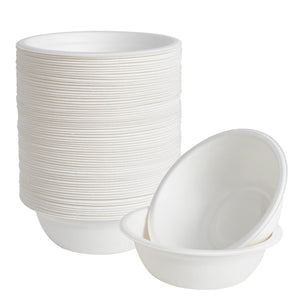
Quick Answer: An 8 oz sugarcane bowl can work well for a breakfast bar serving yogurt, cut fruit or a modest combination of both. The important test is not whether the bowl can hold eight fluid ounces to the rim; it is whether a guest can add toppings, carry it, and use a spoon without spilling. ECO-Lipak's 8 oz white sugarcane bowls come in 150- and 300-count options, so a real portion trial should come before the pack-size decision.
Key Takeaways
- Use the 8 oz label as a starting point. Leave headspace for fruit, granola and a spoon rather than filling the bowl to its nominal capacity.
- Test the complete menu, including any juicy fruit or chilled yogurt, in the actual bowl during the length of your service.
- Calculate a separate bowl for each expected serving, then allow a reasonable buffer before choosing a 150- or 300-count pack.
- Check the local composting route before promising guests that used bowls will be composted.
Why the Small, Shallow Shape Matters
A breakfast buffet asks a bowl to do several jobs quickly. It needs to show colorful food clearly, give a guest room to scoop from the topping station and feel steady on a crowded tray. The ECO-Lipak 8 oz option is a shallow, round white molded-fiber bowl, not a deep soup container. That shape suits a small portion of yogurt or fruit and makes toppings visible; it can also be less forgiving when someone tries to build a tall parfait above the rim.
Pouring eight ounces of liquid into an empty bowl is not a useful service test. Breakfast portions include solids and a spoon, and guests move between tables. Start with your usual scoop of yogurt, add the usual fruit and granola, then lift the bowl from the buffet as a guest would. If fruit rolls over the edge or the spoon has no room to move, reduce the portion or choose a larger bowl from the compostable bowl collection. A bowl that looks generous in an empty product photo may feel tight once your actual recipe is inside it.

Run a Breakfast Fit Test Before Ordering
Build three sample bowls: the lightest guest portion, the normal portion and the most topping-heavy portion. Set each on the trays or plates your service uses. Let them stand for the period a bowl might sit after guests serve themselves, then check the base and sidewall for softening, moisture transfer and comfortable handling. The result is a menu-specific observation, not a blanket claim that any molded-fiber bowl is leakproof for every food or duration.
Next, ask a team member to carry a bowl from the service counter to a table while holding a cup or tray. This simple walk exposes whether the rim gives enough grip and whether fruit or granola is piled too high. For grab-and-go breakfast, also test the transport container and any separate lid; do not assume a lid fits this bowl unless the product listing names that exact pairing. Cold foods should remain under the food-safety controls required for your operation, regardless of the serving bowl material.
| Menu item | 8 oz bowl trial | Consider a larger bowl when... |
|---|---|---|
| Yogurt with a few berries | Check spoon room and a dry, secure carry | Guests routinely add several toppings |
| Cut fruit cup | Check juicy fruit and movement on a tray | The fruit portion rises above the rim |
| Granola and milk | Test the actual serving time and liquid level | The menu needs a full cereal portion |
| Breakfast salad or oats | Check portion volume and temperature needs | It is intended as a full meal rather than a side |
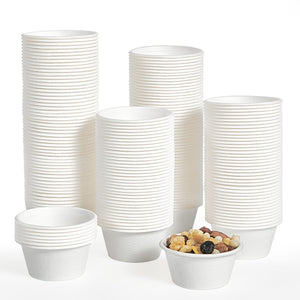
If the trial points to a bigger serving, compare the larger sugarcane bowl range instead of asking an 8 oz bowl to do the work of a meal bowl. Small sugarcane portion cups can keep dressing, honey or toppings separate when self-serve guests want choice, but check the exact portion-cup capacity too.
How Many Bowls Should You Buy?
Count servings rather than seats. If nearly every guest takes one yogurt or fruit serving, one bowl per expected breakfast guest is a sensible starting estimate. If your buffet offers both fruit and yogurt as separate courses, some guests will take two bowls. Watch one comparable service, record actual bowl use and use that rate for future orders. A 10% contingency is a practical planning example for dropped bowls, unexpected guests or a busier-than-usual morning; your own history should replace it when available.
Example: For 100 expected guests taking one bowl each, 100 × 1.10 = 110 bowls. The 150-count option covers that single service with 40 left. For 200 guests at the same rate, plan 220 bowls, so the 300-count option is a closer fit. If 25% of guests are likely to take a second bowl, add that second-serving estimate before the buffer. Don't assume a 300-count box is better value without checking your price, storage space and the number of upcoming breakfasts.

Three Ways the Choice Plays Out
1. Hotel Breakfast Buffet
A hotel may offer several toppings and a long, open service window. Put sample bowls beside the real topping spoons and watch whether guests can add fruit without crowding the rim. Calculate bowls per occupied room only after you understand how many guests eat breakfast and how many return for seconds. Keep unopened backup stock near the service area, not on the display counter.
2. Office Wellness Breakfast
For a short, scheduled office gathering, individual bowls can keep the line moving. One serving of yogurt and berries may be plenty; a full overnight-oats meal may not be. Put napkins where guests pick up bowls and make sure the tray or desk surface supports the serving. A small pack may suit a single meeting, while repeated weekly events may justify a 300-count box.
3. Weekend Brunch or Tasting Table
A tasting portion is often smaller than a full breakfast bowl. Here the shallow 8 oz shape can present fruit clearly without covering most of the table. Test juicy toppings and the time between plating and pickup. If hosts want guests to take a generous build-your-own parfait away from the station, choose more headroom rather than relying on a delicate stack of toppings.
What About Composting and Material Claims?
Sugarcane fiber is a plant-based material, but that fact alone does not establish a local disposal route. The EPA's food-service-ware guidance prioritizes reusable service where collection and washing are practical, and says compostable serviceware should match a program that accepts it. If you operate a dishwashing system and guests dine in, consider reusable bowls first. If disposable bowls are the operational fit, confirm what your hauler accepts and give guests the correct collection instructions.
Review the product listing's current material and certification details when you place the order; don't infer microwave, freezer or long-hold suitability from “sugarcane” alone. Food contact, serving temperature and holding duration are separate questions. The tableware material guide can help staff understand the available materials without replacing a trial with your own menu.
Frequently Asked Questions
Is an 8 oz bowl big enough for yogurt and fruit?
Often for a modest single serving, yes. Use your normal scoop and toppings in the actual bowl. Leave room at the rim so guests can carry and eat without spills.
Should I order 150 or 300 bowls?
Estimate expected bowl use, allow a small buffer and compare with the two pack sizes. A 100-guest, one-bowl service with 10% reserve needs about 110 bowls; a 200-guest service needs about 220.
Can I use this bowl for a full breakfast meal?
It depends on the menu. A shallow 8 oz bowl may be too small for a full cereal, oats or grain-bowl meal. Trial the plated portion or select a larger bowl.
Will the bowl hold juicy fruit?
Test the exact fruit mix and the expected time before eating. A short buffet serving is different from packing fruit hours ahead; avoid assuming all foods behave alike.
Can used sugarcane bowls go in any compost bin?
No. Ask your collector which food-soiled serviceware it accepts. Keep used bowls out of a stream that does not accept them.