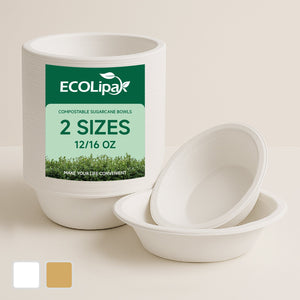
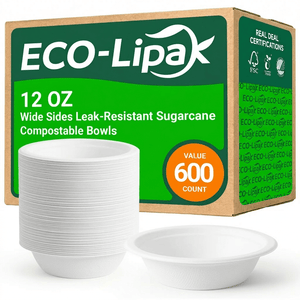
Quick Answer: For a Halloween chili bar, choose 12-ounce wide-rim sugarcane bowls when guests are tasting several dishes or returning for small refills; choose 16-ounce bowls for a fuller single serving with toppings. ECO-Lipak sells both sizes in white or natural color, with 150-count boxes and 600-count cartons. Estimate one bowl per first serving plus realistic refills, then add a small service reserve before ordering.
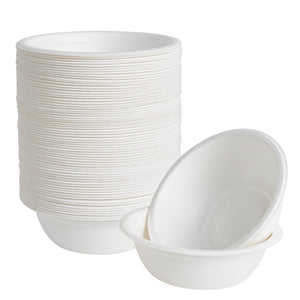
A chili bar looks relaxed only when the practical details are settled. People need room for beans, vegetables, toppings, and a spoon; the host needs enough bowls without an entire carton left in the garage. The 12- and 16-ounce wide-rim sugarcane bowls are shallow, broad bowls rather than tall soup cups. That shape makes them comfortable for a ladle-and-topping station, but it also means you should trial your actual serving size before deciding how many to buy.
Key Takeaways
- 12 oz works best for tasting portions, children, or a menu with several dishes; 16 oz gives a fuller chili-and-toppings serving.
- Nominal capacity is not a target fill line. Leave enough clear rim for carrying and topping without slosh.
- Plan bowls as guests × expected bowls per guest, then add a reserve for dropped bowls and late arrivals.
- The listed variants include white and natural colors in both sizes, sold as 150/box or 600/carton. Verify the exact option at checkout.
- Keep hot food at safe serving conditions and confirm local collection rules before promising guests the bowls can be composted.
What 12 oz and 16 oz Mean at a Chili Station
The difference is four fluid ounces of nominal volume, not a command to fill either bowl to its edge. Chili with beans and chunky vegetables does not flow like water; toppings need vertical space too. In a dry run, serve the portion you actually want people to eat, add the largest likely topping combination, then carry the bowl a few steps. If the surface reaches the rim, step up a size or reduce the ladle portion.
A 12-ounce bowl can encourage a sample-first rhythm when there is also soup, cornbread, fruit, or dessert. A 16-ounce bowl is more forgiving when chili is dinner. Neither is automatically better for children: serving utensils, table height, and a nearby place to set the bowl matter as much as capacity. The wide edge helps handling, but it is not a spill-proof feature. For a very brothy soup, test the route from pot to seating before committing to a large event order.

Count First Servings, Refills, and Reserve
A simple purchase plan starts with the number of people expected to eat. Multiply by bowls used per person, not just invitations sent. If the event offers one full dinner bowl and guests usually keep that same bowl for seconds, the count may be close to attendance. If you ask guests to take a fresh bowl for each return, or offer a separate soup, the count rises. Use the table below as a scenario, not a guarantee.
| Event pattern | Planning count | Likely order | Check before purchase |
|---|---|---|---|
| 60 guests, chili as one main dish | 60 first bowls + 20 refills + 10 reserve = 90 | One 150-box | Whether guests reuse bowls safely |
| 120 guests, chili and soup tasting | 120 × 2 bowls + 20 reserve = 260 | Two 150-boxes | Separate bowls for the two foods |
| 400 guests across several service waves | 400 first bowls + 120 second bowls + 40 reserve = 560 | One 600-carton | Actual arrival and refill forecast |
The reserve amounts above are planning assumptions. For a school event, separate adult and child portion estimates; for a ticketed fundraiser, use registration and past no-show data. A 600-carton may be efficient for a large service team, but storing excess bowls through another season is not automatically good value. Check the live product's pack and color options before ordering; the related wholesale 600-carton listing is useful when multiple stations need the same bowl.
Three Halloween Setups That Change the Decision
Neighborhood porch dinner before trick-or-treating
Guests may eat standing up while juggling coats and treat bags. Choose a portion that can be carried without liquid near the rim. A 16-ounce bowl might be right for a true dinner serving; a 12-ounce bowl works if you offer small tastes and seating. Put toppings on a stable table rather than asking guests to carry a full bowl around the yard.
School or community tasting table
Several recipes and dietary choices make smaller samples sensible. The 12-ounce size gives room for a restrained scoop and toppings without implying everyone needs a full dinner bowl for each recipe. Count the number of recipes sampled per guest and whether a new bowl is required for allergen or hygiene reasons. Keep recipe labels near the food; the bowl material itself does not solve ingredient communication.
Fundraiser serving hundreds over two hours
Here the limiting factor is often restocking. Confirm a 600-carton can be stored beside the service area without crowding food prep, then stage small stacks for each wave. The wide-rim bowl may reduce fumbling at the ladle station, but a dry run with the actual ladle and toppings still matters. Do not compare carton quantities alone; consider queue flow and how many bowls get taken per guest.

Make the Station Easier to Use
Place empty bowls before the food, then ladles, then toppings, napkins, and a clear place to put used serviceware. This lets a guest hold a stable bowl before choosing additions. Keep the backup stack out of the splash zone. For a very wet chili, start with less liquid and let a guest request more. A shallow bowl supports an attractive presentation, but it does not become a sealed transport container.
Do not use the bowl as a hot-holding device. Keep the chili in suitable hot-holding equipment and serve portions as guests arrive. At the end, separate untouched spare bowls from used ones so inventory stays clean. The compostable bowl collection covers other formats if your menu includes larger salads or deeper soups, while the tableware material guide explains the material distinction.
Be Precise About Disposal
The product listing describes these sugarcane-fiber bowls as BPI certified and PFAS-free. If your venue has an organics program, ask its hauler whether used food-service bowls are accepted, including bowls with chili residue. The EPA's food-service ware guidance stresses considering the real collection pathway. A “compostable” claim does not mean a bowl belongs in curbside paper recycling or that every backyard pile can process it. For certification details, use the ECO-Lipak certification guide and confirm the exact item if your buyer requires documentation.
Frequently Asked Questions
Are 12-ounce bowls enough for Halloween chili?
They can work for smaller tasting portions. Test your actual ladle, chunky ingredients, and toppings; leave clear space below the rim.
Should I order white or natural bowls?
Both colors are listed in 12- and 16-ounce options. Choose for presentation and availability, not an assumed difference in capacity or performance.
How many bowls should I buy for 100 guests?
Estimate bowls per eater first. At 1.2 bowls each plus roughly 10 spare, plan around 130 bowls; one 150-box may fit. A tasting menu can require more.
Can these bowls hold hot chili?
The product describes hot-food use, but test a freshly served portion for handling comfort and leakage. Keep the hot food in appropriate serving equipment until plated.
Does a BPI claim mean the used bowls go in any compost bin?
No. Verify the exact certification and local collector acceptance. Compostable food-service ware should not be mixed into ordinary paper recycling.