Quick Answer: The best value paper towels are the rolls that deliver the lowest cost per useful cleanup, not necessarily the lowest shelf price. Compare price per sheet, then test how many sheets you actually use on water, food spills, greasy counters, and lint-sensitive surfaces. For many homes, an 8-roll bamboo pack is the practical trial size; a 32-roll carton makes more sense after the towel has proved its value and the household has dry storage.
Families searching for cheap paper towels often encounter comparisons based on pack price or price per roll. Those numbers are easy to calculate, but they miss the part that changes the monthly budget: weak towels can require several sheets for one job. This updated guide keeps the original family-value focus while giving shoppers a repeatable way to compare kitchen paper towels by the work they complete.
Key Takeaways
- Start with cost per sheet, then multiply by the average sheets used per cleanup.
- Wet strength, absorbency, sheet size, and lint can matter more than the roll count printed on a pack.
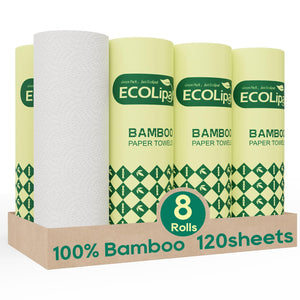
- ECO-Lipak's natural and white bamboo kitchen rolls are 2-ply and list 120 sheets per roll.
- The 32-roll cartons lower the current cost per roll, but only save money when stock is used before it is damaged or overconsumed.
- Used paper towels do not automatically belong in recycling or compost. Follow the local program and the contamination level.
Compare Cost per Sheet and Cost per Cleanup
Use two formulas:
Cost per sheet = pack price ÷ total sheets in the pack.
Cost per cleanup = cost per sheet × average sheets used for that task.
At prices checked in September 2026, the unbleached bamboo paper towels cost $26.99 for 8 rolls or $93.99 for 32 rolls. With 120 sheets per roll, that is approximately 2.8 cents per sheet in the 8-roll box and 2.4 cents in the 32-roll carton. The carton saves roughly half a cent per sheet, but a household still needs to test how many sheets each cleanup consumes. Prices can change, so recalculate from the live listing.
| Format | Pack details | Current planning cost | Best use case | Watch for |
|---|---|---|---|---|
| Natural unbleached bamboo | 2-ply, 120 sheets per roll; 8 or 32 rolls | About $3.37 or $2.94 per roll | Daily kitchen spills, counters, food prep cleanup | Buy the carton only with dry storage |
| White bamboo | 2-ply, 120 sheets per roll; 8 or 32 rolls | About $3.12 or $2.78 per roll | Glass, guest-facing kitchens, lint-conscious wiping | Appearance may matter less for routine spills |
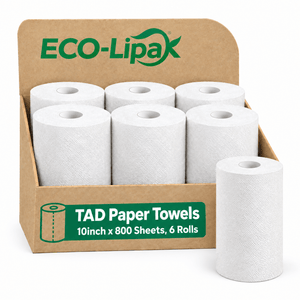
| Commercial TAD roll | 10-inch roll, 800 sheets; 6 rolls per box | 4,800 sheets per box | Compatible automatic dispensers and high traffic | Confirm dispenser fit before ordering |
The table does not rank one format as universally best. A household roll and a commercial dispenser roll solve different problems. Even a low cost per sheet is poor value if the roll does not fit the holder, leaves lint on the target surface, or disappears because users pull more than needed.

Run a Seven-Day Home Test
- Write the start date inside the cardboard core of a fresh roll.
- Use the towel normally for seven days, but count sheets for three common jobs.
- Record small water spills, food-prep wipes, and one tougher greasy cleanup separately.
- Note tearing, pilling, lint, and whether a half-sheet would have been enough.
- Compare the roll's remaining diameter and total sheets used with a second product the next week.
A simple test is more useful than arguing about the cheapest roll. If Product A costs 2 cents per sheet but needs three sheets for a common spill, the task costs 6 cents. If Product B costs 2.8 cents per sheet and finishes with one sheet, the apparently more expensive towel costs less for that job.
What Features Matter Most?
Absorbency
Absorbency affects how much liquid one sheet can lift before it is replaced. Test with the same amount of water on the same counter. Do not use a dramatic oversized spill that does not resemble normal household use.
Wet strength
A towel that breaks apart while wiping a sink edge or lunchbox can require extra sheets and leave fragments behind. Wet one sheet, fold it once, and wipe a textured surface with normal pressure. Record whether it stays intact.
Lint
Visible fibers matter on dark plates, glass, stainless steel, and food-prep surfaces. The white 2-ply bamboo kitchen towel is positioned for soft, lint-free use, while the natural unbleached option emphasizes everyday strength and absorbency. Choose based on the work, not color alone.
Pack size and storage
A 32-roll carton can lower the cost per roll, but it occupies about four times the roll count of an 8-roll box. Store paper towels in a dry, clean cabinet away from plumbing leaks, strong odors, and floor contact. Assign one shelf so bulk stock does not spread through the house and become difficult to count.
Three Real-World Scenarios
1. A busy family kitchen
Breakfast, school lunches, produce washing, and pet bowls create many small spills. Start with the 8-roll natural bamboo box and track one week. If the family uses the product consistently and has a dry shelf, the 32-roll carton reduces reorder frequency and the current cost per roll.
2. A home that cleans glass and stainless steel often
Lint and finish may matter as much as absorbency. Compare one natural and one white sheet on a dark glass surface. Use the option that leaves fewer visible fibers with the least wiping. A reusable microfiber cloth may still be the better choice for routine dry polishing.
3. A small office with an automatic dispenser
Do not substitute a household roll by guesswork. The 10-inch by 800-sheet TAD commercial roll is sold as six rolls for compatible automatic dispensers. Verify roll width, core, diameter, and dispenser specification before purchasing. Controlled dispensing can reduce over-pulling, but only when the roll fits and the sensor settings suit the space.

How to Save Without Buying the Weakest Towel
- Use washable cloths for routine dry dusting and low-risk counter wiping.
- Reserve paper towels for food-contact cleanup, grease, pet messes, and jobs where laundering is impractical.
- Keep the roll within reach but use a holder that tears cleanly, reducing accidental extra sheets.
- Test an 8-roll box before buying 32 rolls of an unfamiliar towel.
- Reorder from actual weekly use instead of waiting for an emergency convenience purchase.
The U.S. EPA's waste management hierarchy prioritizes source reduction and reuse before recycling. In practice, that means using the smallest number of sheets that safely completes the task and choosing a washable tool when it is appropriate.
Disposal: Keep the Claim Specific
Clean paper products and food-soiled towels may follow different local rules. Do not place used paper towels in curbside paper recycling unless the local collector specifically accepts them. Some organics programs accept certain food-soiled paper; others do not. The EPA composting overview notes that accepted feedstocks vary by facility and should be free of contaminants.
A material claim such as bamboo does not determine the disposal route by itself. Cleaning chemicals, grease, bodily fluids, and local processing rules all matter. When no accepting organics program exists, follow municipal trash guidance rather than wish-cycling.
Frequently Asked Questions
What is the best value paper towel for a family?
It is the towel with the lowest cost per useful cleanup for that family's common tasks. Compare price per sheet, absorbency, wet strength, lint, and sheets used rather than relying on roll price alone.
Are bulk paper towels always cheaper?
A larger carton often lowers the unit price, but not always the household cost. Include storage, damage, overuse, cash tied up in inventory, and whether the towel has already passed a home test.
How many sheets are in an ECO-Lipak bamboo kitchen roll?
The natural unbleached and white 2-ply bamboo kitchen towel listings each state 120 sheets per roll. Recheck the live product page in case specifications change.
Are bamboo paper towels food safe?
The ECO-Lipak natural and white kitchen towel listings describe them as food safe. Use a fresh sheet, follow normal kitchen hygiene, and avoid reusing a sheet across raw and ready-to-eat food areas.
Can used paper towels be recycled?
Usually not through conventional paper recycling, especially when wet or contaminated. Follow the local collector's list rather than placing them in the recycling bin by assumption.
Should I buy 8 rolls or 32 rolls?
Buy 8 rolls when testing the towel, when use is light, or when storage is limited. Buy 32 after confirming performance, weekly demand, and a dry storage location.