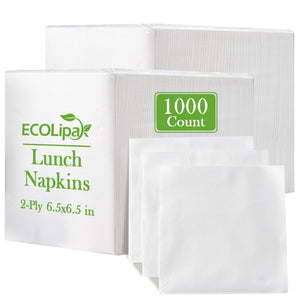
Quick Answer: Buy cocktail beverage napkins for the drink and food service you actually run: check the folded footprint, two-ply handling, absorbency with condensation, placement and pack count. ECO-Lipak's white two-ply paper napkins currently include 9.8- and 13-inch unfolded options. A quick test with your cups and a few real spills is more useful than choosing by a product photo or an “eco” adjective.
Key Takeaways
- Check the size as it will be placed under a cup or handed to a guest, not only its unfolded dimension.
- Two-ply is a construction detail, not a universal absorbency score. Test condensation, a small spill and whether the napkin separates or shreds.
- Plan napkin count from drinks served, returns to the station and the number of service points; then compare with live pack sizes.
- Do not call an ordinary paper napkin compostable, recyclable or chemical-free without specific substantiation and a matching local collection route.
Five Checks That Make the Purchase Easier
1. Does the Folded Footprint Fit the Drink?
A cocktail napkin has a modest job: give the cup a clean landing place, catch condensation and offer a quick wipe. It should sit under the cup without disappearing completely, but an oversized napkin can crowd a narrow drink counter. ECO-Lipak lists 9.8-inch and 13-inch unfolded variants, so compare actual folded samples beneath your most common hot and cold cups. The larger option may be helpful with dessert or a larger drink, while the smaller option may keep a tight counter neater. For a direct size comparison, see the separate 9.8 vs 13 inch guide; this article focuses on the complete buying test.
2. Does Two-Ply Work With Your Drinks?
Place a chilled cup on one napkin for the usual time between pickup and the first sip. Add a teaspoon-sized water spill to another sample and see whether it remains intact when lifted. Repeat with the exact napkin and cup pair you intend to use. A cold-drink station may see more condensation than a hot-coffee counter; a dessert station may need a clean place for sticky fingers. “Two-ply” identifies two paper layers, but it cannot tell you the performance of every product in every situation.

3. Where Will Guests Pick One Up?
Keep napkins next to the cup handoff and at any high-spill touchpoint, not hidden at the far end of the buffet. A second small stack near sweeteners or dessert can be more useful than one oversized central pile. Put enough at each location for the next service interval, but avoid leaving exposed stacks beside a splash-prone pitcher. If the station serves both hot and cold drinks, test placement with a clear cold cup and the actual hot-cup format; different cup bases may change the practical footprint.
4. How Many Do You Need to Order?
Start from expected drinks, not guest count alone. A guest may take a welcome drink, coffee and a second cold drink; one napkin per guest would undercount. Estimate napkins per drink from a comparable event, add napkins for dessert or spills and then include a small reserve. If you have no history, trial a short service and count how many were set out and how many remained. Divide the resulting requirement by the selected pack count to choose boxes or cartons.
Example: A 150-guest event expects 1.5 drinks per guest, or 225 drinks. If the team plans one napkin per drink plus 25% for second picks and spills, it needs about 282 napkins. A 1,000-count box is more than enough for that single event, but the remaining stock may support future events if stored dry. If this is a one-off with limited storage, the better purchasing decision may be a smaller available pack from another supplier; do not buy a bulk carton simply because it sounds economical. For a guest-count planning method, use the separate 150-guest napkin guide.
5. What Happens After Use?
Food-soiled paper may be accepted by a local composting program, but not by all programs, and clean-paper recycling rules also vary. The EPA advises checking local recycling or composting acceptance for paper products. Ask your collector before labeling a napkin bin. The paper essentials resource provides material context, but it does not turn an unverified product into a certified compostable item. Avoid making “chemical-free” or universal biodegradability claims from a product title; request specific evidence for any environmental or material claim you want to communicate to guests.
Compare the Live Options, Not Just the Photo
| ECO-Lipak variant | Current pack option | Test before choosing |
|---|---|---|
| 9.8 in unfolded | 1,000/box or 4,000/carton | Folded size under your common cup; drink-station space |
| 13 in unfolded | 1,000/box or 3,000/carton | Footprint for larger drinks or dessert; table space |
These are the current product variants, not a rule that one size is always more absorbent or better value. Check today's selected variant, price, stock and shipping before ordering. Cost per napkin can help compare two packs, but unused napkins and storage space matter too. For a recurring venue, review weekly consumption before moving from boxes to cartons. Keep cartons closed and dry so the paper reaches the station clean.

Three Buying Situations
1. A Self-Serve Cold Drink Station
Condensation is the main test. Put the real cold cup on the smaller folded napkin, then see whether the napkin still provides a clean base after guests move away from the station. Position refill stacks beside cups, with a small second stack near ice or garnish. Staff can count which stack runs out first and adjust placement at the next event.
2. A Coffee Corner With Pastries
A cup base and a pastry handoff are two different tasks. The smaller napkin may work under coffee, while the larger one may give guests more room when handling a pastry. If the venue already uses hot cups with lids, test the cup-and-napkin combination together. Do not assume a napkin replaces a sleeve, tray or food-safe wrapper where those are needed.
3. A Catered Reception With Several Bars
One central napkin pile creates extra trips and can leave a remote bar bare. Split stock by expected drinks at each bar, put a reserve carton in a dry service area and count the first hour's use. A 1,000-count box may cover the entire reception on paper, but the service only works if each station stays stocked. Use the actual drink mix and whether dessert is served at the same bar to decide which size belongs at each location.
Frequently Asked Questions
What is a cocktail beverage napkin used for?
It sits under a drink, catches light condensation and provides a quick wipe at a bar or coffee station. A full dinner napkin is better for a seated meal.
Should I buy 9.8 or 13 inch unfolded napkins?
Test the folded samples with your cup and serving space. The smaller size often suits drinks; the larger size can give more room for dessert or larger cups.
Are two-ply napkins always more absorbent?
No. Ply count alone is not a measured absorbency rating. Test the exact napkin with condensation and a small spill before a bulk purchase.
How many beverage napkins should I order for 150 guests?
Estimate drinks served and extra picks, then compare with the pack size. At 1.5 drinks per guest and a 25% reserve, roughly 282 napkins are needed; your service may differ.
Can used cocktail napkins go into compost or recycling?
It depends on the local program and whether the napkin is soiled. Ask the collector before adding collection signage or making environmental claims.