


You use paper bowls when you want to serve food fast. These bowls are made from eco-friendly materials like recycled paper or plant fibers. You can throw them away after you use them. This helps you do less dishwashing and makes less trash at home. Many families pick paper bowls because they help the environment. They make meals quicker and cleaner and help you live greener.
Key Takeaways
Paper bowls are good for the earth. They use materials that can grow back. They break down fast and help cut down on trash. They save time because you do not need to wash them. You can use them in the microwave to heat food. Paper bowls do not leak. They hold hot or cold foods well. This makes them useful for many meals and parties. Picking compostable or certified bowls helps the planet. It also helps with recycling. Using paper bowls makes less pollution. They use less energy than plastic or ceramic bowls.
Paper Bowls Overview
What Are Paper Bowls
Paper bowls are a fast and green way to serve food. They are throwaway containers made from things like wood pulp, sugarcane bagasse, or recycled paperboard. People use paper bowls for picnics, parties, takeout, and eating at home. You can see them at food trucks, cafés, and school cafeterias. They hold both hot and cold foods, like soup, salad, noodles, and desserts. Most paper bowls can go in the microwave, so you can heat up food safely.
Did you know? More restaurants and quick-serve chains are using fiber soup bowls. By 2025, kraft or bagasse bowls will be used in most places for meals.
Key Features
Paper bowls are light, strong, and simple to use. You can take them anywhere, and they do not break easily. Many bowls have linings that stop leaks and let you use them in the microwave. This means you can eat hot soup or cold cereal without spills. Grease and water will not soak through. Some bowls have lids to keep food fresh and stop leaks when you carry them.
Here is a simple chart showing types of paper bowls and what they do:
|
Type |
Leak Resistance |
Heat Retention |
Compostability |
Microwave Safe |
|---|---|---|---|---|
|
Kraft Paper Bowls |
High (with lining) |
Good |
Often compostable |
Yes |
|
Bagasse Bowls |
Excellent |
Good |
Fully compostable |
Yes |
|
Cupstock Paper Bowls |
Good |
Good |
Compostable (PLA) |
Yes |
|
Paper Laminated with Foil |
Excellent |
Not as good |
Not compostable |
Yes |
Materials and Coatings
Most paper bowls are made from paperboard, bagasse, or bamboo fiber. These materials break down and come from sources that can be replaced. Some bowls use recycled paperboard to cut down on waste. To make bowls strong and stop leaks, makers add coatings. The two main coatings are PE (polyethylene) and PLA (polylactic acid). PE coatings keep bowls safe from water and let you use them in the microwave, but they do not break down. PLA coated bowls use plant stuff, so they break down and can be composted at special places. PLA bowls are also safe in the microwave, but they may not handle very high heat as well as PE. Some bowls use PP (polypropylene) coatings, which are good for heat and make bowls safe in the microwave. PP coated bowls are not as common but are extra strong.
Tip: For the greenest choice, pick bowls made from bagasse or bamboo with PLA coatings. These bowls break down faster and help the planet.
Reduce Waste
When you pick paper tableware, you help the earth. Paper bowls make less plastic waste and lower pollution. If you throw away a paper bowl, it breaks down fast. It only takes 2 to 5 months in a landfill. Plastic bowls can stay in the ground for hundreds or even a thousand years. Paper bowls break down quickly, so there is less trash and less harm to nature.
Many paper bowls come from things like wood pulp or sugarcane. These materials grow back fast, so we do not run out. You can recycle many kinds of paper bowls. In Europe, people recycle about 70% to 80% of their paper products. In the United States, the recycling rate is between 38% and 68%. This keeps more trash out of landfills.
Composting is another way to get rid of used paper bowls. Composting centers turn paper bowls into soil, but it takes time. After 180 days, about half of a paper bowl will break down in a compost pile. Some cities have special programs to collect and compost eco-friendly packaging. This makes it easier for you to help the planet.
Tip: Always check if your local recycling or composting center takes paper bowls. This small step helps the earth and keeps waste low.
Comparison to Plastic and Ceramic
Paper bowls have big benefits over plastic and ceramic bowls. Plastic bowls are made from fossil fuels and need lots of energy to make. They give off bad gases and take up to a thousand years to break down. Paper bowls use less energy to make. They come from trees, which take in carbon dioxide as they grow.
Here is a quick chart that shows how different disposable tableware compares:
|
Type |
Decomposition Time |
Carbon Footprint |
Recyclable |
Compostable |
|---|---|---|---|---|
|
Paper Bowls |
2-5 months |
Low |
Yes |
Yes |
|
Plastic Bowls |
400-1000 years |
High |
Rarely |
No |
|
Ceramic Bowls |
N/A (not disposable) |
High (energy to make and transport) |
No |
No |
You also save energy when you use paper bowls. They are light and easy to move, so trucks use less fuel. Plastic bowls are heavier and take up more space, so trucks pollute more. Ceramic bowls are not disposable, so you must wash them after each use. Washing uses water, soap, and energy. Paper bowls let you skip washing, so you save time and resources.
Paper bowls also help you eat in a cleaner and safer way. You use them once, so germs do not spread between meals. Picking eco-friendly packaging like paper bowls helps the planet. You cut down on waste, lower pollution, and save natural resources. Every time you choose paper bowls over plastic or ceramic, you help the earth.
Save Time
Convenience for Households
You want to make mealtime easier. Paper bowls help you do that. You can use them for hot soups, fresh salads, or even ice cream. Many families use paper bowls during family gatherings, take-out meals, and outdoor picnics. These bowls are microwave safe, so you can reheat leftovers or warm up soup without switching containers. This saves you time and effort. Busy professionals and parents often choose microwave safe paper bowls because they do not want to spend extra time on chores. You can focus on enjoying your meal and spending time with your family.
Tip: Use microwave safe paper bowls for quick lunches or snacks. You can heat food directly and serve it right away.
Easy Cleanup
Cleaning up after meals can take a lot of time. With paper bowls, you just throw them away when you finish eating. You do not need to scrub or soak anything. This makes cleanup fast and simple. If you use bowls with lids, you can avoid spills and messes. This is helpful during parties or picnics. You can spend more time with friends and less time cleaning. Microwave safe paper bowls also help you avoid extra dishes because you can heat and serve in the same bowl.
-
No need to wash dishes
-
Less mess from spills
-
More time for fun activities
No Washing Needed
You do not have to wash paper bowls. This saves you time, especially after big meals or events. You skip the steps of rinsing, scrubbing, and drying. You also lower the risk of spreading germs because each bowl is used only once. This supports food safety in your home. While you might think using paper bowls saves water, making one paper bowl uses more water than washing a bowl in a modern dishwasher. Still, the main benefit is saving your time and energy. Microwave safe paper bowls let you heat, eat, and toss—no washing needed.
Note: Always check if your paper bowls are microwave safe before reheating food. This keeps you safe and helps your bowls last through the meal.
Uses of Disposable Paper Bowls
Everyday Meals
You can use disposable paper bowls for many types of meals at home. These bowls work well for breakfast, lunch, or dinner. You might pour cereal and milk in the morning or serve hot soup at night. Many people choose disposable tableware because it saves time and effort. You do not need to wash dishes after eating. These bowls hold both hot and cold foods, such as noodles, salads, or ice cream. Their lightweight design makes them easy to carry, even for kids. You can pick from different sizes to match your meal. Many families use disposable paper bowls for quick snacks or casual dinners.
Tip: Choose bowls made from renewable materials if you want to help the environment while enjoying easy cleanup.
-
Popular uses for disposable paper bowls at home:
-
Serving soup, pasta, or rice
-
Holding fruit, yogurt, or desserts
-
Quick snacks like popcorn or chips
-
Parties and Events
Disposable tableware is a top choice for parties and events. You can serve many guests without worrying about washing up later. These bowls make cleanup fast and simple. After the party, you just throw them away. This helps you spend more time with friends and less time on chores. At large gatherings, disposable paper bowls help keep the area tidy. You do not need to worry about broken dishes or spills. Many bowls come in stylish designs, adding a fun touch to your event.
Note: While disposable paper bowls make parties easier, remember that most end up in landfills. Look for compostable options to reduce waste.
Takeout and Meal Prep
Restaurants and food trucks often use disposable tableware for takeout orders. You can bring home hot soup or cold salad without leaks. These bowls keep your food fresh and safe during travel. If you like to prepare meals ahead of time, disposable paper bowls help you store and serve food quickly. You can pack lunches for school or work and toss the bowl when finished. This saves you time and keeps your kitchen clean.
-
Benefits for takeout and meal prep:
-
No need to return containers
-
Easy to stack and store
-
Perfect for busy days or travel
-
Choosing Paper Bowls
Quality Tips
You want paper bowls that will not leak or break. Pick bowls made from strong kraft paper or thick paperboard. Strong bowls keep your food safe and stop spills. Always look at the bowl for any tears or wrinkles before you use it. If the bowl is smooth, it is usually better quality. Many bowls have a special coating inside. Polyethylene (PE) coatings help stop leaks, even with hot or oily foods. Bowls that are thick and have a round shape do not leak as much. Good brands test their bowls for heat and moisture. This helps you trust the bowl for microwave safe use and food safety.
|
Quality Indicator |
Description |
|---|---|
|
Material Quality |
High-quality kraft paper gives strength and durability. |
|
Construction and Design |
Strong design prevents leaks and keeps the bowl in shape. |
|
Surface Quality |
No tears or wrinkles for better performance. |
|
Performance Testing |
Tested for moisture and heat resistance. |
|
Inner Coating |
PE coating with even thickness for leak resistance. |
|
Paperboard Quality |
Uniform density reduces weak spots. |
|
Supplier Reputation |
Trusted suppliers offer better quality and consistency. |
Tip: Pick bowls that say microwave safe on the label. These bowls can hold hot foods and liquids without losing their shape.
Sizing Options
Paper bowls come in many sizes and shapes. Small bowls like 5 oz or 8 oz are good for snacks or desserts. Medium bowls like 10 oz or 12 oz work for salads or soups. Large bowls like 14 oz or 16 oz are best for big meals or family servings. Some bowls are round, square, or have wavy sides. You can also find special sizes for different needs. Most stores sell bowls from 3 oz up to 44 oz. This lets you pick the right size for any meal. Many microwave safe bowls have lids, so they are great for takeout or meal prep.
|
Size (oz) |
Common Use |
Shape Options |
|---|---|---|
|
5, 8 |
Snacks, desserts |
Round, Square |
|
10, 12 |
Soup, salad |
Round, Wave |
|
14, 16 |
Large meals |
Round, Square |
|
24, 32 |
Family servings |
Round |
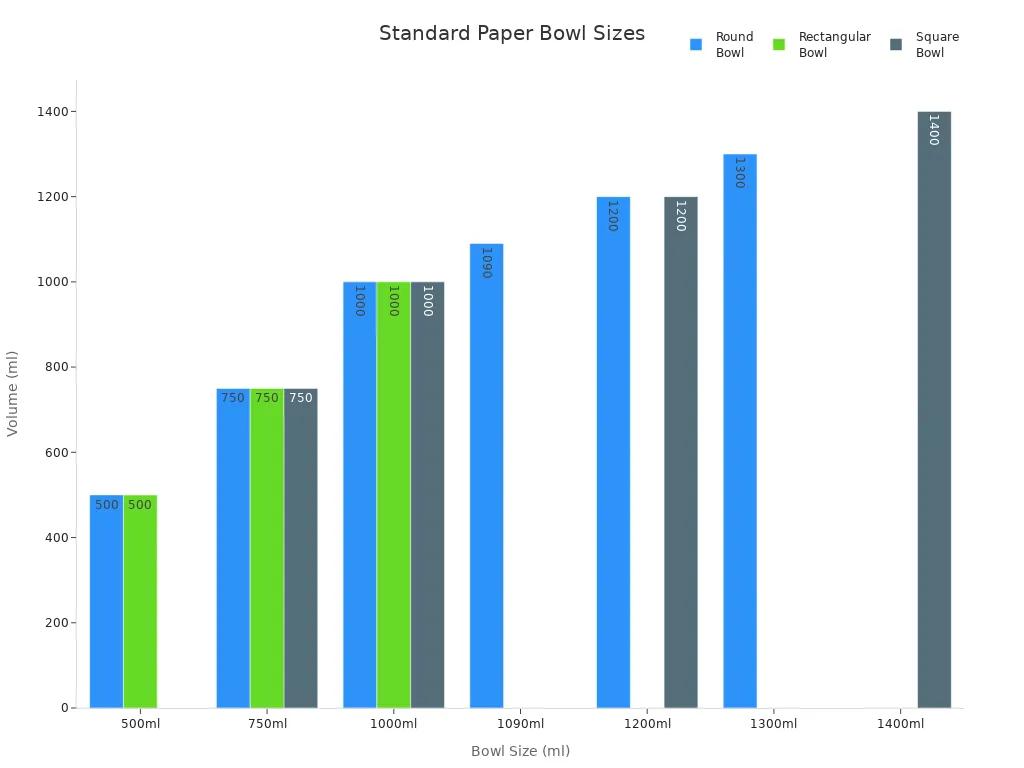
Note: Always check if your bowl is microwave safe before you heat food. This keeps your food safe and your bowl strong.
Eco-Friendly Choices
You can help the earth by choosing eco-friendly paper bowls. Look for labels like BPI Certified Compostable, FSC Certified, or Plastic-Free Certification. These labels show the bowl comes from safe, renewable sources and breaks down after you use it. Some brands use at least 80% plant-based materials and do not use harmful chemicals. Compostable bowls may cost a little more, but they are better for the environment. Many eco-friendly bowls are also microwave safe, so you do not lose convenience. Pick bowls with OK Compost HOME or USDA Certified Biobased Product labels for the best green choice.
|
Certification/Label |
Description |
|---|---|
|
BPI Certified Compostable |
Breaks down in commercial composting. |
|
FSC Certified |
Made from responsibly managed forests. |
|
OK Compost HOME Certified |
Safe for backyard composting. |
|
Plastic-Free Certification |
Contains no plastic materials. |
|
USDA Certified Biobased |
Uses renewable plant ingredients. |
|
No Added PFAS |
Free from harmful chemicals. |
Tip: Eco-friendly bowls help keep food safe and cut down on waste. You make a smart choice for your home and the planet.
You make a smart choice when you use paper bowls at home or for events. These bowls help you cut waste and save time. They break down quickly, return nutrients to the soil, and lower pollution. Many people now pick paper bowls because they care about the planet. You support a cleaner future and enjoy easy cleanup.
-
Paper bowls come from renewable resources.
-
They fit your busy life and special moments.
-
Choosing them helps protect forests and reduce landfill waste.
FAQ
Are paper bowls safe for hot foods?
You can use most paper bowls for hot foods. Many have special coatings that stop leaks and keep the bowl strong. Always check the label for "microwave safe" or "heat resistant" before using them with hot meals.
Can you recycle or compost paper bowls?
You can recycle or compost many paper bowls. Look for labels like "compostable" or "recyclable." Bowls with plastic coatings may not break down. Check your local recycling or composting rules for the best way to dispose of them.
Do paper bowls leak with liquids?
Most paper bowls have a leak-resistant lining. You can use them for soup, cereal, or ice cream. If you pick a bowl with a strong coating, you will not see leaks or soggy spots during your meal.
How do you choose the right size paper bowl?
You should match the bowl size to your meal. Small bowls work for snacks or desserts. Medium bowls fit soup or salad. Large bowls hold big servings. Check the ounces listed on the package for the best fit.
Are paper bowls better for the environment than plastic?
You help the planet when you choose paper bowls. They break down faster than plastic and use renewable materials. Many paper bowls are compostable or recyclable. You reduce landfill waste and support a cleaner environment with every use.

