Quick Answer: A single-wall paper cup uses one structural paper wall, while a double-wall cup adds an outer layer to improve hand comfort and insulation. For an 8 oz drink, choose by the exact beverage, serving temperature, hold time, sleeve or lid requirement, storage space, and total service cost. Do not assume wall construction or hot-drink suitability from the cup size alone.
Key Takeaways
- Single-wall and double-wall describe cup construction; they do not prove liner type, lid fit, temperature limits, or disposal route.
- Single-wall cups use less storage space and may need a sleeve for warmer service, depending on the exact cup and drink.
- Double-wall cups add material and can improve hand comfort, but the benefit should be tested with the actual beverage.
- An 8 oz cup is a nominal capacity, so the finished recipe must include foam, milk, garnish, and headspace.
- Compare total service cost per drink, not cup price alone.
Searchers often ask whether double-wall cups are “better.” That question misses the service context. A short cold tasting pour, a room-temperature drink, and a hot coffee held for twenty minutes place different demands on the same nominal cup size.
The best construction is the simplest complete system that passes the real recipe test. Sometimes that is a single-wall cup. Sometimes it is a single-wall cup plus a sleeve. Sometimes a documented double-wall format is the cleaner choice.
Single-Wall vs Double-Wall at a Glance
| Decision point | Single-wall cup | Double-wall cup | What to verify |
|---|---|---|---|
| Construction | One structural paper wall | Primary cup plus an added outer wall | Exact supplier specification |
| Hand comfort | May need a sleeve for warmer drinks | Added layer can reduce heat felt outside | Finished beverage and full hold time |
| Storage | Usually more compact | Can require more case and dispenser space | Actual carton and stack dimensions |
| Accessories | Sleeve may be part of the hot-service system | Sleeve may be unnecessary after testing | Lid, sleeve, carrier, and cup fit |
| Cost | Compare cup plus needed accessories | Compare higher-spec cup and reduced accessories | Total cost per served drink |
These are general construction differences, not guarantees for every product. Paper weight, liner, seam, base, rim, beverage temperature, and manufacturing quality all affect performance.

Start With the 8 oz Recipe
An 8 oz cup does not automatically mean eight fluid ounces of finished coffee can be poured to the rim. A cappuccino needs room for milk and foam. A tasting drink may deliberately use less capacity. A covered drink needs enough headspace to avoid contacting the lid opening during carrying.
Write the recipe as served:
- Base beverage volume
- Milk, foam, syrup, or ice
- Required headspace
- Expected pickup and consumption time
- Lid, sleeve, stirrer, and carrier requirements
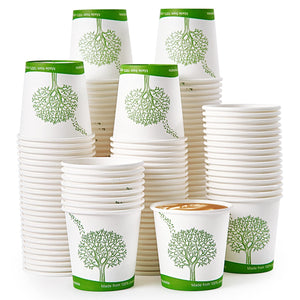
The current ECO-Lipak white PLA-lined paper cup listing includes 8 oz quantities of 300 per box, 1,000 per carton, and 1,800 per carton. Its current use copy describes cold and room-temperature drinks. The listing does not state a wall count in the facts reviewed for this article, so do not label it single-wall or double-wall without confirmation.
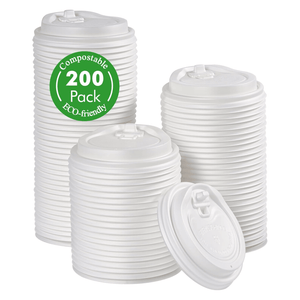
For a cup-and-lid format, the multi-purpose paper cup and CPLA lid set currently includes 8 oz options at 200 sets per box and 600 sets per carton. Follow the exact product instructions rather than transferring a temperature claim from another cup.
Calculate Total Service Cost
A useful comparison includes every component consumed with one drink:
Total service cost per drink = cup + lid + sleeve + stirrer + carrier share + expected waste.
For example, a lower-priced single-wall cup may not be the lower-cost system if nearly every drink also uses a sleeve. A double-wall cup may avoid a sleeve but require more storage space. A cup-and-lid set may simplify matching but still needs a quantity check because cup and lid counts can differ across products.
Do not borrow generic internet price ranges. Use current quotes for the exact carton, freight, accessories, and forecast volume.
Run a Six-Cup Service Test
- Choose production samples. Test the exact 8 oz products being considered.
- Prepare the real recipe. Use the normal fill temperature, milk, foam, and headspace.
- Test three of each construction. One cup cannot reveal normal variation.
- Observe the full hold time. Check pickup, carrying, and the longest credible drinking period.
- Score hand comfort and rigidity. Decide whether a sleeve is needed using the operation's safety procedure.
- Test lids and carriers separately. Similar appearance or diameter is not proof of compatibility.
The hot cup lid-fit guide explains why physical fit and carry testing belong in the purchasing decision.

Four Service Scenarios
Espresso Bar With Short Pickup Time
A compact 8 oz format may suit a short recipe, but the wall decision still depends on beverage temperature and customer handling. Test whether the exact cup requires a sleeve and whether that sleeve slows service.
Office Coffee Station
People may carry drinks farther and hold them through a meeting. Test the longest normal route, not only the first minute after pouring. Keep the approved cup, lid, and sleeve together so substitutes are not mixed in.
Room-Temperature Tasting Pour
A single-wall format may be sufficient when the exact product is documented for the drink and the hold time is short. Avoid paying for insulation the service does not use, but still test seam and base performance.
Covered Drink for Takeout
Lid fit and headspace may matter more than wall count. Pair the exact lid and cup, fill to the operational line, place the drink in its carrier, and complete a real walking or driving test.
Storage and Quantity Planning
Forecast 8 oz drinks separately from 12 and 16 oz drinks. Then add a chosen reserve and round up to the available box or carton count:
Packages needed = ceiling of [forecast 8 oz drinks x (1 + reserve rate) divided by units per package].
For 540 drinks plus a 10% example reserve, plan 594 cups. Two 300-count boxes provide 600. If every drink needs a lid, plan at least 594 compatible lids too; package counts may not align.
Measure shelf height and dispenser fit before moving to a larger carton or thicker cup. The best unit price can create a poor workflow when cases do not fit the storage area.
Use Environmental Claims Carefully
Wall count does not determine whether a cup is recyclable or compostable. Liner chemistry, additives, certification, contamination, and local infrastructure matter. The FTC Green Guides summary explains why broad environmental claims need evidence and qualifications.
Check exact product documents in the ECO-Lipak resource library. Ask the local facility whether it accepts the cup, liner, lid, and food residue before placing disposal instructions at the station.
FAQ
What is the difference between single-wall and double-wall paper cups?
A single-wall cup has one structural paper wall. A double-wall cup adds an outer layer that can improve insulation and hand comfort, depending on the exact design and drink.
Do single-wall coffee cups always need sleeves?
No universal rule applies. Test the exact cup and finished beverage under the operation's safety procedure; warmer service often makes a sleeve more likely.
Are double-wall paper cups always better for hot drinks?
No. They can improve hand comfort, but the exact cup still needs documented temperature suitability, lid fit, and a realistic hold test.
How much coffee fits in an 8 oz paper cup?
Eight ounces is nominal capacity. The practical beverage fill must leave room for milk, foam, garnish, ice, and headspace as required by the recipe.
Can I use any 8 oz lid on an 8 oz cup?
No. Capacity does not define rim diameter or profile. Match the lid's stated compatibility and complete a physical fit-and-carry test.
Are paper cups recyclable or compostable?
It depends on the exact cup construction and local program. Wall count alone does not answer the disposal question.