Quick Answer: ECO-Lipak's white 8 oz sugarcane bowls come in 150- and 300-count boxes. At the prices checked October 8, 2026, the 150-count box costs $25.99, or about 17.3 cents per bowl; the 300-count box costs $36.99, or about 12.3 cents each. Buy the smaller box to test portion fit or cover occasional side service. The larger box has a lower listed unit cost when the same shallow, lidless bowl will be used regularly.
Key Takeaways
- Both options are the same white 8 oz molded-sugarcane bowl; the quantity and listed unit cost change, not the bowl shape.
- One 300-count box costs $14.99 less than two 150-count boxes at the prices checked, before shipping and tax.
- An 8 oz bowl is a small side or dessert vessel, not a sealed takeaway soup container.
- Test the served portion and pickup path before committing to 300 pieces.
- Compostability depends on the exact product and a receiving facility that accepts used food-service ware.
What does the 8 oz bowl actually suit?
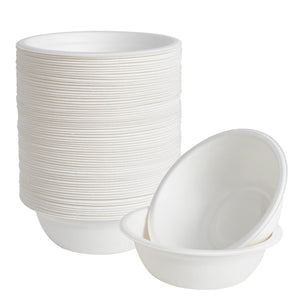
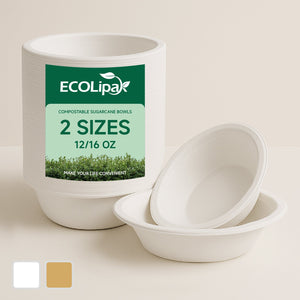
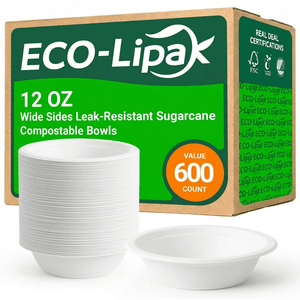
This is the shallow white molded-fiber bowl shown in ECO-Lipak's 8 oz sugarcane bowl listing. Despite the product URL's older “paper bowls” wording, the current product title and description identify sugarcane fiber. The bowl has no supplied lid in the selected variants. Its 8 oz nominal capacity helps compare sizes, but a practical serving can be less than eight fluid ounces when food needs headroom.
Think side salad, fruit, one dessert scoop, tasting portions, or a small grain side. For a generous entree, a runny soup delivered by car, or a salad with a heavy protein topping, trial a larger and properly matched format from the compostable bowls collection. The buyer's question is not simply “does eight ounces fit?” It is “does the real serving look right, stay comfortable to carry, and arrive in the state we expect?”

150 versus 300: the current purchase math
Prices and availability below were checked October 8, 2026. They exclude delivery, tax, volume offers and any later price changes. The calculation compares the same product and color, not two unrelated bowl lines.
| White 8 oz bowl | Listed box price | Approx. cost per bowl | Best first use |
|---|---|---|---|
| 150 pieces | $25.99 | $0.173 | Menu trial or occasional service |
| 300 pieces | $36.99 | $0.123 | Repeat side or dessert service |
Two 150-count boxes total $51.98 for 300 bowls. One 300-count box is $36.99, a $14.99 difference at the current list prices. That difference only helps when 300 pieces will be used within your normal stock cycle. If bowls sit in storage while the menu changes, the apparent per-piece saving may not be the meaningful number. Count portions actually served in this shape, not all orders that could hypothetically take a bowl.
Three service scenarios
Cafe lunch sides
A cafe offers a sandwich-plus-side lunch. Of 120 lunches in a week, perhaps 60 guests choose a side salad in a bowl while others take chips or fruit in another format. At that observed rate, a 150-count box covers about two weeks with a modest buffer. Before moving to a 300-count box, check whether a new menu cycle will maintain the same side mix. Plate a sample, carry it to a table, and check whether garnish or dressing overflows.
Breakfast or dessert buffet
A caterer serving 240 yogurt or fruit portions may prefer the 300-count box. It leaves 60 spare bowls for damaged stock or guests who return for a second serving. Place sample portions in a bowl for 15 minutes at the expected buffet temperature and check the base, rim and appearance. A bowl that looks right empty can look overfilled once granola and fruit are added. Put toppings in the service plan, not only in the cost calculation.
Takeaway with loose liquid
For a side that will be carried directly to a nearby table, the shallow bowl may work well. For broth or a heavily sauced dish travelling inside a delivery bag, do not treat the bowl as a leakproof package: it has no supplied lid. Consider a tested lidded food container instead, and run a real transport trial before changing the packaging. ECO-Lipak's larger 12–32 oz sugarcane bowl range is a useful size comparison, though any travel service still needs an appropriate closure plan.

A reorder rule you can actually use
Start with the average number of bowls used on a normal service day, multiply by the days until the next delivery, then add a buffer for breakage and demand variation. If the cafe uses 30 bowls a day and expects a five-day lead time, baseline demand is 150. A 20% operating buffer brings the reorder point to 180 bowls. That means ordering when remaining usable stock approaches 180, not waiting until the last sleeve is open. Adjust the buffer from your own stockout history.
Store the unopened boxes where the rims will not be crushed or exposed to moisture. Put one open sleeve at the service station, and keep the rest closed until needed. If you serve both 8 oz and larger bowls, label the shelf by capacity and use; the similarly white stacks can be easy to mix during a rush. For a broader purchasing comparison, ECO-Lipak's bulk tableware buying guide explains how to think beyond a single unit price.
Material claims should be kept separate from serving performance. The current listing describes these bowls as BPI-certified compostable, but the US EPA's food-service ware guidance advises using certified compostable ware only where a local program accepts that product type and collection is in place. Ask the receiving facility about used molded-fiber bowls before putting “compost here” on a guest-facing sign.
Frequently Asked Questions
Are the 150- and 300-count boxes different bowl sizes?
No. Both listed options are the same white 8 oz sugarcane bowl; the box quantity and price differ.
How much cheaper is the 300-count option per bowl?
At the October 8 list prices, it is about five cents less per bowl than the 150-count option before shipping and tax.
Does an 8 oz bowl hold a full 8 oz serving neatly?
Not always. Food shape and toppings need headroom, so fill and carry a real sample rather than using nominal capacity as a target fill line.
Does this bowl have a lid for delivery?
The selected 150- and 300-count bowl variants do not list an included lid. Use a tested matched package for loose liquids or transport.
Can used bowls go into any compost bin?
No. Check the exact product documentation and confirm the local receiving facility accepts used food-service bowls.