Quick Answer: Compostable wooden cutlery works best when foodservice teams need a sturdy, plastic-free utensil system for catering, food trucks, office meals, and outdoor events. The main decision is not simply fork versus spoon; it is whether the service flow needs loose utensils, pre-packed sets, or wholesale cartons that keep prep teams moving during rush periods.
Key Takeaways
- Wooden cutlery is a practical fit for salads, bowls, boxed lunches, desserts, and catered meals.
- Loose forks, knives, and spoons are efficient when staff control the service line.
- Pre-packed sets reduce mistakes for takeout, office meals, and delivery bags.
- Wholesale cartons make sense when weekly order volume is predictable.
- For very hot or dense foods, compare wooden cutlery with CPLA options before scaling.
Cutlery is easy to underestimate because it sits at the edge of the meal. But when the wrong utensil is packed, the customer notices immediately. A salad without a fork, soup without a spoon, or steak-like entree with a weak knife can make otherwise good packaging feel careless. Wooden cutlery solves part of that problem by giving operators a sturdy, familiar utensil format with a more natural presentation than plastic.

Choose Loose, Set, Or Wholesale
| Service type | Best cutlery format | Reason |
|---|---|---|
| Food truck counter | Loose utensils in cups or bins | Customers take only what they need. |
| Office boxed lunch | Pre-packed cutlery set | Every bag leaves with a complete kit. |
| Catered buffet | Loose utensils plus backup sets | Staff can reset quickly during rush periods. |
| Weekly restaurant takeout | Wholesale carton | Ordering becomes predictable and less reactive. |
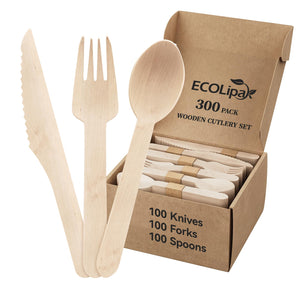
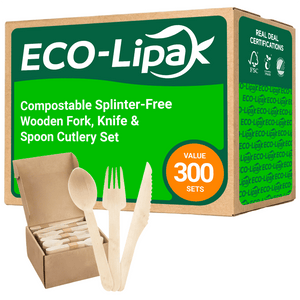
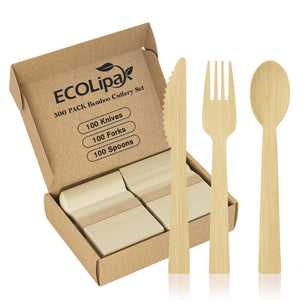
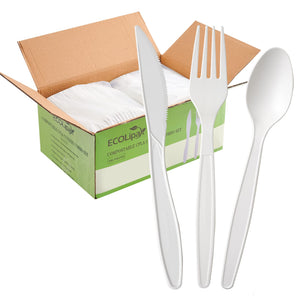
For everyday service, ECO-Lipak's compostable wooden cutlery set gives teams forks, knives, and spoons in a simple plant-based format. Higher-volume buyers can compare wholesale compostable wooden cutlery. If the menu is hotter, denser, or more utensil-stressing, also review heat-resistant CPLA cutlery and bamboo cutlery as alternatives.
Operational Rules That Prevent Waste
- Pack by menu, not habit. A grain bowl may need a fork; soup needs a spoon; a dessert station may not need knives.
- Use sets when orders leave sealed. Delivery and office meals benefit from fewer packing decisions.
- Use loose bins when guests self-serve. Buffets and food trucks can reduce unused utensils this way.
- Keep napkins beside cutlery. Separating them creates line friction and forgotten items.
- Track weekly burn rate. Wholesale cartons work when the team knows normal fork, knife, and spoon ratios.

The EPA food service ware guidance is useful when comparing material choices because the best utensil is only one part of sourcing, use, and disposal planning.
FAQ
Is wooden cutlery strong enough for catering?
Yes, wooden cutlery is often strong enough for salads, bowls, boxed lunches, desserts, and many catered meals, but very dense foods should be tested first.
Should I buy loose utensils or cutlery sets?
Use loose utensils when guests self-serve and sets when orders are packed, sealed, or delivered.
Is wooden cutlery better than CPLA cutlery?
It depends on the menu. Wooden cutlery offers a natural look, while CPLA can be better for some hotter or more rigid service needs.
How many extra utensils should events carry?
For self-serve events, plan a modest buffer because guests often take extra forks or spoons. The buffer should be higher for buffet and outdoor service than for boxed meals.