Quick Answer: For a small holiday appetizer or dessert station, the 7-inch square bamboo plate is a portion plate, not a full dinner plate. ECO-Lipak currently offers this plate in 50 per box and 300 per carton variants. Estimate how many times each guest is likely to take a fresh plate, add a modest service buffer, and choose the pack size that covers the event without a long leftover stack.
Key Takeaways
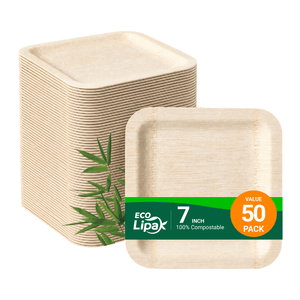
- The pictured product is a pale, fine-grain square bamboo plate with softly rounded corners; it is not a palm-leaf plate.
- Count plate pickups, not guest seats. A separate dessert pass can nearly double demand.
- A 50-count box suits a smaller or trial setup, while 300-count cartons make sense for repeat events or several stations.
- Test actual food portions, sauces and carry distance before committing to a bulk order.
Which jobs suit a 7-inch square plate?
A 7-inch square gives a neat base for two or three small savory bites, a cake slice, or a compact dessert. It is less convincing for a full dinner with several sides, and the edges should not be treated as extra capacity that invites overfilling. For a buffet, plate size affects what a guest can comfortably carry while standing. Try the real menu: one mini quiche and fruit garnish may fit easily; a saucy entree may call for a larger plate or a bowl.
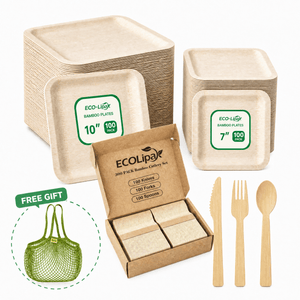
On the 7-inch and 10-inch bamboo plate listing, choose the 7-inch 50-box or 300-carton variant deliberately. The same page also includes 10-inch plates and sets; that is useful for a combined menu, but the counts and sizes should not be mixed in your spreadsheet. A shallow molded bamboo plate also looks different from a dark, ridged palm-leaf plate. The fine light grain is part of this product's visual identity, so the event styling should be built around what actually arrives.
Work from plate pickups
For a standing reception, assume one appetizer plate per participating guest, then ask whether dessert is served on a fresh plate. A second plate is likely when the first has sauce or savory crumbs. If a dessert table opens later and attendance thins, count that portion of the audience separately. A simple formula is appetizer participants + dessert participants + extra pickups + service buffer. Use observations from a prior event when available rather than a fixed “two plates per guest” rule.
| Event example | Plate pickups before buffer | With 10% reserve | Pack judgment |
|---|---|---|---|
| 35 guests, one small-bite pass | 35 | 39 | One 50-count box |
| 40 guests, appetizer plus dessert for 30 | 70 | 77 | Two 50-count boxes |
| 120 guests, two fresh-plate moments | 240 | 264 | One 300-count carton |
| Two events of 100 pickups each | 200 | 220 | One 300-count carton if storage is dry |
These are illustrative counts, not a guarantee that guests behave identically. A buffet where staff hand out plates usually creates more predictable use than a self-serve table with loose stacks. If guests take a spare plate while browsing, consumption rises. If reusable plates serve the sit-down dinner and bamboo plates are used only for dessert, consumption falls. Before ordering, subtract any clean 7-inch stock already in storage.

Three holiday setups
Home open house: one 50-count box may cover a modest appetizer table when most guests take only one plate. Put the stack where people enter the food area, then keep a small reserve out of sight rather than opening multiple boxes. If dessert is served an hour later, count it separately. A cake slice and berries work better than a pile of heavily sauced sides on a small plate.
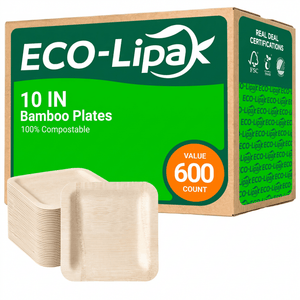
Office holiday lunch: a narrow table is often short on space. A 7-inch appetizer plate can sit beside a cup without crowding the service line, but the main course may need a 10-inch plate. The 10-inch bamboo dinner carton is a distinct larger format; do not order it by accident when your spreadsheet calls for 7-inch dessert plates.
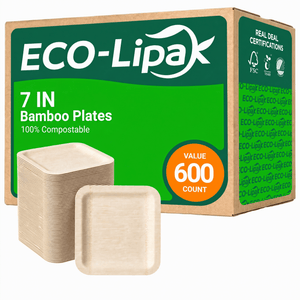
Catered tasting: a tasting menu may offer several small courses, each requiring a clean plate to avoid flavor crossover. That can make 300 pieces more sensible even with fewer than 150 guests. If the venue changes menus often, test one 50-count box before committing to the larger carton. On a repeat program, the 600-count wholesale 7-inch carton is another capacity option, but it is not the same 300-count variant and should be compared on actual delivered cost and storage.
Food fit, handling, and cleanup
The plate should be evaluated with the food it will carry. Put the actual hot or cold bites on a sample plate and walk the route from buffet to standing table. Check the rim, food contact area and whether guests need a fork. The plate listing describes heavy-duty bamboo construction, but no plate is a tray for unlimited weight. Avoid putting a cup on top of food just because the plate looks rigid. Where foods are wet or oily, test for the actual serving interval instead of relying on broad material claims.
“Bamboo” is a feedstock description, not a complete disposal instruction. Ask the event hauler whether the specific finished plate is accepted. The US EPA says reusable foodservice ware is preferred when an effective reuse system exists, and that commercially compostable ware should only be purchased for diversion when an accepting program and collection are in place; see its food-service guidance. When the event lacks that route, keep signage honest. ECO-Lipak's bamboo material resource can help frame material questions without replacing SKU-level proof.

Before buying the 50-box or 300-carton
Confirm the variant on the checkout page, then record the guest count, participation at each station, expected plate changes, and 10% or other justified reserve. Photograph the actual menu portion on one plate so purchasing and catering staff agree on fit. Check whether the event needs matching dinner plates or cutlery and order those independently. The bamboo collection shows other formats, while the wholesale tableware guide is useful when buying across multiple events. A good count makes the table feel effortless; it also avoids storing more boxes than the next season can use.
Frequently Asked Questions
How many 7-inch bamboo plates for 40 guests?
For one serving moment, start around 40 plus a buffer, so one 50-count box may work. If 30 people also take a fresh dessert plate, plan around 77 including a 10% reserve; two boxes are more realistic.
Are these plates the same as palm-leaf plates?
No. The listed product is a pale square bamboo plate with fine linear grain. Do not substitute a dark, ridged palm-leaf product in photos or purchasing.
Can I use a 7-inch plate for dinner?
It is usually better for appetizers and dessert. Test your actual entree; a 10-inch format or a bowl may be more appropriate for a full meal.
Is a 300-count carton always the cheapest choice?
Not automatically. Compare live delivered price per usable plate, storage, and expected leftovers. A 50-count box is a lower-commitment trial.
Can bamboo plates go into every compost bin?
No. Acceptance depends on the finished product and local facility. Verify the exact item and the program before using compost signage.