Quick Answer: Facility teams should choose compostable trash bags by bin size, load type, and disposal route before ordering by case count. A 13 gallon bag belongs in most office kitchens, while 33 and 55 gallon bags are better for facility cleanup, event back-of-house work, and larger liners. Compostable claims still need local composting context, so buying the right size is only one part of a workable waste plan.
Key Takeaways
- Use 13 gallon compostable bags for most kitchen and break room bins.
- Use 33 gallon bags for medium facility bins, event cleanup stations, and heavier shared waste points.
- Use 55 gallon bags only when the bin and load justify the extra liner size.
- Separate sizing decisions from disposal claims; local facility rules still decide acceptance.
Office waste planning is easy to ignore until the wrong bag is in the wrong bin. A liner that is too small slips into the can. A liner that is too large wastes material and makes ties messy. For compostable bags, that mismatch can also confuse staff about what the bag is meant to collect.
Start with the compostable bags collection, then narrow by the actual bins your team uses every week.

Match the Bag to the Bin First
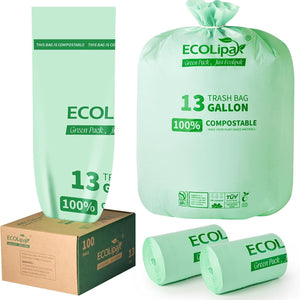
The 13/33/55 Gallon Tear-Resistant PLA Compostable Trash Bags gives teams a flexible starting point when one site has kitchen, office, and cleanup bins. For recurring office kitchens, a 13 gallon liner is usually the right size to test first.
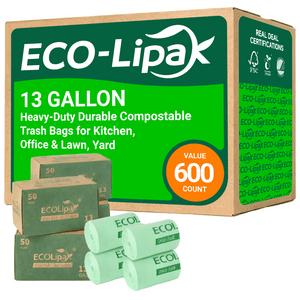
For buyers ordering by carton, the Wholesale 13 Gallon Heavy-Duty BPI Certified Compostable Trash Bags can support repeat kitchen-bin use. The key is to verify bin dimensions before switching the whole office to one liner size.
| Use Case | Better Starting Size | Buying Note |
|---|---|---|
| Office kitchen or break room | 13 gallon | Best first fit for common kitchen-style bins |
| Shared event cleanup point | 33 gallon | Useful when cups, plates, and food scraps collect quickly |
| Facility or yard cleanup | 55 gallon | Use only when the bin and load require the volume |
| Mixed site with many bins | Test two sizes | Prevents overbuying one size that fits poorly |
Use Larger Liners Where They Actually Help
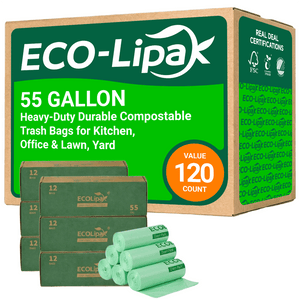
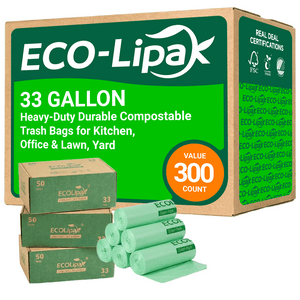
The Wholesale 33 Gallon Heavy-Duty BPI Certified Compostable Trash Bags is a better fit for larger shared stations, while the Wholesale 55 Gallon Industrial-Grade BPI Certified Compostable Trash Bags belongs in industrial-grade cleanup or high-volume facility work. Larger bags are not automatically stronger in a useful way if the bin is smaller than the liner.

Keep Compostable Claims Grounded
Compostable bags should be paired with clear staff instructions. The EPA's composting overview is a helpful baseline, and the FTC Green Guides explain why environmental claims should be specific. For certification context, review BPI certification.
For sizing details, ECO-Lipak's compostable trash bag size guide is the natural next step. For site-specific help, teams can contact ECO-Lipak before committing to a full carton program.
FAQ
What size compostable trash bag fits most office kitchens?
A 13 gallon compostable bag is usually the best starting point for standard kitchen or break room bins.
When should an office use 33 gallon bags?
Use 33 gallon bags for medium shared waste stations, event cleanup points, or larger facility bins that are too big for kitchen liners.
Are 55 gallon compostable bags necessary for normal office waste?
No. They are better for industrial-grade cleanup, larger bins, or back-of-house facility work.
Can compostable trash bags go into every composting program?
No. Acceptance depends on local program rules, bag certification, and contamination requirements.