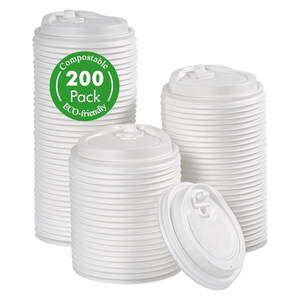
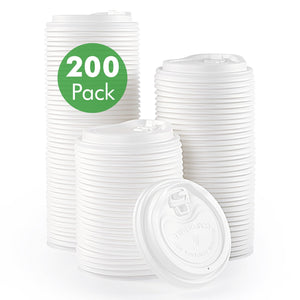
Quick Answer: Choose a CPLA hot-cup lid by the cup's measured rim and an actual snap-on test, not by its ounce label alone. ECO-Lipak currently lists a 3.15-inch white sip-through lid aimed at a compatible 8-ounce cup and a 3.54-inch white lid for compatible larger rims. Both 200-count boxes are $28.99, but the 1,200-count carton prices differ. A lid that looks close but does not seat all the way around is the wrong size for takeaway service.
Key Takeaways
- A cup's 8-, 12-, or 16-ounce capacity does not specify its rim diameter across every manufacturer.
- Compare the actual outer rim with the lid size, then test the exact cup and lid combination with cool water before serving hot drinks.
- The listed 200-count boxes are $28.99 each, roughly $0.145 per lid; the 1,200-count cartons have different unit prices.
- Keep the two diameters physically separated at the station, especially when staff use more than one cup size.
- Check the exact product's claims and your local collection program before calling any lid compostable in practice.
Why the rim matters more than the cup label
A "12 oz" cup tells a customer how much drink it holds. It does not promise the same top diameter as every other 12-ounce paper cup. Wall taper, rolled-rim thickness and manufacturer tolerances vary. A lid can appear to sit on the cup while one small section remains above the rim. That gap is precisely where a carry-out coffee can splash.
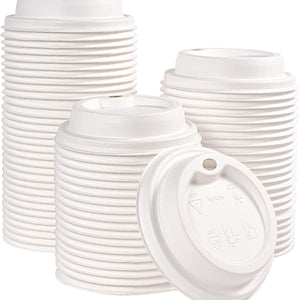
Start with the cup supplier's rim specification. ECO-Lipak's 3.15-inch CPLA sip-through lid is presented for a compatible 8-ounce cup. Its 3.54-inch CPLA sip-through lid is listed for compatible larger paper cups. Those descriptions are useful starting points, not a cross-brand fit guarantee. Order samples for the cups actually on your counter.

Current lid prices at a glance
These prices were checked September 30, 2026, for the white variants shown on the ECO-Lipak listings. They can change, and the figures below exclude tax, shipping and promotions. The carton may be useful for a busy cafe, but it is still a larger inventory commitment.
| White CPLA lid | 200-count box | Cost per lid | 1,200-count carton | Cost per lid |
|---|---|---|---|---|
| 3.15-inch sip-through | $28.99 | About $0.145 | $143.06 | About $0.119 |
| 3.54-inch sip-through | $28.99 | About $0.145 | $165.24 | About $0.138 |
Six 200-count boxes cost $173.94 before shipping at either diameter. Compared with that box total, the listed 3.15-inch carton is $30.88 less and the 3.54-inch carton is $8.70 less. That arithmetic only matters after fit is confirmed. Buying 1,200 incorrect lids is an expensive way to discover that a 12-ounce cup has an unusual rolled rim.
The five-minute fit check
Measure the outside of the cup's finished top rim with a ruler or caliper, then compare it with the lid listing. Treat the advertised diameter as a screening step, not a substitute for trial. Use a sample of the cup and lid you plan to reorder. Press evenly around the entire circumference until the lid seats. Look for a level edge without a lifted section, warped cup lip or cracked lid.
Fill the cup partway with cool water and carry it across the normal service route. Gently tilt it as a walking customer might; do not turn a filled hot cup upside down as a fit test. Then repeat with the intended warm beverage at the service temperature allowed by the cup and lid suppliers. Check the sip opening, rim seal and comfort of handling. If the lid pops off during ordinary handling, try the other matched combination or change the cup, not extra force.

Three service situations
One 8-ounce hot cup at a small coffee bar
If the cafe uses one consistent 8-ounce cup, the 3.15-inch listing is the obvious first sample. Check the rim and run the carry test before ordering cartons. Mark the approved cup-lid pair on the shelf so a substitute cup from another supplier does not quietly inherit the same lid without testing. Start with a 200-count box if weekly demand is uncertain.
Several cup capacities on one counter
A 10-, 12- and 16-ounce menu does not automatically need three lids; nor does it automatically work with one. Some cup families share a rim across capacities, while other product lines do not. Make a simple fit matrix for every cup SKU. If the larger cups all pass with the 3.54-inch lid, one labeled bin can serve them. Keep the smaller approved lid in a different bin, and do not mix loose lids during a rush.
Event service with a temporary supplier
Caterers often change cup brands to meet a short lead time. Recheck the rim even if the new cup has the same volume printed on its carton. For 600 expected hot drinks with a 10% service buffer, plan for about 660 compatible lids. That is four 200-count boxes, or part of a 1,200-count carton if the same cup-lid pair will be used later. The correct purchase is the one that fits and leaves manageable stock, not simply the lowest calculated unit cost.
Material and end-of-use questions
CPLA is a crystallized form of polylactic acid used in some hot-drink accessories. Its name alone does not tell you whether a particular item is accepted in your city's composting stream. Check the current product documentation for applicable certifications and contact the receiving organics program before telling customers to compost used lids. The US EPA's food-service ware guidance emphasizes acceptance by local composting programs. The FTC's Green Guides summary explains why environmental claims need suitable qualifications.
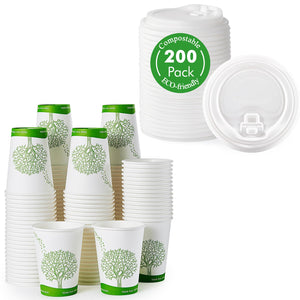
At the pickup point, give staff and customers the collection instruction that is true for that location. If an approved organics route is unavailable, do not label the lid as if it will compost in a regular trash bin. When selecting the rest of the drink service, compare cup and lid dimensions together instead of buying them as unrelated supplies.
Frequently Asked Questions
Will every 8-ounce paper cup fit a 3.15-inch lid?
No. The product listing is a starting point; measure and test the actual cup rim before ordering quantity.
Will one 3.54-inch lid fit all 10- to 20-ounce cups?
Not necessarily. Different cup lines can use different rim sizes even when their capacities match the listing's examples.
How do I test a hot-cup lid without a spill risk?
Seat it fully, test first with cool water, then check a warm drink during normal carrying. Never invert a filled hot cup.
Which carton has the lower listed unit cost?
At the September 30 prices, the 3.15-inch 1,200-count carton is about $0.119 per lid and the 3.54-inch carton about $0.138. Fit comes first.
Can used CPLA lids go into any compost bin?
No. Confirm the exact item's certification and ask the local facility whether it accepts that lid through the available collection route.