Quick Answer: The useful way to compare paper cup types is to check three things in order: the drink's temperature, the cup's wall and lining specification, and the collection route available after use. A paper cup can be convenient for a cold tasting, an office drink station, or takeaway service, but its paper exterior does not tell you whether the interior lining suits hot liquid or whether a local recycler or composter accepts it. Match the exact product variant to the job before buying.
Key Takeaways
- Single-wall, insulated, and specialty paper cups solve different handling problems; wall count alone does not establish a safe beverage temperature.
- A lining helps hold liquid. Ask what it is and whether the specific cup is documented for cold, room-temperature, or hot service.
- “Compostable,” “biodegradable,” and “recyclable” are not interchangeable disposal instructions. Local acceptance and certification matter.
- Start with the actual drink and service time, then choose the smallest pack and cup size that will work.
Paper cups types: a buyer's map
The original question behind this guide is simple: why can two cups that both look like paper behave differently? One may feel hot in the hand, another may have a textured outer wall, and a third may have a plant-based lining. Those visible differences can be useful clues, but the product specification remains the final authority. A paperboard wall and a moisture-resistant lining do different jobs. Examine the whole cup construction rather than treating paper as a single uniform material.
| Cup feature | What it changes | What to verify before purchase |
|---|---|---|
| Single-wall paperboard | Lightweight, compact storage | Approved beverage temperature and whether a sleeve is needed |
| Double-wall or ripple exterior | More insulation at the hand | Actual hot-drink rating, lid fit and carton count |
| PLA or other moisture-resistant lining | Helps hold liquid | Specific use conditions and local compost/recycling acceptance |
| Uncoated paper vessel | May suit dry contents | Whether it is actually designed to hold a drink |
This is a comparison of features, not a ranking of materials from “healthy” to “unhealthy.” Claims about safety need the specific product and its conditions of use. Avoid assuming that a plant-derived lining is automatically safer than every alternative, or that all products described as paper cups have the same end-of-life route.
Single-wall paper cups
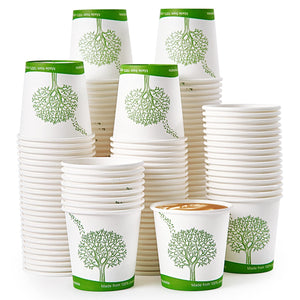
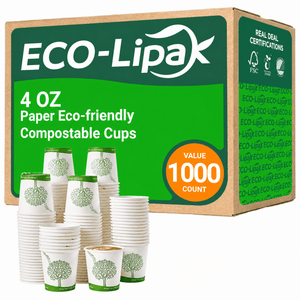
A single-wall cup uses one principal paperboard wall. That makes a stack easy to store and can be sufficient for a quick, suitable-temperature serving. It is not a promise that a hot beverage will feel comfortable without a sleeve. At a cold tasting booth, a short single-wall cup may be exactly right. At a busy office coffee point, handling comfort and a verified hot-service rating are more important than small savings in carton space. The current ECO-Lipak white PLA-lined cup listing includes 4 oz and larger variants, but its detailed description says cold and room-temperature service; do not use the broad product name to overrule that instruction.
For a practical purchase, pour the actual beverage into the chosen sample, hold it for a normal service interval, and check the rim and base. This is especially useful for iced drinks, acidic beverages, or drinks served over ice. A short 4 oz cup is not a substitute for a 12 oz takeaway cup just because both share a material description.
Double-wall and ripple paper cups
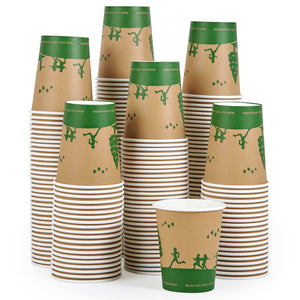
Double-wall and ripple designs add an outer insulating structure. That can help a guest hold a warm drink without relying on a separate sleeve, but they use more material and take more room on the counter. More importantly, their insulation does not itself verify the lining or the recommended liquid temperature. Read the SKU-level details. An 8 oz cup that feels comfortable in one setup may still be the wrong size or lid match for a different program. Our 8 oz single-wall versus double-wall guide goes deeper on that narrower choice.

Poly-coated, wax-coated, and plant-lined cups
Linings keep paperboard from soaking through in normal use. Common broad categories include conventional polymer coatings, wax coatings, and plant-derived alternatives such as PLA. They should not be treated as synonyms. The original version of this guide suggested a simple environmental ranking; that overstates what a material name can tell you. For any cup, ask: what lining is used, what beverages and temperatures are specified, how long is typical use, and what local facilities accept it?
A PLA-lined paper cup may be intended for commercial composting where accepted, but it is not automatically home-compostable or suitable for a standard paper-recycling stream. The US EPA's sustainable food-service guidance recommends certified commercially compostable ware only when a local program accepts the exact item and collection is arranged. If you are making a customer-facing compostability claim, verify the exact product's evidence, not a general statement about PLA. ECO-Lipak's PLA material resource explains the material terminology.
Compostable and biodegradable paper cups are not the same promise
“Biodegradable” describes a general ability to break down under some conditions; without a timeframe and environment, it is not a useful bin label. “Commercially compostable” is more specific when tied to a recognized certification and an accepting facility. Neither term tells you that the cup belongs in your backyard compost. Recycling can be possible in some local systems and unavailable in others. Ask the waste provider whether it takes lined cups, and post a simple instruction where cups are used. At an event with no separate collection, do not display a compost sign merely because the cup is marketed as compostable.
Certification claims also need specificity. Look for the exact product or SKU in the certifier's records, and check what the certification covers. ECO-Lipak's compostable certification guide is a starting point for the questions buyers should ask; the answer still depends on the purchased item and the facility.
Branding, events, and specialty uses
A well-chosen cup is part of a service system, not only a printed surface. For a branded event, test ink legibility, stacking, and cup handling before committing to a large custom order. Do not let a brand brief dictate a size that wastes beverage. For a chilled sample station, a sample-cup format is often more appropriate than a full refreshment cup. For an office with takeaway drinks, choose the correct capacity and verify lid fit separately. For a family party, a drink cup may be used by children, so consider how likely it is to be squeezed, set down, or refilled.
The original article also mentioned ice cream, soup, and snack cups. Those are distinct products, not automatic alternate uses for a drinking cup. Cold desserts may need a spoon-friendly shape and leak behavior; soup needs a documented hot-food rating and possibly a different lid. Do not transfer a paper cup's drink specification to an unrelated food cup. The paper-cup collection is a starting point for beverage options, while other food containers should be evaluated on their own listings.

A short purchase check
Write down the exact drink, serving temperature, desired ounces, expected number of pours, hold time, lid requirement, and disposal route. Then compare those needs with live product information. For example, a cold two-flavor tasting might use 4 oz cups sold in a 500-count box, whereas a 12 oz takeaway program could use a cup-and-lid set only after confirming the listed variant and fit. The cup-and-lid product listing has its own available sizes and use instructions. Do not borrow those specifications for a different cup.
This discipline is also the best way to make the article useful to a household buyer. You do not need to memorize every coating chemistry. You need enough detail to avoid a mismatched cup, an unverified claim, or a carton that will sit unused. Before a major order, test a small pack in the real serving conditions.
Frequently Asked Questions
What are the main types of paper cups?
Single-wall, insulated double-wall or ripple, and cups with different liquid-resistant linings are useful groups. The exact use depends on the full product specification, not the category label alone.
Are paper cups safe for hot drinks?
Only when the specific cup is documented for the intended hot-drink use. A paper exterior or “hot cup” name is not enough if the detailed listing says cold or room-temperature service.
Are PLA-lined paper cups recyclable?
That depends on the local collection system. Do not put them in paper recycling without checking acceptance of lined cups with the provider.
Can a compostable paper cup go into home compost?
Do not assume it can. Check the exact certification and whether it is for home or commercial composting, then confirm the receiving facility accepts lined cups.
Should I choose a double-wall cup for every hot drink?
No. It may improve handling comfort, but the correct choice also depends on temperature rating, size, lid fit, storage, and service style.