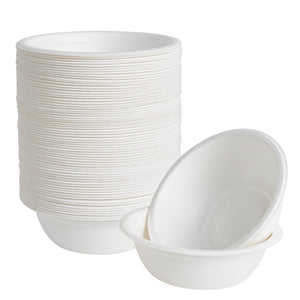
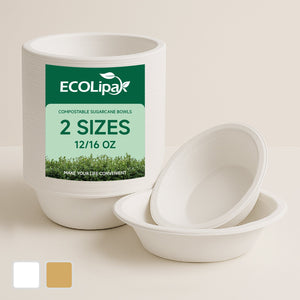
Quick Answer: Choose a 20 oz sugarcane bowl when a 16 oz bowl crowds your actual lunch recipe, not simply because “bigger” sounds safer. ECO-Lipak's white 20 oz sugarcane bowl is a shallow, wide molded-fiber bowl available as 150 per box or 900 per carton. Trial the full meal, leave carrying and spoon room below the rim, then calculate packs from the number of meals you actually serve.
Key Takeaways
- A nominal 20 oz capacity does not mean you should fill a lunch bowl with 20 oz of food. Toppings, sauce and transport need headroom.
- Compare 16, 20 and 32 oz with the same finished menu item; do not judge an empty bowl by its label alone.
- For 20 oz white bowls, ECO-Lipak currently lists 150 per box and 900 per carton on the main bowl product. Check the selected variant before ordering.
- Test hot and moist food for the actual hold time, and confirm your collector accepts the exact used serviceware before claiming a composting route.
When Does 20 oz Solve a Real Lunch Problem?
A bowl often looks roomy until a cafe adds grain, vegetables, protein, dressing and the last-minute garnish. If your 16 oz test bowl forces food into a dome above the rim, it is too tight for that menu, even if its nominal capacity sounds adequate. The 20 oz format offers a little more working space without automatically stepping up to a 32 oz family-size serving. It can suit a single substantial grain bowl, a chunky soup with a modest side component, or an office lunch portion. It may still be too small for a large build-your-own salad or too large for a tasting sample.
Use a real plated sample rather than guessing from ounces. Build the most common order and the most topping-heavy permitted order. Leave room for a spoon or fork, then carry each bowl from the pass to the pickup shelf and along a short delivery route. Note whether food reaches the rim, whether a guest can hold the bowl without touching food, and whether the molded-fiber base stays comfortable to handle. These checks are not laboratory performance claims; they are a purchasing trial for your own recipe and service time.

16, 20 or 32 oz? Match Size to the Menu
| Size to trial | Good starting use | Reason to move up or down |
|---|---|---|
| 16 oz | Side salad, modest soup or smaller lunch | Move up if toppings or a spoon crowd the rim |
| 20 oz | Single hearty grain bowl, chunky soup or composed lunch | Move down if much of the bowl stays empty; move up if full-meal builds spill |
| 32 oz | Large meal or shareable serving | Move down if a single portion looks sparse or becomes hard to carry |
The table is a starting point, not a rule for every recipe. ECO-Lipak's white 16 oz bowl and 20 oz option allow a same-menu comparison; the compostable bowl collection also shows other styles. For a broad, low salad presentation, compare the wide-rimmed 12 and 16 oz bowls rather than assuming that the same capacity always gives the same usable eating surface. A nominal ounce figure says little about rim width or how food sits.
Test Moisture, Heat and the Pickup Window
Set a filled sample aside for the longest ordinary interval between packing and eating. A soup counter should test broth or chunky soup at its actual serving temperature; a salad counter should test dressing pooled against one side; an office lunch program should test any sauce added before delivery. Check sidewall firmness, the bottom of the bowl, the grip at the rim and any moisture transferred to a tray. Change one variable at a time: portion, sauce placement, holding time or bowl choice. Do not describe any bowl as universally leakproof because it held one test food for a few minutes.
If customers carry food away, test a transport solution specifically matched to this bowl. Do not assume a lid from another diameter or material fits just because it is sold in the same collection. A tall topping pile may require a different container entirely. If your operation can wash reusable bowls for dine-in meals, consider that system first; EPA food-service-ware guidance prioritizes reusables when practical and advises matching commercially compostable ware to a program that accepts it. The tableware material guide is a helpful material reference, but the final decision still belongs to your menu trial.

150-Count Box or 900-Count Carton?
Count expected bowls over the time until the next delivery. Start with average 20 oz meals per day, multiply by operating days, then add a measured reserve. A 10% buffer is a reasonable first planning example for an unfamiliar service, but use your own variance after several weeks. Compare the result with the currently listed 150-per-box and 900-per-carton white 20 oz variants, and verify availability at checkout. Do not let a carton quantity dictate the portion size; the fit test comes first.
Example: A lunch counter selling 70 of these meals a day, five days a week, needs 350 bowls for a week. With a 10% reserve, plan for 385. Three 150-count boxes provide 450 and leave 65 for the next cycle. A 900-count carton covers a little over two such weeks, but that only helps if dry storage and cash flow make sense. At 18 bowls a day, five days a week, the same buffer produces 99 bowls, so one 150-count box is a simpler trial order.
The listed 150-count white 20 oz bowl offer is another purchase route; compare the live product variant and price, not a fixed discount assumption. If your order alternates between small salads and hearty lunches, count each bowl size separately. Combining them into one “bowls per week” number makes both overstock and service-day shortages more likely.
Three Service Scenarios
1. Cafe Grain Bowl
A cafe builds bowls to order. The base recipe fits 16 oz, but the extra-protein option crowds the top and makes dressing messy. Test the paid upgrade in 20 oz; if the regular recipe looks underfilled there, keep two sizes instead of upsizing every order. Mark the menu and packing station clearly so staff choose the right bowl without pausing the lunch line.
2. Office Soup Lunch
A coordinator pre-orders 120 soup lunches. A 20 oz bowl may be useful for chunky soup, but hot broth and a long pickup window require a real hold test. Use the exact soup, a tray and the planned utensils. Order 150 bowls for 120 meals plus a small reserve only if that trial passes; otherwise select a more suitable vessel before buying.
3. Catered Event With Two Menus
At an event with a grain bowl and a lighter salad, guests may select either. Estimate the split from prior events and label boxes by menu, not simply by material. A 20 oz bowl can be the default for the hearty entree while a smaller wide-rim bowl handles the salad. That reduces wasted space on trays and keeps portion expectations clear.
Frequently Asked Questions
Is a 20 oz bowl bigger than a 16 oz bowl in a useful way?
It can be when your finished lunch needs extra headroom. Compare the actual recipe in both bowls; shape and rim width matter along with nominal capacity.
Can I fill a 20 oz bowl right to the rim?
Avoid it for carry-out or self-service. Leave room for utensils, movement and toppings, then confirm with a real carry test.
How many white 20 oz bowls are in the ECO-Lipak pack?
The main product currently lists 150 per box and 900 per carton for white 20 oz. Check the selected live variant before purchase.
Will a sugarcane bowl hold hot soup or wet salad?
Test the exact food and holding time. Product descriptions are a starting point, but broth, dressing, temperature and pickup delay all affect the service result.
Can guests put used bowls in any compost bin?
No. Confirm that the local organics collector accepts that specific food-soiled serviceware before directing guests to a compost stream.