Quick Answer: A 55-gallon compostable bag is a candidate for a large event-venue bin only after you check the bin's rim, depth and expected load. The ECO-Lipak wholesale variant contains 120 liners per carton. Estimate changes by bin and shift, add a reserve for early replacements, and confirm the exact waste stream with your hauler. A bag described as compostable does not make mixed event trash compostable.
Key Takeaways
- “55 gallon” describes nominal capacity, not a universal fit across square and round bins.
- Test one liner on the actual container before ordering a 120-count carton; check overhang and bottom reach.
- Forecast changes as bins x shifts x changes per shift, then add a measured reserve.
- Verify whether the facility accepts the bag itself, and never promise that a mixed-waste bag will be composted.
Start with the bin, not the carton price
Large venue bins are not all the same shape. A round drum, a square rolling bin and a narrow recycling station can each be called “55 gallon,” yet the opening and depth differ. Measure the outer rim where the liner must fold over and the distance from rim to base. For a rectangular bin, note the long and short rim dimensions; for a round bin, note the diameter. Then fit one actual bag and leave a practical cuff over the rim. A liner that reaches the bottom but slips off the rim is still the wrong liner for a fast cleanup team.
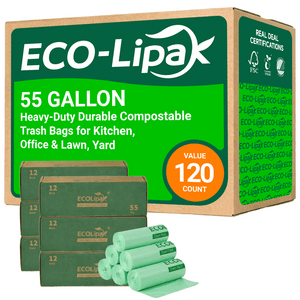
The ECO-Lipak 55-gallon wholesale carton is listed as 120 bags. The product page describes a reinforced bottom and roll dispensing, but the specification should still be tested against sharp props, soaked food waste and the way staff lift the bag. Avoid dragging a loaded liner or treating “heavy duty” as a guarantee against every puncture. A full, wet bag may be too heavy to handle safely even when the liner itself has not torn. Operational limits matter more than a single adjective in a listing.
| Before purchase | Field test | Decision |
|---|---|---|
| Rim coverage | Fit a liner and fold a cuff over every edge | Reject if it slips during normal loading |
| Depth | Check that the liner reaches the base without tension | Reject if suspended above the bottom |
| Typical load | Try the actual service stream at safe handling weight | Change earlier for heavy or wet waste |
| Collection | Ask the local hauler about certified liners | Use only the approved stream and instructions |
Turn a venue schedule into a liner count
Count bin changes, not attendance alone. A 500-person event with reusable serviceware may produce fewer liner changes than a smaller catered event with multiple disposable stations. Start with each bin's job: food scraps, general waste, back-of-house prep, or a vendor area. Observe one representative event, recording which bins were changed and why. Forecast the next event from that log. If an outdoor station is changed early to control overflow or odors, record it as a real bag use.
Consider a venue with eight large bins and two service shifts. If four bins need one change in each shift and the other four need one change over the whole day, that is 8 + 4 = 12 liners. A 15% reserve brings the event target to 14 after rounding up. Eight similar dates would require about 112 liners. One 120-count carton could cover them if the pattern stays stable, but it leaves only eight as reserve. One holiday event with unusually heavy food service can erase that margin, so check the schedule before choosing the carton.
| Example | Observed changes | Planning amount with 15% reserve |
|---|---|---|
| Single moderate event | 12 | 14 bags |
| Four similar events | 48 | 56 bags |
| Eight similar events | 96 | 111 bags |
| Ten similar events | 120 | 138 bags; one carton is short |
These are examples, not consumption promises. If the team already has clean usable stock, subtract it before ordering. If the venue rents storage space or rotates through seasonal operations, calculate delivered cost and holding cost as well as price per bag. The compostable trash bag collection lets buyers compare smaller formats when some stations do not need a 55-gallon liner.

Three situations that change the answer
Banquet back-of-house: food preparation can create dense, wet waste. Change bags before they become hard to lift, and confirm whether the collector accepts food scraps in this liner. If the answer is no, use the venue's approved route instead. Do not equate a liner certification with approval for every load.
Outdoor festival: bins may be changed for capacity and guest experience even when the liner is not full. Wind can pull a poorly cuffed bag off an open bin, so the rim test matters. Place a clean replacement near each cluster but protect spare rolls from rain and sun.
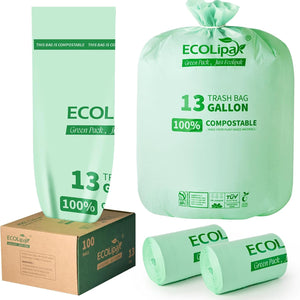
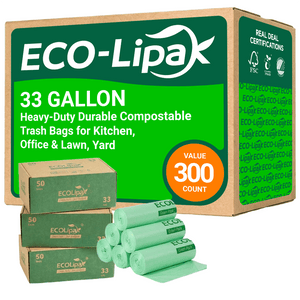
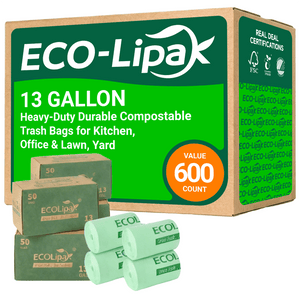
Office event room: the large bin may be mostly dry general waste. A smaller 33-gallon option might fit better, but measure first rather than moving blindly down a nominal size. ECO-Lipak's multi-size bag listing is a useful comparison for stations that do not need the full 55-gallon format.
What compostable certification does and does not say
The product listing states BPI and industrial-composting claims. Verify the exact current SKU and certification record before using those claims in venue signage or procurement documents. A certification for a liner is not evidence that the food scraps, coatings, stickers or general trash inside are accepted by a facility. The US EPA's food-service guidance emphasizes local program availability and acceptance for compostable items. Confirm the hauler's bag and contents rules in writing when diversion reporting matters.
If the venue has separate organics and general-waste stations, use clear signs and staff checks so bags are not swapped inadvertently. The site compostable certification guide helps buyers formulate evidence requests, but local acceptance still governs. Do not tell guests that a pale green bag will “disappear” in a backyard pile. Industrial standards and real collection conditions are specific.

Order checklist
Write down the actual bin ID and dimensions, the test-fit result, observed changes per event, planned dates, clean inventory and reserve. Check that the Shopify variant is the 55-gallon 120-count carton, not the smaller 12- or 36-count options on another listing. Keep a photo of the successful fit for the next purchaser. If staff have to stretch the liner into place, or the waste route is unconfirmed, resolve that before ordering a season's supply. A small field test can prevent a large carton of the wrong bags.
Frequently Asked Questions
Will any 55-gallon liner fit any 55-gallon bin?
No. Nominal volume does not guarantee rim or depth fit. Test one liner on the actual bin and check that it stays cuffed during normal use.
How many 55-gallon bags are in this wholesale carton?
The current ECO-Lipak wholesale variant lists 120 bags per carton. Recheck the live variant before ordering.
How many liners should a venue stock for eight events?
Use observed changes per event. At 12 changes each and a 15% planning reserve, eight events call for about 111 liners; larger or wetter events may need more.
Can these bags line a general-waste bin?
They can be used operationally where they fit, but a compostable bag in mixed trash is not evidence of composting. Follow the venue's approved waste route.
Does BPI certification mean home composting?
No. Verify the specific product's certification and the intended processing conditions; industrial acceptance does not automatically extend to a home pile.