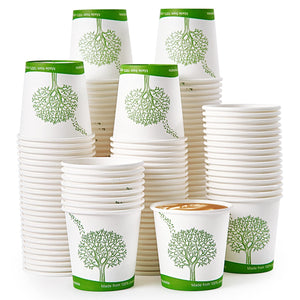
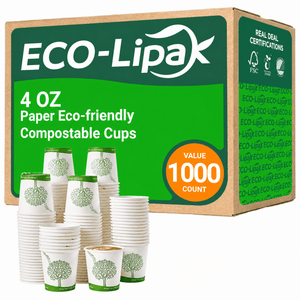
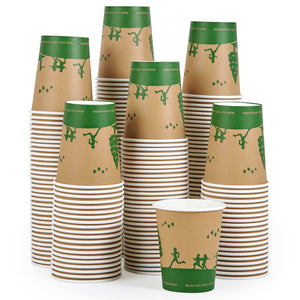
Quick Answer: A 4 oz paper cup is a useful sample vessel for a small pour of cold or room-temperature tea, juice, or other drinks. For an event, estimate one cup per pour, add a modest spill and second-taste buffer, then round up to the available 500-count box or 1,000/2,000-count carton. ECO-Lipak's white PLA-lined cup listing describes this cup for cold and room-temperature service; do not assume it is approved for hot espresso just because another paper cup is.
Key Takeaways
- Buy against expected pours, not guest count alone: a guest offered two flavors may use two cups.
- The current 4 oz white paper cup options include 500 per box and 1,000 or 2,000 per carton; check the selected variant before checkout.
- A short sample cup helps control beverage volume, but serving a 2 oz taste in it is perfectly reasonable.
- Verify the drink-temperature instructions and the local collection route. PLA lining does not make a cup universally recyclable or home-compostable.
Start with the number of pours
Picture a market stall with two chilled infusions. Two hundred visitors pass the table, perhaps 60% accept a sample, and half of those try both flavors. The first estimate is 120 first pours plus 60 second pours, or 180 cups. Add a 10% service buffer and the working number is 198. In that case a 500-count box is enough; a full carton would be excessive unless the team has more tasting dates booked. This is an operating estimate, not a claim about how many people will actually stop.
The formula is visitors x participation rate x average tastes per participant x (1 + buffer). Round up to a whole cup, then to a purchasable pack. Put the assumptions on the event sheet so the next buyer can adjust them. If there is only one flavor or staff pour into a reusable taster, the cup count falls. If the menu encourages a three-drink flight, it rises quickly.
| Service example | Planning assumption | Estimated cups with 10% buffer | Likely pack choice |
|---|---|---|---|
| Small store demo | 150 visitors x 60% x 1 taste | 99 | One 500-count box, with remainder for later |
| Two-flavor market booth | 200 visitors x 60% x 1.5 tastes | 198 | One 500-count box |
| Multi-day sampling | 900 accepted pours | 990 | One 1,000-count carton |
| Large tasting program | 1,550 accepted pours | 1,705 | One 2,000-count carton |
These pack choices assume no stock already on hand. Count clean leftover cups before ordering. A small case can be a better purchase when storage is tight, even when its per-cup price is higher. For a repeated program, check the live price per usable cup and shipping before choosing the larger carton; prices change, so a fixed price printed in an article would age badly.
Where a 4 oz cup fits, and where it does not
Cold drink launch: a 2 to 3 oz chilled sample leaves headspace in a 4 oz cup and reduces splashing as guests walk away. Place a pour line on the staff worksheet rather than promising each guest a brim-full 4 oz serving. A realistic trial includes the actual beverage, ice, and typical serving time, because a damp cup that sits for an hour behaves differently from a cup emptied promptly.
Trade-show tasting: one staff member pours while another restocks. Keep the clean stack away from the used-cup return point. If the organizer requires lidded drinks, do not assume a lid exists for the 4 oz variant. Verify a compatible lid on the actual product or choose another service format. The larger paper-cup collection is useful for comparing other cup sizes, but this article is deliberately about short samples.
Small cafe counter: a limited-time iced tea can be sampled near pickup without opening a full 12 oz cup for every taste. If the cafe wants hot espresso samples, stop here: the white PLA-lined paper cup listing specifies cold and room-temperature service. A product name containing “hot cups” is not a substitute for the detailed use instructions. Ask for the appropriate hot-service specification before changing the menu.

Choose the pack without treating a case as a bargain by default
For a one-off demonstration, the 500-count box gives a low commitment. The matching wholesale listing offers a 1,000-count and a 2,000-count 4 oz carton, which better suits repeated dates or a multi-location program. Those numbers are cups, not cup-and-lid sets. Compare the wholesale white paper cup carton variants with the retail box and check the final selected variant in the cart. Do not infer that all cup sizes in the same listing use the same carton count.
A useful procurement sheet has five columns: expected pours, existing clean stock, buffer, order quantity, and next event date. If the booth uses 300 cups on a Saturday and another 300 two weeks later, one 1,000-count carton may make sense only if the cups can be stored clean and dry until the second date. If stock space is rented or the menu is changing, the box might be more economical overall. For broader event purchasing, ECO-Lipak's wholesale tableware guide helps frame carton, storage, and purchasing questions.
Material and disposal checks belong on the order sheet
The specified cups use paper with a PLA lining. That lining helps resist liquid during normal use, but the phrase “paper cup” alone does not identify the liner, and “plant-based” is not an end-of-life instruction. The US EPA recommends buying certified commercially compostable serviceware only where a commercial program is available, accepts those exact items, and collection is arranged. Read its food-service ware guidance before promising guests a compost bin. Ask the hauler whether it accepts PLA-lined paper cups; if not, follow local disposal instructions rather than contaminating another stream.
Likewise, a cup used with fruit juice should not be automatically placed with dry paper recycling. Acceptance varies. For a public tasting, position the collection container where guests finish their drink and give staff one clear rule. If the event has only a mixed-waste route, say so plainly. The cup can still solve a portion-control problem without an unsupported “zero waste” claim.

Before checkout
Check that the chosen variant is 4 oz, confirm whether it is 500, 1,000 or 2,000 cups, and compare that number with the worksheet. Check the beverage temperature against the detailed product description. Test the actual drink in a sample cup before a large order, especially if it is acidic, carbonated, heavily iced, or held for a long period. Finally, decide who will manage the used cups. A clean purchasing decision is often a collection and workflow decision as much as a unit-price decision.
Frequently Asked Questions
How many 4 oz cups do I need for 200 guests?
For one taste each, start with 200 and add a service buffer; 220 at 10% is a reasonable planning figure. For two tastes each, start with 400 before the buffer. Use expected participation, not just the guest invitation count, for a more precise estimate.
Can these 4 oz cups hold hot espresso?
Do not assume so. The referenced white PLA-lined cup listing describes cold and room-temperature use. Verify a separate cup's hot-service specification before pouring espresso into it.
Is a 4 oz cup too big for a 2 oz sample?
No. A 2 oz pour leaves useful headspace in a 4 oz cup. Consistent pours matter more than filling the vessel to the rim.
Is a 1,000-count carton always cheaper than two 500-count boxes?
Not necessarily. Compare live delivered cost, storage, and expected leftover stock. Check the selected variants rather than assuming today's unit price will remain fixed.
Can PLA-lined paper cups go in a home compost bin?
Do not make that assumption. Confirm product certification and whether a local commercial composter accepts this cup type. The EPA notes that facilities and acceptance vary.