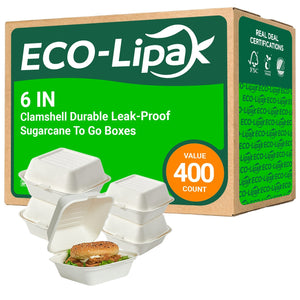
Quick Answer: A small deli should buy sugarcane clamshells by menu item and weekly takeout volume, not by the lowest carton price. ECO-Lipak's current wholesale range includes white 6-inch boxes at 400 per carton, white or natural 8-inch boxes at 200 per carton, white 9 x 6-inch boxes at 300 per carton, and natural 9 x 6-inch boxes at 500 per carton. Test the filled box first, then purchase enough of each size for the next delivery cycle.
Key Takeaways
- Match the internal meal footprint to a sample box before committing to a carton.
- Carton counts differ by size and color; a 200-count box is not interchangeable with a 500-count box.
- Use a seven-day order log to estimate demand by meal type, then add a modest remake and rush buffer.
- Ask your local collector whether it accepts the finished used fiber container before making disposal claims.
Why a mixed deli menu needs a mixed box plan
A deli selling a breakfast sandwich, a lunch bowl and a sandwich-plus-side meal has three different packaging jobs. A single “universal” clamshell can waste space around a small pastry yet squeeze a generous lunch. Start with the food, not the catalog: put the actual portion in a sample, close the lid without crushing it, tip it gently as a delivery driver would, and check whether steam or dressing changes the result after twenty minutes. That short test prevents a costly carton of boxes that fit on paper but fail during service.
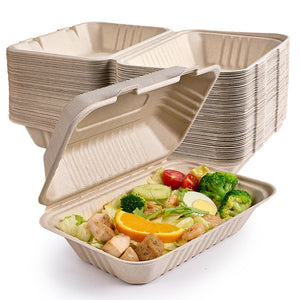
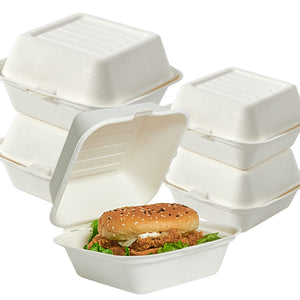
The wholesale sugarcane clamshell range offers several plain molded-fiber, hinged, single-compartment formats. The featured product image shows white fiber clamshells, not a clear plastic lid or a divided meal tray. If a sauce or salad must remain separate, use a separate portion cup or select a genuine compartment box; do not assume that a plain clamshell has a divider.

Compare size and carton count together
Here is the current buying matrix for the main wholesale listing. Availability and pack counts can change, so confirm the selected variant at checkout. The natural-color 9 x 6-inch carton is larger than the white-color one; comparing their box prices without dividing by count gives the wrong signal.
| Variant | Current carton count | Possible deli job to test |
|---|---|---|
| White 6-inch | 400 | Compact sandwich or pastry |
| White 8-inch | 200 | Large sandwich or substantial lunch |
| Natural 8-inch | 200 | Same footprint, different presentation |
| White 9 x 6-inch | 300 | Sandwich and side, pending fit test |
| Natural 9 x 6-inch | 500 | Repeat high-volume sandwich-and-side order |
The “possible job” column is a test prompt, not a guarantee that any particular sandwich fits. Bread thickness, garnish and side container height can change the fit. A deli with one weekly lunch special may use only the 8-inch size; another may need the rectangular format every day. If the initial order is a trial, compare the smaller sugarcane to-go box packs before taking on a wholesale case.
A practical first case calculation
Suppose a deli records 45 compact takeouts, 65 larger lunches and 90 sandwich-and-side orders in a week. For a two-week lead-and-use window, the expected need is 90, 130 and 180 boxes. Adding a 10% working buffer produces 99, 143 and 198. One carton of each white format covers this illustrative cycle, but the 6-inch case leaves far more carryover than the other two. If storage is tight, a smaller pack may be better than a seemingly attractive per-unit wholesale price.
Count the unopened cartons and the loose sleeves in active use. Reorder when expected use before the next delivery plus buffer exceeds usable stock. Record that trigger separately for each size. A strong lunch rush can empty 8-inch stock while 6-inch boxes still fill the storeroom; a single overall box count hides that problem. For comparing landed cost, divide the delivered price of each variant by its actual count, then add any storage or waste caused by buying the wrong size.
Three small-business scenarios
Breakfast counter with compact food
A breakfast counter that sells pastries and small sandwiches may find the 6-inch box sufficient, but it should test a fully dressed breakfast sandwich, not an empty shell. Place only one working sleeve near the griddle and keep the rest dry. If the menu uses only 100 boxes a week, a 400-count carton is roughly four weeks of supply before buffer; buy it only if that carryover fits the storage plan.
Lunch deli with bowls and sandwiches
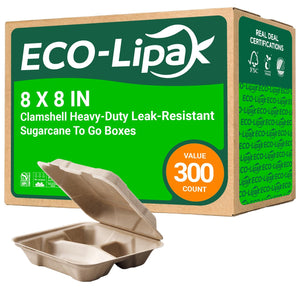
Separate the menu into box-shaped meals and wet meals. A molded-fiber clamshell may work for a dry sandwich-and-side lunch, while a saucy grain bowl may need a different form and a leak test. Compare the takeout container collection and the 8 x 8 compartment clamshell if sauce separation is truly needed. Do not buy the compartment version for every order merely because one menu item requires it.
Catered office lunch with a fixed headcount
For a booked 150-person lunch, plan the specific menu box and a small replacement buffer. A 200-count 8-inch carton might cover the service with 50 left over; a 500-count natural rectangular carton could be too much unless future events will use it. Coordinate containers with the delivery vehicle, stacking height and pickup time. A box that closes well at the counter can still crush when stacked too high.

Claims and purchasing checks
“Sugarcane fiber” describes the base material; it does not by itself prove acceptance in a local compost program. Check the finished item's applicable certification, food-contact claims and the collector's rules. ECO-Lipak's compostable certification guide is a useful checklist, while the U.S. EPA composting overview explains why disposal routes vary. In day-to-day buying, the first test remains food fit and reliable service, followed by a specific end-of-life plan.
Frequently Asked Questions
Should a small deli buy the 200-count or 400-count carton?
Choose by the food size and expected demand, not only the count. The 8-inch white option is 200 per carton and the 6-inch white option is 400; they do different jobs.
Is the 9 x 6-inch box available in both colors?
Yes, but current wholesale counts differ: 300 white or 500 natural per carton. Verify the variant before buying.
Can a plain clamshell keep sauce separate?
No. A single-compartment box has no divider. Use a separate portion cup or test a compartment design.
How much buffer should a deli hold?
Start with a modest allowance based on remakes and rushes, then replace it with your own measured rate. Count by box size.
Are used sugarcane boxes always compostable locally?
No. Ask the local collection program about the exact finished container and food contamination rules.