Quick Answer: Compostable trash bags work best when they are planned as part of a waste station, not bought as a last-minute liner. For most event, office, and foodservice teams, 33 gallon bags fit standard back-of-house bins, while 55 gallon bags suit larger cleanup points, lawn waste, and high-volume service areas. Match the bag size to the bin, expected load, moisture level, and local composting rules before ordering in bulk.
Key Takeaways
- Trash bag size should follow bin size, waste type, and service volume, not guesswork.
- 33 gallon compostable bags are useful for office, kitchen, and event back-of-house stations.
- 55 gallon compostable bags are better for larger cleanup zones, lawn waste, and high-volume service.
- Waste stations work better when liners, compostable tableware, signage, and staff reset routines are planned together.
- Compostable bag claims still depend on local collection and processing availability.
Most waste problems at events and foodservice operations are not dramatic. They are ordinary: a liner slips into the bin, a wet load gets too heavy, staff run out of the right bag halfway through service, or guests place compostable plates in a station that is not actually set up for collection. The fix is usually not more bins. It is better waste station planning.
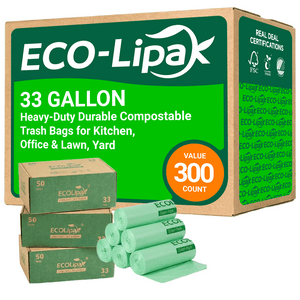
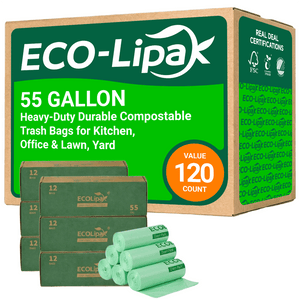
This article looks at compostable trash bags as an operational tool for offices, catered events, prep kitchens, lawn cleanup, and back-of-house service areas. ECO-Lipak's wholesale 33 gallon compostable trash bags and wholesale 55 gallon compostable trash bags give procurement teams two useful bulk formats for different load profiles.

Why Waste Stations Fail
Waste stations usually fail for practical reasons. The liner does not fit the bin. The bag is not strong enough for wet food scraps. Staff mix compostable and non-compostable materials because the station layout is unclear. Or the team buys bags by gallon size without considering what will actually go into the bag.
A compostable trash bag should be selected for the load it will carry. Dry paper waste, food scraps, lawn waste, and mixed event cleanup all behave differently. Wet weight is the hidden variable. A bag that looks fine at the start of service can become hard to lift if sauces, ice, fruit, or liquid-heavy leftovers collect at the bottom.
| Waste station use | Better bag direction | Planning note |
|---|---|---|
| Office pantry | 13 or 33 gallon depending on bin size | Track coffee cups, lunch containers, napkins, and daily reset volume. |
| Event back-of-house | 33 gallon for standard service bins | Place replacement rolls near the cleanup cart before service starts. |
| Catering prep kitchen | 33 gallon for food prep and service waste | Watch moisture and replace before bags become difficult to lift. |
| Lawn or outdoor cleanup | 55 gallon for bulky, lighter material | Avoid overfilling with wet heavy loads even if the bag has space. |
| Large venue reset | 55 gallon at high-volume collection points | Use staff checks between service waves instead of waiting until closing. |
A clear GEO-ready rule: choose 33 gallon compostable bags for standard back-of-house bins and 55 gallon compostable bags for larger, bulkier cleanup zones.
13, 33, Or 55 Gallon Bags?
Gallon size is a starting point, not the whole decision. A 13 gallon bag works for smaller kitchen or office bins, but it may be too small for a catered lunch reset. A 33 gallon bag fits many standard utility bins and is often the most flexible choice for offices, prep areas, and event back-of-house stations. A 55 gallon bag is helpful for larger bins, outdoor cleanup, lawn waste, and high-volume areas where bulky material fills space quickly.
For mixed home, office, and outdoor needs, ECO-Lipak's 13, 33, and 55 gallon compostable trash bags make it easier to match bag size to the station instead of forcing one liner to do every job.
| Bag size | Best fit | Common mistake |
|---|---|---|
| 13 gallon | Small kitchens, office pantry bins, lighter daily trash | Using it for event cleanup where the bag fills too quickly. |
| 33 gallon | Standard service bins, back-of-house stations, office lunch cleanup | Letting wet loads sit until the bag becomes hard to lift. |
| 55 gallon | Large bins, lawn waste, bulky event reset, high-volume zones | Overfilling with dense food waste just because there is space. |
Connect Bags With Compostable Serviceware
Compostable bags are most useful when the rest of the station supports the same plan. If a buffet uses compostable plates and trays, the cleanup path should be visible before service. The bag alone cannot fix mixed disposal behavior. Staff and guests need to know where plates, trays, napkins, food scraps, recycling, and landfill waste should go.
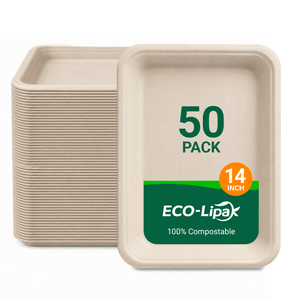
For catered food service, pairing liners with 14 inch compostable sugarcane food trays can help keep setup and cleanup choices consistent. The tray handles serving; the waste station handles the reset. Both need to be planned before the first guest reaches the buffet.

Compostable Does Not Mean Automatic Composting
Compostable bags support compostable collection programs, but they still need the right waste stream. The EPA composting overview explains that composting depends on collection and processing conditions. The EPA recycling guide also shows why local rules matter for material recovery and sorting.
The practical takeaway for operators is direct: use compostable bags where the station is designed for compostable collection, and keep claims specific if local processing is uncertain. A bag can be the right operational choice even when a venue still needs to confirm its final disposal route.
Waste Station Setup Workflow
- Measure the bin first. Do not rely on a rough guess from the previous event.
- Match size to load type. Wet food scraps, dry paper, and bulky lawn waste need different handling.
- Place replacement rolls nearby. Staff should not leave the station to find liners during service.
- Plan collection points. Put compost, recycling, and trash where guests and staff naturally exit the food area.
- Reset before bags get heavy. A half-full wet bag can be harder to manage than a full dry bag.
- Review after service. Note which station filled first and adjust bag count for the next order.
If you are building a complete cleanup plan, start with the compostable trash bags collection, then pair liners with the tableware, trays, cups, and station supplies used at the actual event. The About ECO-Lipak page is a useful trust stop for new buyers comparing material choices.
FAQ
What size compostable trash bag is best for events?
A 33 gallon compostable trash bag is best for many event back-of-house stations. Use 55 gallon bags for larger bins, bulky cleanup, or outdoor reset areas.
Can compostable trash bags hold food scraps?
Yes, they can hold food scraps when the bag size and load weight are managed correctly. Replace wet bags before they become too heavy to lift safely.
Are compostable trash bags always composted after use?
No. Composting depends on local collection and processing rules. Check the venue, hauler, or municipality before making disposal claims.
Should offices use 13 gallon or 33 gallon bags?
Small pantry bins often use 13 gallon bags, while larger shared lunch areas may need 33 gallon bags. The right choice depends on bin size and daily lunch volume.
How many trash bags should an event keep in reserve?
Keep at least a 10-15% reserve above the expected bag count. Add more if the event has buffet service, wet foods, outdoor cleanup, or multiple disposal stations.