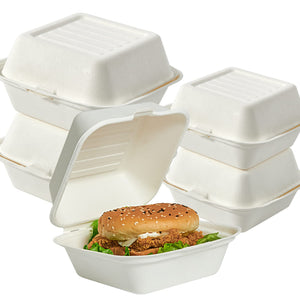
Bagasse clamshells show strong performance in heat resistance, making them ideal for microwave reheating. These food packaging options, crafted from sugarcane fiber, maintain safety up to 120°C and do not release harmful chemicals. Ecolipak’s Sugarcane To Go Boxes provide reliable health protection for meals, supporting sustainability in office catering. Compared to traditional packaging, bagasse offers superior safety, performance, and health benefits. Microwave & Reheating Truth highlights their effectiveness for food reheating, allowing professionals to enjoy meals without compromising health or performance.
Key Takeaways
Bagasse clamshells are microwave-safe and can withstand temperatures up to 120°C, ensuring safe reheating without harmful chemicals.
These containers are made from renewable sugarcane fiber, making them a sustainable alternative to plastic packaging.
Bagasse clamshells are 100% compostable and biodegradable, breaking down within 60 to 90 days, which helps reduce environmental impact.
The sturdy design of bagasse packaging prevents leaks and maintains food quality, making it ideal for office catering and meal delivery.
Ecolipak's bagasse clamshells meet strict food safety standards, providing a reliable choice for corporate wellness initiatives.
What Is Bagasse?
Sugarcane Fiber Origins
Bagasse comes from the fibrous residue left after extracting juice from sugarcane stalks. Farmers and manufacturers collect this material, which once served mainly as agricultural waste. Today, bagasse finds new purpose in sustainable packaging. The process starts with harvesting sugarcane, then crushing the stalks to release juice for sugar production. The leftover pulp becomes bagasse. Companies like Ecolipak use bagasse to create clamshell containers for foodservice. This plant-based material offers a renewable resource that does not require extra crops or fossil fuels. Bagasse supports the shift toward greener office catering solutions, helping businesses meet sustainability goals.
Eco-Friendly Material Benefits
Bagasse provides several environmental advantages for corporate meal delivery and office catering. It acts as a direct replacement for single-use plastic containers. Bagasse clamshells break down naturally after disposal, eliminating long-term pollution. The production of bagasse containers uses agricultural byproducts, reducing waste and conserving resources. Quick-service restaurants and office caterers choose bagasse for its compostable qualities. Municipal restrictions on plastic encourage businesses to adopt bagasse packaging.
Bagasse clamshells offer practical benefits for executive-level catering:
They keep meals safe for desk-side reheating.
They maintain food quality during transport.
They support corporate wellness initiatives.
Bagasse decomposes within 60 to 90 days under composting conditions. Plastic containers can persist for hundreds of years. Bagasse performs comparably to plastic, making it a practical choice for busy office environments. The growth of fast-food chains and changing urban lifestyles drive demand for bagasse clamshells. E-commerce also expands the market for sustainable packaging. Molded fiber clamshells and bioplastic trays, including bagasse options, lead the way in eco-friendly foodservice.
Ecolipak’s Bagasse Clamshells

Product Features and Certifications
Ecolipak’s bagasse clamshells stand out in the world of sustainable food packaging. The company uses bagasse, a natural fiber from sugarcane, to create packaging that supports a cleaner planet. These clamshells are 100% compostable and biodegradable, making them a smart choice for businesses that want to reduce waste. Ecolipak’s packaging is microwave-safe, so office workers can reheat meals at their desks without worry. The non-toxic composition ensures food safety, and the absence of harmful substances protects both people and the environment.
Ecolipak’s commitment to quality shows in its certifications. The packaging meets strict standards for compostability and safety. The following table lists the main certifications for bagasse packaging:
Certification |
Description |
|---|---|
BPI Certification |
Confirms compostability in industrial systems |
EN13432 |
Certifies biodegradability and compostability in Europe |
ASTM D6400 |
Verifies compostability in industrial composting environments |
BPA-Free |
Ensures the packaging contains no bisphenol A |
These certifications give confidence to corporate wellness directors and office caterers who want reliable, recyclable food packaging for their teams.
Leakproof and Durable Design
Ecolipak’s bagasse clamshells offer a leakproof and sturdy design. The double-lock closure keeps food secure, even during transport. This feature helps prevent spills in busy office settings. The durable food packaging handles both hot and cold meals, making it perfect for executive-level catering and enterprise meal delivery networks. The microwave-safe quality allows for safe reheating, while the structure resists warping at high temperatures.
Bagasse packaging supports an office-friendly lifestyle. Employees can enjoy convenient, disposable food packaging that does not sacrifice performance. The packaging remains strong, even with saucy or juicy foods. Ecolipak’s clamshells provide a practical solution for companies that value sustainability and convenience. They help businesses meet green goals while delivering quality meals to every desk.
Tip: Ecolipak’s microwave-safe bagasse clamshells make meal prep and catering simple, safe, and eco-friendly for any professional environment.
Microwave & Reheating Truth
Microwave Safety and Performance
Bagasse clamshells deliver impressive performance in microwave environments. The microwave & reheating truth shows that these containers maintain structural integrity and safety during meal preparation. Scientists have studied bagasse and found that it does not release toxins or deform when exposed to microwave heat. Bagasse products withstand temperatures up to 220 degrees Fahrenheit, making them ideal for hot meals and microwavable meals in office settings.
The cellulose fibers in bagasse contain β-1,4-glycosidic bonds. These bonds form long, rigid chains that resist thermal motion. High crystallinity in the fibers reduces movement under thermal stress. Dense hydrogen bonding creates strong stability. Lignin, another component in bagasse, has aromatic rings that provide resistance to thermal deformation. During heat pressing, lignin forms cross-linked networks, acting like a natural thermoset resin. This structure gives bagasse clamshells their heat-resistant food packaging qualities.
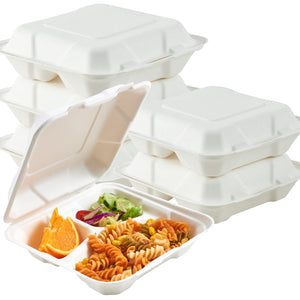
Ecolipak’s 8 inch Compostable Sugarcane 3 Compartment To Go Boxes demonstrate microwave & reheating truth in real-world scenarios. Office caterers use these boxes to deliver meals that employees can reheat at their desks. The boxes keep food safe from plastic contamination. They do not melt, buckle, or lose their seal during microwave use. Employees enjoy hot meals without worrying about odors or leaks. The design supports executive-level catering, making meal delivery networks more efficient.
Note: Bagasse containers outperform traditional paper and Styrofoam in thermal stability. They stay strong and reliable during microwave & reheating truth, ensuring food safety for every meal.
Thermal Thresholds and Practical Use
Bagasse clamshells excel in thermal environments. The microwave & reheating truth reveals that these containers handle thermal extremes without losing their shape. Bagasse products are oven safe up to 220°C. They do not melt or release odors, even when exposed to high-power microwave or convection oven heating. This makes them perfect for hot meals in corporate catering.
The thermal properties of bagasse come from its microfibrils. These microfibrils maintain structure under thermal stress. The material’s thermal stability ensures that food stays secure during reheating. Ecolipak’s clamshells support office-friendly lifestyles. Employees can store meals in the refrigerator, then reheat them in the microwave. The boxes keep food fresh and safe.
Office caterers rely on bagasse clamshells for meal prep and delivery. The microwave & reheating truth proves that these containers protect food during transport and reheating. They prevent leaks and spills, making them a trusted choice for executive-level catering. Ecolipak’s heat-resistant food packaging supports corporate wellness directors who prioritize safety and convenience.
Bagasse clamshells withstand thermal extremes.
They keep hot meals safe and fresh.
Ecolipak’s boxes offer reliable microwave & reheating truth for office environments.
Tip: Choose bagasse clamshells for microwavable meals. They deliver thermal stability and safety, making every meal convenient and eco-friendly.
Comparing Bagasse to CPET Food Packaging
CPET vs Bagasse: Heat Resistance
Bagasse clamshells and CPET food packaging serve similar purposes in meal delivery, but their performance differs greatly. Bagasse containers stay strong during microwave reheating. They resist warping and do not sweat when exposed to hot food. CPET food packaging, made from plastic, often warps or bends under high heat. Some CPET trays release odors or chemicals when heated, which can affect food quality. Office caterers prefer bagasse for desk-side reheating because it keeps meals safe and stable. Bagasse does not leach harmful substances into food, making it a reliable choice for executive-level catering. CPET food packaging sometimes fails to protect food during transport, especially with saucy or greasy meals. Bagasse clamshells prevent leaks and keep food separated, supporting an office-friendly lifestyle.
Tip: Bagasse clamshells offer safe reheating and sturdy performance, making them ideal for corporate wellness directors who value food safety.
Environmental Impact Comparison
Bagasse and CPET food packaging differ in their environmental effects. Bagasse comes from renewable sugarcane, while CPET uses fossil fuels. Bagasse breaks down quickly after disposal, leaving no toxins behind. CPET food packaging takes much longer to degrade and can pollute oceans and landfills. Bagasse supports resource efficiency and reduces carbon emissions. CPET food packaging increases pollution and carbon footprint. Many office meal delivery networks choose bagasse to meet sustainability goals.
The following table shows the environmental differences between bagasse and CPET food packaging:
Aspect |
Bagasse |
CPET (Plastic) |
|---|---|---|
Raw Material |
Derived from renewable sugarcane |
Made from non-renewable fossil fuels |
Environmental Impact |
Lower carbon footprint, biodegradable |
Significant carbon emissions, long degradation time |
Resource Efficiency |
Renewable and compostable |
Non-renewable, contributes to pollution |
Pollution Potential |
Minimal, compostable |
High, especially in oceans |
Bagasse packaging helps protect green spaces and supports eco-conscious operations. CPET food packaging creates waste and harms the environment. Office caterers and corporate wellness directors trust bagasse for safe, sustainable food solutions.
Real-World Catering Applications
Ecolipak in Corporate Catering
Ecolipak’s bagasse clamshells have become a popular choice in the foodservice industry. Many office caterers use these containers for ready-meal packaging because they keep food fresh and safe during transport. Companies that provide meals for large meetings or daily staff lunches rely on this packaging to deliver hot and cold food without leaks. The three-compartment design helps keep different foods separate, which improves the meal experience for employees.
Catering teams appreciate the sturdy construction of Ecolipak’s packaging. The boxes do not bend or collapse, even when filled with heavy meals. Food stays organized and appetizing, which is important for executive-level events. Meal prep services also use these containers to portion out balanced meals for the week. The packaging can go from the refrigerator to the microwave, making it easy for workers to reheat food at their desks. This convenience supports an office-friendly lifestyle and helps companies meet their sustainability goals.
User Feedback and Industry Standards
Users report that Ecolipak’s bagasse packaging performs well with hot food. They note that the containers do not warp, melt, or release any toxic chemicals, even when reheating meals in the microwave. The thick and rigid design means the packaging does not bend under heavy food. Many users say they feel confident serving hot dishes, knowing the packaging will not leak or fail.
Ecolipak’s bagasse packaging can withstand temperatures up to 120°C (248°F).
The containers handle multiple microwave cycles without losing shape.
They keep food secure for over 30 minutes with hot liquids.
Meals with greasy or saucy food stay fresh for more than 12 hours without leaks.
Industry standards show that bagasse packaging resists deformation and leakage, even at high temperatures. The table below compares heat resistance in common food packaging materials:
Material |
Heat Resistance |
Additional Notes |
|---|---|---|
CPET |
Up to 200°C |
Does not produce toxic substances when heated. Ideal for reheating food. |
Bagasse |
Up to 220°C |
Resists deformation and leakage, suitable for high-heat applications. |
Catering companies and corporate wellness directors trust Ecolipak’s packaging for safe, reliable food delivery. The packaging meets the needs of modern offices, where meals must be convenient, eco-friendly, and ready to eat.
Limitations and Safety Considerations
Oil, Grease, and Boiling Water
Bagasse clamshells show strong resistance to oil and grease. The dense fiber structure, formed during the molding process, creates a barrier that keeps most oils and liquids from seeping through. This feature supports food safety in busy office catering environments. The compartment design in Ecolipak’s boxes helps limit sauce movement, while a secure lid keeps oily liquids away from the rim.
Factor |
Effect On Oily Meal Packaging |
|---|---|
Fiber density |
Reduces pathways for grease migration |
Wall uniformity |
Prevents local weak spots |
Barrier chemistry |
Influences oil and water resistance |
Food temperature |
Higher heat increases stress |
Contact duration |
Longer exposure raises penetration risk |
Compartment design |
Limits sauce movement |
Lid fit |
Keeps oily liquid away from the rim |
Bagasse containers can hold hot or greasy food and resist heat up to 200°F (93°C). They maintain their shape under normal use, even with heavy meals. However, very high temperatures, such as boiling water, may cause the material to soften or break down over time. Office caterers should use normal serving temperatures and portion weights. They should inspect the packaging after reheating, especially when meals contain sauces or oils.
Tip: For best results, test finished meals at intervals and check the bottom, corners, and lid area for leaks.
Handling and Storage Tips
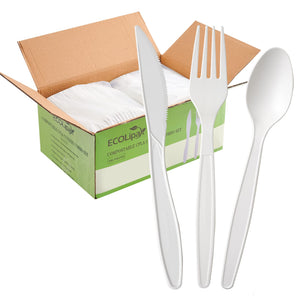
Proper handling and storage help maintain the quality and food safety of bagasse clamshells. Staff should keep the boxes in their original packaging until use. Dry storage areas prevent moisture damage. Direct sunlight can degrade the material and cause warping, so storage in shaded areas is best. Training staff on stacking limits prevents crushing or bending. Using the boxes within their recommended shelf life (12-24 months) ensures optimal performance. Providing appropriate cutlery reduces the risk of puncturing the container.
Safety Consideration |
Description |
|---|---|
Store in original packaging until use |
Maintains product integrity and performance |
Maintain dry storage areas |
Prevents moisture damage |
Avoid direct sunlight exposure |
Protects from degradation and warping |
Train staff on stacking limits |
Prevents product damage |
Use within recommended shelf life |
Guarantees optimal performance and safety |
Provide appropriate cutlery |
Reduces risk of puncturing |
Bagasse clamshells meet FDA and EFSA standards for food safety. They are free from BPA and phthalates, providing a reliable barrier against contaminants. These features make them a trusted choice for executive-level catering and office-friendly meal delivery.
Bagasse clamshells from Ecolipak show strong reliability for heat applications. Studies confirm that this packaging stays safe for hot food, does not melt, and avoids harmful chemicals. Office caterers value bagasse for its sustainability and performance. Key advantages include:
Packaging comes from renewable resources and supports sustainability.
Bagasse packaging is compostable, biodegradable, and safe for food.
It reduces environmental impact and meets strict food safety standards.
Packaging handles a wide range of food temperatures.
Bagasse packaging stands out as a next-generation solution for foodservice. Foodservice buyers can trust Ecolipak to support sustainability and operational stability.
FAQ
Are Ecolipak bagasse clamshells safe for microwaves?
Yes. Ecolipak bagasse clamshells handle microwave reheating up to 120°C. They do not release harmful chemicals. Office caterers can use them for safe, convenient desk-side meal warming.
How long can hot food stay in bagasse clamshells?
Bagasse clamshells keep hot food secure for over 30 minutes. Meals stay fresh and leak-free during transport and reheating. This feature supports executive-level catering and busy office schedules.
Can bagasse clamshells hold oily or saucy foods?
Yes. The dense fiber structure resists oil and grease. The compartment design keeps sauces separate. Office meal delivery teams trust these boxes for a variety of menu items.
Are Ecolipak clamshells compostable after use?
Absolutely. Ecolipak clamshells break down in commercial composting facilities within 60 to 90 days. They leave no toxins behind. This helps companies meet sustainability goals.
What certifications do Ecolipak bagasse clamshells have?
Ecolipak clamshells hold BPI, ASTM D6400, and EN13432 certifications. They are BPA-free and meet strict food safety standards. These certifications give confidence to corporate wellness directors and office caterers.