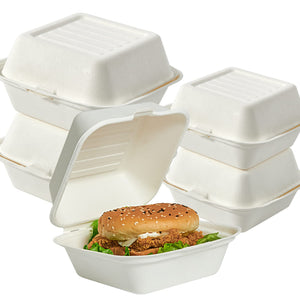
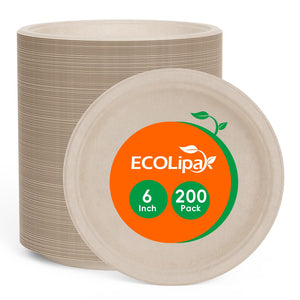
The "compostable" label on most packaging can be misleading. Many people believe it means you can toss the package into a home compost pile. Here is the shocking truth about the compostability of products like sugarcane food packaging:
A product with ASTM D6400 or ASTM D6868 certification is only compostable in a high-temperature industrial facility. This standard does not apply to a backyard compost bin.
This gap between consumer expectation and technical reality creates the perfect opportunity for greenwashing. So, what do these official-sounding ASTM standards guarantee for compostable packaging, and how can you spot a truly sustainable product?
Key Takeaways
ASTM standards like D6400 and D6868 mean a product is compostable only in industrial facilities. These products do not break down in a home compost pile.
Industrial composting facilities use high heat to break down materials. Home compost piles do not get hot enough for certified compostable items to break down.
Many brands use vague terms like "biodegradable" or "eco-friendly." These terms can be greenwashing. Look for BPI or CMA logos for true compostable certification.
Always check if you have access to an industrial composting facility before buying compostable products. If you are unsure, put the item in the trash to avoid contaminating compost.
Decoding ASTM Standards: D6400 vs. D6868
Official-sounding labels like ASTM D6400 can build trust. They make a product seem genuinely eco-friendly. But what do these astm standards actually test for? For businesses, passing these tests is essential. It helps them meet the demands of eco-conscious clients and pass customs inspections in regions with strict environmental laws. Let's break down what these certifications mean.
What is ASTM D6400 for Plastics?
ASTM D6400 is a key standard in the United States. It specifies the requirements for plastics that are designed to be composted in industrial facilities. This standard applies to solid plastic products like:
Plastic films
Containers made from organic materials
Other solid products designed for composting
To earn this certification, a product must pass a strict three-part test in a controlled lab setting. This ensures it won't harm the final compost.
Disintegration: The product must physically break down. After 12 weeks in the composting process, less than 10% of the original material can remain on a 2mm screen. This ensures no large plastic chunks are left.
Biodegradation: The material must chemically decompose. Microorganisms must convert at least 90% of the carbon in the plastic into carbon dioxide. This process proves the material is truly returning to nature.
Eco-toxicity: The resulting compost must be safe for plant life. The test measures heavy metal content and plant germination rates to ensure no toxic substances are left behind. This is a critical step for eco-toxicity validation.
This rigorous lab testing confirms that biodegradable plastics, like those made from PLA, can break down under the right conditions.
What is ASTM D6868 for Coated Paper?
Many paper products, like coffee cups and to-go boxes, have a thin plastic lining to prevent leaks. ASTM D6868 is the standard for these items. It ensures that not only the paper but also the coating, adhesive, and inks will compost successfully.
This standard covers coatings made from various materials, including:
PLA (Polylactic Acid), a bio-plastic derived from corn or sugarcane.
PHA (Polyhydroxyalkanoates), a polymer made by microbes.
Water-based or bio-resin coatings made from starches or other plant polymers.
Essentially, ASTM D6868 applies the same three-part test of disintegration, biodegradation, and eco-toxicity to every component of a coated product.
The Limits of Certified Compostability
Here is the critical point: ASTM certifications are based on ideal lab conditions. Real-world industrial facilities are much more variable. This gap between lab testing and field testing creates significant limitations for compostability.
A lab provides stable heat and moisture. An industrial facility faces constant change. The table below shows how lab conditions differ from the field testing environment.
Aspect |
Lab (ASTM D6400/D6868) |
Field (Industrial) |
|---|---|---|
Temperature |
Stable 58 °C (136 °F) |
Cycles between 35–65 °C (95-149 °F) |
Moisture |
Around 50% |
Fluctuates between 35–60% |
Aeration |
Active, consistent |
Variable with pile density |
Residence Time |
90 to 180 days |
Often 8–12 weeks (active composting) |
These differences have a huge impact. A biodegradable plastic that passes its disintegration test in a 90-day lab trial may take 120-160 days to break down in a real facility. Because facilities prioritize speed, materials that don't break down quickly can clog machinery or contaminate the final compost, leading to rejection. This highlights the difference between controlled lab results and the realities of field testing. The success of disintegration in field testing is not always guaranteed.
Why They Fail in Your Backyard Compost
If certified compostable materials struggle in industrial facilities, they stand no chance in a backyard pile. The reason is simple: heat.
Beneficial microorganisms in a compost pile require an optimal temperature range of 131 to 160 degrees Fahrenheit for their activity.
Industrial facilities are designed to maintain these high temperatures. Your backyard pile is not.
Composting Type |
Temperature Range |
|---|---|
Industrial |
55-70°C (131-158°F) |
Home/Backyard |
Ambient temperatures, low and variable |
Materials like PLA require temperatures above 55°C for biodegradation to even begin. Without that heat, a "compostable" fork or cup will not break down. One study found that after 7 months in a home compost environment, PLA products showed no signs of degradation.
Instead of turning into healthy soil, these items persist. They become macro and microplastic pollutants that contaminate your compost and soil. These fragments can harm soil organisms and may even enter the food chain. This failure to break down creates a serious eco-toxicity risk, turning a well-intentioned act into a source of pollution. The lack of proper disintegration in home compost is a major flaw in how these products are marketed.
The Greenwashing Trap: How Brands Mislead You

Brands know that consumers want to make sustainable choices. Some companies use this desire to their advantage through greenwashing. They use confusing terms and unverified claims to make products seem more eco-friendly than they are. This creates a trap for well-meaning buyers and puts honest businesses at a disadvantage. Understanding these tactics is the first step to avoiding them.
Industrial vs. Home Composting
The most common greenwashing tactic involves blurring the line between industrial and home composting. The two processes are fundamentally different. The key difference is heat.
Industrial composting facilities are actively managed to maintain temperatures between 131°F and 160°F. These high temperatures are necessary for the rapid breakdown of organic materials, including certified compostable packaging.
Home compost piles rarely reach or sustain this level of heat. They have inconsistent temperatures, moisture levels, and microbial populations. Industrial composting uses specific microbes that thrive in high heat to perform biodegradation. These microbes break down tough polymer chains in certified products. Home composting environments lack these consistent conditions.
So, what happens when an ASTM-certified product ends up in your backyard bin?
It fails to break down. The material requires high heat to begin the disintegration process.
It becomes a contaminant. The item, like a PLA fork or cup, will persist for months or even years.
It pollutes your compost. It eventually fragments into smaller plastic pieces, contaminating the soil you worked hard to create.
This failure of disintegration in a home setting turns a supposedly "green" product into a long-term pollutant.
Vague Claims vs. Real Certification
Marketers often use vague, unregulated terms to suggest environmental benefits. These words sound good but often mean very little without proper certification. Watch out for phrases like:
Eco-friendly
Earth-friendly
Plant-based
Green
Biodegradable
The term "biodegradable" is especially misleading. According to the U.S. Federal Trade Commission (FTC) Green Guides, a product can only be called biodegradable if the entire item completely breaks down and returns to nature within one year of customary disposal. Since most trash ends up in landfills deprived of oxygen and light, very few products meet this standard. The term "compostable" is more specific. It means a product has scientific evidence that it can become usable compost in a timely manner.
Companies that misuse these terms face serious consequences. This is a major risk for businesses, as penalties can be severe.
Company |
Action/Claim |
Penalty/Consequence |
|---|---|---|
Clorox Australia |
Falsely claimed GLAD bin liners were made from "50% ocean plastic" |
Fined AUD $8.25 million |
Deutsche Bank’s DWS |
Overstated its use of sustainable investing criteria |
Fined $27 million by U.S. regulators |
Coca-Cola |
Used misleading language like “100% recycled” on bottle labels |
Required to revise labels, risking costly rebranding |
Recent class-action lawsuits show that claims about compostability are also under scrutiny. For businesses, making unverified claims is a direct path to legal trouble and losing customer trust. The lack of proper field testing can lead to costly litigation.
Company/Product |
Claim |
Status |
|---|---|---|
Matter disposable plates & bags |
Compostable |
Pending (Class action filed Feb. 2024) |
Earth Rated dog poop bags |
Compostable |
Voluntarily dismissed (Class action filed Feb. 2024) |
Earth Rated dog poop bags |
Compostable |
Stayed (Class action filed Dec. 2023) |
Even established brands like Lavazza have faced rulings over their "compostable" coffee pods, highlighting the need for clarity between industrial and home compostability. Successful field testing is no longer a recommendation; it's a business necessity.
Reading Labels: BPI & CMA Logos
So, how can you identify truly compostable packaging? Ignore the vague marketing words on the front. Instead, turn the product over and look for official certification marks. In the United States, the two most important logos to know are from the Biodegradable Products Institute (BPI) and the Compost Manufacturing Alliance (CMA).
BPI (Biodegradable Products Institute): This is the most widely recognized certification for compostable products in North America. The BPI logo confirms that a product has passed the required astm standards (like astm d6400 for biodegradable plastics) and will undergo proper disintegration in an industrial facility. BPI requires its logo to be printed on the product itself, not just the outer packaging, to ensure composters can identify it. This level of field testing ensures a product's compostability.
CMA (Compost Manufacturing Alliance): The CMA takes field testing a step further. It is a group of industrial composters who test products in their real-world facilities. A CMA-approved logo means a product has proven its disintegration and compostability in multiple processing technologies.
Finding one or both of these logos is your best assurance that a product's claims of compostability are legitimate. For businesses, sourcing products with these certifications is crucial for meeting client expectations and ensuring smooth passage through customs in regions with strict environmental laws. It is the clearest way to demonstrate a commitment to genuine sustainability.
Your Guide to Compostable Packaging
Navigating the world of compostable packaging can feel complex. You can make truly sustainable choices with the right knowledge. This guide provides three simple steps to ensure your good intentions lead to good environmental outcomes.
Step 1: Check for Local Facility Access
A product's compostability is useless without a place to compost it. Before you buy, confirm you have access to an industrial composting facility. Many cities now offer programs.
San Francisco, CA
Minneapolis, MN
Austin, TX
Denver, CO
Boston, MA
You can use online tools to find a local service. Websites like BioCycle's FindAComposter.com and Better Earth’s Compost Drop Off Database help you locate nearby facilities that accept compostable packaging. This first step is vital for successful material disintegration.
Step 2: Find Certified Products like Ecolipak's
Once you confirm facility access, look for brands committed to transparency. Ecolipak offers genuinely sustainable packaging solutions. A prime example is the 8 inch Compostable Sugarcane 3 Compartment To Go Boxes. These containers are BPI Certified, guaranteeing their disintegration in a commercial facility.
They are made from sugarcane bagasse, an upcycled agricultural waste. This material choice supports a circular economy. It also ensures a faster disintegration than many other bioplastics. Customers love that these boxes are sturdy, leakproof, and microwave-safe. Choosing them proves you don't have to sacrifice quality for sustainability. For your next green choice, remember: Green Pack, Go for ECOLipak.
Step 3: When in Doubt, Use the Trash
This rule is the most important in composting. Tossing the wrong item into a compost bin causes contamination. Non-compostable items require manual removal. This extra labor increases costs for facilities. Contamination can ruin entire batches of compost, forcing them into a landfill. A product that fails to achieve full disintegration becomes a pollutant. Protecting the composting stream is everyone's responsibility. If you are unsure about an item's certification, the trash is the safest place for it to prevent incomplete disintegration.
The "compostable" label, even with ASTM standards, almost always means industrial compostability only. Using this term without context is a common form of greenwashing. You now have the power to see past these claims. You can check for BPI/CMA logos, find local facilities, and choose trustworthy brands like Ecolipak. Their certified compostable packaging helps businesses meet a higher standard of sustainability. The future of compostability is promising, but it requires clarity.
True sustainability is not about trusting one word on a label. It is about understanding the full product lifecycle and demanding transparency from the brands we support.
FAQ
Why should my business care about BPI certification?
BPI certification is essential for business. It proves your products meet legal standards for compostability. This helps you pass customs inspections in regions with strict environmental laws. It also builds trust with eco-conscious clients who demand verified sustainable products.
What is the difference between "biodegradable" and "compostable"?
"Biodegradable" is a vague term. It means something will break down eventually, but the timeline is not defined. "Compostable" is a specific claim. It means a product will break down into nutrient-rich soil within a set time in a commercial facility.
Can I compost Ecolipak's sugarcane boxes at home?
Ecolipak's sugarcane boxes are BPI Certified for industrial composting only. They require the high heat of a commercial facility to break down properly. They will not decompose in a backyard compost pile. Always send them to a local industrial composting service.
What happens if I put the wrong item in the compost bin?
Putting non-compostable items in a compost bin causes contamination. Workers must remove these items by hand, which increases costs for the facility. This contamination can ruin entire batches of compost, forcing them to be sent to a landfill instead.
Remember: When in doubt, throw it out! Protecting the compost stream is crucial.