Choosing a reusable bag is your best move for the environment. However, you sometimes need a single-use bag for your household waste. This raises questions about compostable, biodegradable, and recycled options.
You may wonder: Is a biodegradable bag truly better than a compostable one? What makes the best compostable trash bags different from other compostable trash bags?
The answer depends on your local disposal capabilities.
Key Takeaways
Always choose reusable bags first; they are the best for the environment.
Compostable bags are good, but only if your town has a special composting facility.
Be careful with 'biodegradable' labels; they often do not mean the bag breaks down safely or quickly.
Recycled plastic bags help reduce new plastic, but they are still single-use items.
Check your local waste services to pick the right single-use bag for your area.
Why Reusable Bags Are the Top Choice
Before we compare single-use options, it's important to understand why reusable bags are the gold standard for the environment. Making them your first choice is the most effective way to create a positive change.
The Power of Reduce and Reuse
You have likely heard of "Reduce, Reuse, Recycle." These actions are listed in order of importance.
Reduce: Use fewer resources in the first place.
Reuse: Use items multiple times before replacing them.
Recycle: Turn an old item into a new one.
Choosing a reusable bag is a perfect example of reducing and reusing. Every time you bring your own bag, you prevent a single-use one from being created. This simple habit directly lowers your environmental impact.
The Environmental Cost of Single-Use Items
Single-use bags require significant energy and resources to produce, transport, and dispose of. For example, the estimated carbon footprint for producing just one single-use plastic bag is 1.58 kg of CO2e. When you multiply that by the billions of bags used globally, the numbers become staggering. This cycle contributes to resource depletion, increased waste, and other major environmental concerns.
Examples of Great Reusable Bags
A great reusable bag is durable, easy to clean, and fits your lifestyle. Different materials offer unique benefits for a long-lasting, sustainable option.
Tip: Look for bags made from sturdy materials that can handle heavy loads and last for years.
Material |
Key Advantages |
|---|---|
Canvas |
Extremely strong, tear-resistant, and can be washed frequently. |
Jute |
A robust natural fiber known for its exceptional strength and durability. |
Recycled PET (RPET) |
Made from recycled plastic bottles, it is water-resistant and very durable. |
Compostable vs. Biodegradable vs. Recycled Bags

When you cannot use a reusable bag, you face a choice for your single-use needs. Understanding the terms compostable, biodegradable, and recycled is key to making the best decision for your local area. This section breaks down the compostable vs biodegradable debate and shows where recycled bags fit in.
The Pros and Cons of Compostable Bags
Compostable bags offer a fantastic solution for waste, but only under the right conditions. These bags are made from compostable materials, like plant-based starches, that can break down completely into natural elements.
The main benefit is clear. When you send a compostable bag to an industrial composting facility, it turns into nutrient-rich soil, or compost. This process returns organic matter to the earth and avoids sending waste to a landfill. This makes compostable packaging a great choice for a circular economy.
However, there is a major catch. Compostable bags require the specific high-heat environment of an industrial composter to break down properly. If a compostable bag ends up in a landfill, it will not decompose as designed. Landfills lack the oxygen and microorganisms needed, so the bag may linger for years, similar to conventional plastic. This is why your access to a composting facility is so important when choosing compostable packaging.
Understanding the 'Biodegradable' Label
The term "biodegradable" can be confusing and is often misleading. In theory, almost everything is biodegradable, meaning it can be broken down by living organisms over time. The problem is that the term doesn't specify how long it will take or what it will break down into.
Many products with a biodegradable label do not break down in a timely or safe manner. The U.S. Federal Trade Commission (FTC) has rules to prevent misleading claims.
The term ”biodegradable” when used for marketing purposes includes a time component regarding the length of time it takes for the plastic to fully degrade... It is deceptive to make an unqualified degradable claim for items entering the solid waste stream if the items do not completely decompose within one year after customary disposal.
Without the right conditions, some biodegradable materials simply fragment into tiny, harmful microplastics. These microplastics can contaminate soil, water, and even enter the food chain. This makes most biodegradable packaging a risky choice unless it is also certified compostable. Always be cautious with a simple biodegradable claim on packaging. These biodegradable materials are not always the sustainable solution they appear to be.
The Case for Recycled Plastic Bags
Recycled plastic bags offer a different kind of environmental benefit. Their main advantage is that they reduce the demand for new, "virgin" plastic production. Making products from recycled materials uses less energy and conserves natural resources like petroleum.
When you choose a recycled bag, you support a market for recycled plastic. This helps keep plastic waste out of landfills and oceans. Using recycled packaging is a good example of the "Recycle" part of "Reduce, Reuse, Recycle."
However, the plastic recycling process has limitations.
It's Inefficient: Not all plastic that enters a recycling bin actually gets recycled. Contamination is a major issue.
Limited Lifespan: Plastic can only be recycled a few times before its quality degrades too much.
Energy Use: The recycling process itself still requires energy and water.
A recycled bag is often better than a new plastic one, but it is still a single-use item that will eventually become waste. Recyclable packaging is a step in the right direction, but it is not a perfect solution.
Why 'Certified Compostable' Matters
With confusing terms like biodegradable, how can you trust a product is truly eco-friendly? The answer is certification. A "certified compostable" label provides third-party verification that a product will break down safely in a commercial composting facility.
The Federal Trade Commission requires companies making a compostable claim to have scientific evidence that their packaging will turn into usable compost. Look for these official marks on any compostable packaging:
Certification Body |
What It Means |
|---|---|
BPI (Biodegradable Products Institute) |
The leading North American authority on compostable products. A BPI certified compostable product is verified to break down safely in commercial facilities. |
OK compost HOME |
This certification guarantees the product can be composted in a backyard compost pile. |
OK compost INDUSTRIAL |
This certification ensures a product will break down in an industrial composting facility. |
When you see a certified compostable seal, you know the product meets strict standards. These bioplastics are designed to be part of a sustainable system. Choosing certified compostable products ensures your compostable plastic packaging contributes positively to the environment instead of causing harm. This makes certified compostable packaging a reliable choice for sustainable waste management.
Finding the Best Compostable Trash Bags
When you have access to a commercial composting facility, choosing the best compostable trash bags is an excellent way to manage your household waste. The best compostable trash bags are more than just eco-friendly—they are also strong and reliable for everyday use.
Here’s what you should look for:
BPI Certification: This is non-negotiable. It guarantees the bag meets scientific standards for compostability. Always look for the BPI Certified Compostable logo.
Durable Material: The best compostable trash bags are made from high-quality, plant-based compostable materials like PLA (polylactic acid). This makes them strong and tear-resistant.
Leak-Proof Design: You need a bag that can handle wet kitchen scraps without breaking or leaking.
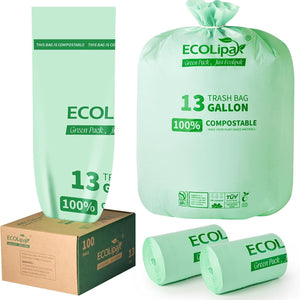
Finding a product that meets all these criteria ensures you are making a truly sustainable choice. For example, Ecolipak's Compostable Trash Bags are a prime example of high-quality, certified compostable packaging. They are BPI Certified and made from durable, plant-based PLA, so you can be confident they will break down safely in a composting facility. Designed to be tear-resistant and heavy-duty, they provide the reliability you need for kitchen waste while supporting a healthier planet. Choosing the best compostable trash bags like these makes your sustainable lifestyle easier and more effective.
Making the Right Choice for Your Area
The best single-use bag is one that your local facilities can process correctly. A bag's environmental impact changes based on your disposal system. For example, a compostable bag sent to a landfill loses its eco-friendly benefit. This section helps you match your choice to your town's services.
Step 1: Check Your Local Waste Services
Your first step is to find out what your community offers. You can usually find this information easily.
Tip: Visit your city or county's public works or sanitation department website. Look for a "recycling guide" or "waste disposal" page. A quick phone call can also give you clear answers.
This simple check is the most important part of making a responsible choice.
Do You Have Industrial Composting Access?
If your town offers a curbside green bin program for food scraps, you likely have access to industrial composting. In this case, a certified compostable bag is an excellent choice. These facilities provide the right conditions for a compostable bag to break down properly. Without this access, a compostable bag is not the right option, as it will not decompose in a landfill. Many biodegradable bags face this same issue.
Does Your Town Recycle Plastic Film?
Some areas have special programs for recycling plastic films, which include many plastic bags. Often, you can drop these off at designated collection points, like local grocery stores. If your town supports this, a recycled plastic bag can be a good option. However, remember that most biodegradable bags cannot be recycled and will contaminate the recycling stream.
What to Do with No Special Services
If your area has no industrial composting or plastic film recycling, your options are limited. In this situation, any single-use bag—whether it's a standard, biodegradable, or compostable bag—will likely end up in a landfill. The goal here is to minimize overall waste. A biodegradable bag will not offer a benefit in a landfill environment. Focus on reducing your bag use altogether and choose the option that uses the fewest resources.
Your most powerful action is choosing a reusable bag. When you need disposable packaging, the best choice depends on your local services. A compostable bag is only effective with a proper composting facility. This makes certified compostable packaging a great sustainable choice in the right setting. The wrong packaging can cause harm. Good compostable packaging is key.
Commit to carrying a reusable bag. When you can't, and you have composting access, choose responsible compostable packaging like Ecolipak's certified compostable products. Make your packaging choice count. Green Pack, Go for ECOLipak.
FAQ
What is the main difference between compostable and biodegradable?
Compostable bags must meet strict standards. They break down into healthy soil in special facilities. The term "biodegradable" is often vague. It does not guarantee a product will break down quickly or safely, and it may leave behind harmful microplastics.
Can I put compostable bags in my home compost bin?
You should only use bags with an "OK compost HOME" certification in your backyard compost. Most certified compostable bags, including many BPI certified ones, need the high heat of an industrial facility to decompose properly. Always check the label for the correct certification.
What makes a compostable trash bag a good choice?
A great compostable bag has key features. Look for BPI certification to ensure it breaks down safely. It should also be strong and tear-resistant for practical use. Ecolipak's Compostable Trash Bags meet these standards, offering a durable, certified, and reliable option for your home.
What if my town has no special disposal services?
If you lack access to industrial composting or plastic film recycling, any single-use bag will go to a landfill. Your best action is to focus on reducing waste. Prioritize using reusable bags whenever possible to make the biggest positive impact.