Quick Answer: For a septic-conscious household, both 2-ply and 3-ply bamboo toilet paper can be practical when the product is labeled septic safe and users flush only reasonable amounts. Choose 2-ply for more sheets per roll, compact storage, and straightforward daily use; choose 3-ply when a thicker feel may reduce the number of sheets some people use. Ply count alone does not protect a septic system. Flushing habits and system maintenance matter more.
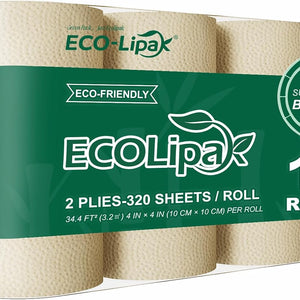
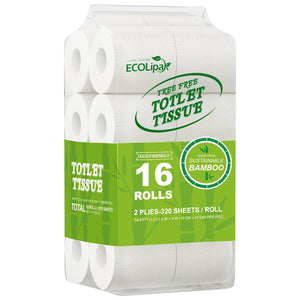
“Septic safe” is often treated like a single feature, but a better buying decision considers the whole bathroom routine. ECO-Lipak's natural 2-ply bamboo toilet paper has 320 sheets per roll, with sheets measuring approximately 4 x 4 inches. It is sold in 16-roll and 24-roll packs and is described as lint-free, absorbent, unscented, tree-free, and septic safe. Here is how to compare it with 3-ply alternatives without assuming that thicker automatically means better.
Key Takeaways
- 2-ply usually offers more sheets and a slimmer roll; 3-ply emphasizes a thicker hand feel.
- The real consumption question is sheets per visit, not rolls per box.
- For septic care, flush only toilet paper and human waste; wipes, paper towels, and hygiene products belong in the trash.
- Natural bamboo paper may be beige rather than bright white. Color is not a measure of septic performance.
- Compare sheet size, sheets per roll, household usage, storage, and reorder frequency before comparing pack price.
2-Ply vs 3-Ply: What Changes?
| Decision point | 2-ply bamboo paper | 3-ply bamboo paper |
|---|---|---|
| Feel | Light, flexible, efficient | Thicker, more cushioned |
| Potential sheet use | Some users fold more sheets | Some users use fewer sheets because each sheet is thicker |
| Roll storage | Often compact for the sheet count | Often bulkier at a comparable diameter |
| Best starting point | Busy households, offices, rentals, practical everyday stocking | Primary bathrooms, hospitality settings, comfort-led purchases |
| Septic consideration | Use a reasonable amount and flush only toilet paper | Use a reasonable amount and flush only toilet paper |
There is no universal winner because people use paper differently. One household may use six sheets of 2-ply and four sheets of 3-ply; another may take the same number regardless of thickness. A one-week household test gives better information than package adjectives. Record how quickly the roll changes, whether users are comfortable, and whether the bathroom holder and storage cabinet accommodate the roll.

What “Septic Safe” Should Mean in Daily Use
The U.S. Environmental Protection Agency advises homeowners to flush only human waste and toilet paper, while keeping wipes, paper towels, feminine hygiene products, diapers, and similar items out of the system. Its broader guidance also emphasizes inspections, pumping, water efficiency, and protecting the drainfield. Read the EPA's septic system care guidance for the complete household checklist.
That makes toilet paper only one part of septic care. Even a product sold as septic safe should not be used to justify flushing a very large wad at once. If a toilet is slow, the plumbing is already restricted, or the septic system is overdue for service, changing ply count is not a repair. Contact a qualified professional when performance changes persist.
Three Buying Scenarios
1. A family bathroom with limited cabinet space
A 2-ply, 320-sheet roll is a sensible starting point when the household wants fewer restocking trips without storing oversized rolls. Keep one spare roll within reach and the remaining pack in a dry cabinet. Track how many days a roll lasts. That number makes the next purchase more accurate than estimating from roll appearance.
2. A short-term rental with mixed guest preferences
Guests vary widely in the number of sheets they use. A clearly stocked 2-ply option can balance comfort and predictable inventory, while a 3-ply test in the primary bathroom may reveal whether reviews or consumption improve. Pair the test with a closed waste bin and a simple reminder that wipes should not be flushed. For inventory planning, see the bamboo toilet paper roll planning guide.
3. An office or studio with weekly cleaning
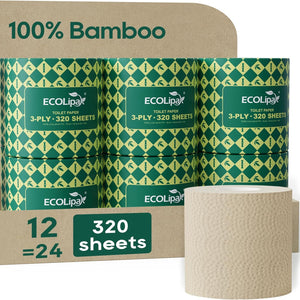
Consistency matters more than luxury claims. Count occupied workdays, average visitors, and rolls used between service visits. A 24-roll carton of 2-ply paper may simplify a predictable restock schedule. Store it above the floor and away from sink splashes. If staff routinely find empty holders, adjust the par level before switching ply.
Run a Simple Home Comparison
- Choose one 2-ply and one 3-ply bamboo product with clearly stated sheet counts.
- Use each in the same bathroom for seven days under normal conditions.
- Record roll changes and ask users only about comfort, lint, and how many sheets they tend to take.
- Do not perform a “flush test” with excessive paper; that creates a plumbing risk rather than useful evidence.
- Calculate cost per day and estimated days per pack, not just cost per roll.

Other Details Worth Checking
Sheet dimensions: A roll with more sheets is not automatically more paper if each sheet is smaller. ECO-Lipak's featured 2-ply roll lists approximately 4 x 4-inch sheets.
Color and processing: Unbleached or naturally colored bamboo paper is typically beige. Bright white and natural beige options can both be bamboo-based; choose according to the product information and your preference rather than treating color as proof of environmental performance.
Fragrance and additives: People who prefer a simple bathroom product often choose unscented paper. Review the exact listing if ingredient or sensitivity concerns are central to the purchase.
Supply format: Compare the 16-roll and 24-roll options with your available storage and reorder cadence. The broader bamboo toilet paper collection includes different ply and color choices, making a small side-by-side trial easier.
Frequently Asked Questions
Is bamboo toilet paper safe for septic tanks?
Use a product specifically labeled septic safe and follow the household's normal septic-care routine. Only toilet paper and human waste should be flushed, and the system still needs inspection and pumping on an appropriate schedule.
Does 2-ply dissolve faster than 3-ply?
Ply count can affect thickness, but construction, embossing, additives, sheet use, plumbing, and water conditions also matter. Do not infer a precise breakdown time from ply count alone.
Is 3-ply always softer?
It is usually thicker, but perceived softness also depends on fiber treatment, embossing, and personal preference. A small pack test is more reliable than choosing only by the number of plies.
Why is natural bamboo toilet paper beige?
The natural beige appearance reflects the product's processing and presentation. It does not mean the paper is dirty, nor does color alone prove how a paper will perform in a septic system.
How many rolls should a household order?
Track rolls used in one or two normal weeks, multiply by the number of weeks between orders, and add a modest reserve. This method accounts for the habits of the people actually using the bathroom.