Should biodegradable plastics go in your recycling bin? The simple answer is no. Placing biodegradable items into recycling contaminates the entire process. Proper disposal is crucial for these materials to be truly eco-friendly.
Key Takeaway: Biodegradable products, including compostable trash bags, have a unique makeup. They cannot be processed with standard recycling. This difference harms the recycling system.
Key Takeaways
-
Do not put biodegradable plastics in your recycling bin. They contaminate the recycling process.
-
Biodegradable plastics do not break down well in landfills. They can release harmful methane gas.
-
Most biodegradable plastics need special industrial compost facilities. They do not break down in home compost bins.
-
Biodegradable plastics do not disappear safely in the ocean. They break into tiny pieces that harm marine life.
-
Always check for certifications like BPI. These labels tell you how to dispose of biodegradable products correctly.
Myth 1: 'Biodegradable' Means Recyclable
A common mistake is thinking that a "biodegradable" label means an item is also recyclable. This is not true. Biodegradable products are made from different materials than traditional plastics. They require a separate disposal process. Putting them in your recycling bin causes significant problems for the recycling system.
Contaminating the Recycling Stream
Biodegradable plastics are designed to break down under specific conditions. Traditional plastics are designed to be melted and remolded. When you mix biodegradable items with regular plastics, you contaminate the recycling stream. This contamination lowers the quality of the final recycled material. A batch of plastic mixed with biodegradable materials can become weak and unusable, forcing the entire load to be sent to a landfill. This defeats the purpose of recycling.
The Problem with Different Melting Points
The recycling process relies on heat. Different plastics have different melting points. Bioplastics and traditional plastics cannot be melted together effectively. This difference is a major issue in recycling facilities.
-
PLA bioplastics have a melting point of around 180–220°C.
-
PET plastics (like water bottles) melt at much higher temperatures.
When bioplastics enter the recycling stream, they melt and burn long before the PET plastics do. This ruins the entire batch of plastic, making it impossible to create new products. The entire effort of recycling is wasted.
Tip for Success 💡 Always check the label on a product. A biodegradable item should never go into your standard recycling bin. Proper sorting is the first step to effective recycling.
Protecting Our Recycling System
Keeping biodegradable items out of your recycling bin is essential. It protects the integrity of our recycling infrastructure. Clean recycling streams produce high-quality materials that can be used to make new products. When we sort correctly, we help the recycling system work as intended. This simple action ensures that our efforts to recycle have a positive impact. Remember, a clean recycling stream starts at home with your choices.
Myth 2: The Truth About Biodegradable Plastics in Landfills
Many people believe that sending a biodegradable item to the landfill is a responsible choice. The logic seems simple: it will just break down naturally. However, this is a major misunderstanding of how landfills work. Tossing biodegradable plastics into the trash can actually cause more harm than good.
Why Landfills Lack the Right Conditions
Modern landfills are not designed for decomposition. They are engineered to store waste and isolate it from the surrounding environment. Most landfills are sealed and deprived of oxygen and microorganisms. These are the exact elements that biodegradable materials need to break down effectively.
A truly biodegradable product requires specific conditions to decompose. Industrial compost facilities provide high heat, humidity, and oxygen. In this environment, a biodegradable item can break down in about 180 days. In an oxygen-starved landfill, that same item will decompose over a very long period, just like any other piece of trash. The biodegradable label becomes meaningless without the right environment.
The Risk of Methane Gas Release
When biodegradable materials, including some bioplastics, are trapped in an oxygen-free landfill, they break down anaerobically. This process releases methane, a powerful greenhouse gas. Methane is a significant contributor to climate change.
Did You Know? 🌍 Methane is a potent greenhouse gas with a serious impact.
Over a 20-year period, methane is about 80 times more powerful at trapping heat than carbon dioxide.
Over a 100-year period, it is about 28 times more potent.
Globally, landfilled waste generates approximately 75 billion cubic meters of methane each year. Sending biodegradable waste to landfills directly contributes to this massive emission, undermining the environmental benefits of using bioplastics in the first place.
Landfills Are Not Giant Compost Bins
It is crucial to understand that a landfill is not a large-scale compost pile. A compost environment is alive with microorganisms, oxygen, and moisture, actively turning organic matter into nutrient-rich soil. Landfills are the opposite; they are designed for containment, not transformation.
A biodegradable product is engineered to return to the earth under the right conditions. A landfill prevents this natural cycle. The material sits preserved for decades or centuries, unable to complete its biodegradable purpose. The promise of a biodegradable product is only fulfilled when it is disposed of correctly, which means keeping it out of the landfill whenever possible.
Myth 3: You Can Compost It in Your Backyard
It seems logical to toss a biodegradable product into your backyard compost bin. Unfortunately, most biodegradable plastics are not designed for home compost systems. This common mistake can ruin your compost and add to pollution.
'Biodegradable' vs. 'Compostable'
The terms 'biodegradable' and 'compostable' are often used interchangeably, but they mean very different things. A biodegradable item can be broken down by microorganisms over time. However, this definition has no time limit. 'Compostable' is a much more specific term.
For a product to be labeled compostable in the United States, it must meet strict standards like ASTM D6400. This means it must:
-
Break down into carbon dioxide, water, and biomass at a consistent rate.
-
Disintegrate completely within 90 days in a commercial facility.
-
Leave no toxic residue behind.
This ensures the final compost is safe for the environment and can support plant life. A biodegradable product does not have to meet these tough requirements.
The Need for Industrial Composting
Most compostable plastics, including many bioplastics, require an industrial composting facility to break down properly. These facilities create the perfect environment for decomposition.
Did You Know? 🌡️ Home compost piles usually reach temperatures of 90-140°F. Industrial facilities maintain much higher, controlled temperatures between 104-140°F, which are essential for breaking down certified compostable plastics.
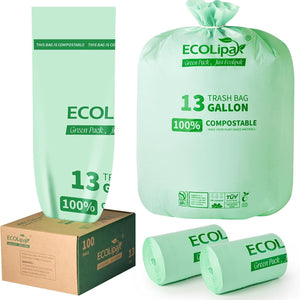
Products like Ecolipak's BPI Certified compostable trash bags are engineered for this high-heat process. The BPI certification guarantees they will break down safely and completely in a commercial compost facility. This highlights why choosing certified products and using the right disposal infrastructure are so important.
When Home Composting Fails
When you put a biodegradable plastic item that is not certified for home compost into your backyard pile, it will not break down. Studies show that PLA bioplastics remain almost fully intact after a year in a home compost environment. The material does not decompose; it simply becomes a plastic contaminant in your compost.
Instead of turning into nutrient-rich soil, the biodegradable item sits there, polluting the very compost you worked hard to create. This defeats the purpose of both composting and using a biodegradable product. For these items to be eco-friendly, they must be sent to a facility that can handle them.
Myth 4: It Will Safely Disappear in the Ocean
The idea of a plastic item harmlessly dissolving in the vast ocean is appealing. However, this is a dangerous fantasy. Most biodegradable plastics are not designed to break down in marine environments. They pose a significant threat to ocean ecosystems.
The Threat of Bioplastics to Marine Life
Bioplastics can harm marine animals just like conventional plastics. Sea creatures often mistake plastic items for food. Ingesting these materials can lead to physiological problems affecting their feeding, reproduction, and movement. Studies show that while some bio-plastics may not cause immediate death, they still accumulate inside animals.
Furthermore, many bioplastics contain thousands of chemicals. Research has found that these chemical mixtures can be toxic. Leachate from PLA-lined cups, for example, caused mortality and deformities in mosquito larvae at levels similar to petrochemical plastics. These materials can act as a sponge for other toxins in the water, making them even more dangerous when consumed.
From Bioplastic to Microplastic
Biodegradable plastics do not simply vanish in the ocean. Instead, they fragment into smaller and smaller pieces. This process creates secondary microplastics. Sunlight and the constant motion of ocean waves cause the material's structure to weaken and break apart.
Important Fact 🌊 Some studies show that certain biodegradable plastics, like PBAT, can produce a significantly larger quantity of microplastic fragments compared to non-biodegradable plastics when exposed to aquatic environments.
These tiny particles persist in the water for a very long time. They spread throughout the ocean, polluting habitats from the surface to the deep sea. The promise of "biodegradable" does not stop this fragmentation process.
Why the Ocean Is Not a Solution
The ocean does not provide the right conditions for most bioplastics to biodegrade. The process requires specific temperatures and microorganisms that are absent in cold, deep, or nutrient-poor marine environments.
For example, PLA plastic shows almost no signs of degradation even after more than a year in natural marine conditions. Marine biologist Christian Lott explains that degradation rates vary greatly. A thin film might break down in a few months in a tropical sea but could take ten times longer in the Mediterranean. In cold places like the Arctic, the process is extremely slow. The ocean is not a universal waste disposal solution; it is a fragile ecosystem that we must protect from all forms of plastic pollution.
Myth 5: The 'Biodegradable' Label Is Always Greener
A "biodegradable" label can be misleading. Many assume it automatically means a product has a lower environmental impact. However, the true green benefit of biodegradable packaging depends entirely on how you dispose of it. Without proper disposal, these items can cause more problems than they solve.
The Golden Rule: Check for Certifications
The most important step is to look for third-party certifications. These logos are not just for show; they are a guarantee that a product meets strict standards.
-
BPI Certified: The Biodegradable Products Institute (BPI) certifies items for industrial composting in North America. This mark ensures a product will break down safely in a commercial facility.
-
TÜV Austria Certified: This is a global standard. It includes certifications for industrial composting ("OK compost INDUSTRIAL") and home composting ("OK compost HOME").
These certifications prove that biodegradable products have been tested and will decompose as promised. You can verify a product's status by checking the BPI's online database.
The Correct Disposal Hierarchy
To make the best choice, it helps to understand the waste management hierarchy. The EPA ranks disposal methods from most to least preferred:
-
Reduce and Reuse: The best option is to use less.
-
Recycling and Composting: This gives materials a new life.
-
Energy Recovery: Converting waste to energy.
-
Treatment and Disposal: Landfill is the last resort.
Industrial composting fits into the second tier, alongside recycling. It is a highly preferred method for managing certified compostable bioplastics. Proper recycling and composting turn waste into valuable resources.
When the Trash Can Is the Right Choice
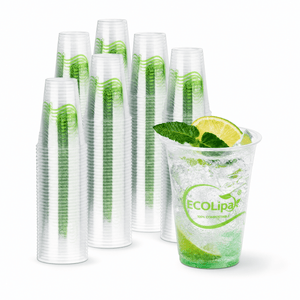
Let's look at Ecolipak's Biodegradable Clear PLA Cold Cups. These cups are made from plant-based PLA and are certified compostable. This means they are designed for an industrial composting facility, not your home compost or recycling bin.
You might see a "recyclable" label on some PLA products. While PLA is technically a Type 7 plastic, it is not accepted in most curbside recycling programs. Putting it in your recycling bin contaminates the main plastic stream, ruining the recycling process. For these cups, the "Compostable" label is the most important instruction. If an industrial composter is not available, the trash can is the correct choice to prevent contamination of the recycling system. A biodegradable item in the trash is better than a biodegradable item that ruins a whole batch of recycling.
The most important lesson is that biodegradable plastics should never enter your recycling bin. Proper disposal is key. Prioritize industrial composting for certified products, like those from Ecolipak. This option is growing, with over 100 facilities in the USA accepting compostable packaging.
-
Cities like San Francisco and Seattle have successful city-wide programs.
If composting is unavailable, use the trash can. This action prevents contamination of the recycling system. To make a real difference, check labels and local options. Your choices protect our recycling infrastructure. Green Pack, Go for ECOLipak.
FAQ
Can I recycle biodegradable plastics like PLA cups?
No. Biodegradable plastics should never go in your recycling bin. They have a different chemical makeup and contaminate the recycling process. This contamination can ruin an entire batch of recyclable materials, forcing it to be sent to a landfill.
What if I don't have an industrial compost facility near me?
The trash can is the correct choice in this situation. It is better to send a biodegradable item to the landfill than to contaminate the recycling stream. This action protects our recycling system from being damaged by incorrect sorting.
Is 'biodegradable' the same as 'compostable'?
No, they are different. 'Compostable' means a product meets specific standards (like BPI) to break down safely in a commercial facility. 'Biodegradable' is a general term without a required timeframe, making it less reliable for proper disposal.
Why are certifications like BPI important?
Certifications are your guide to proper disposal. A BPI logo guarantees a product has been tested and will break down in an industrial composter. This helps you ensure your eco-friendly choice has a truly positive impact on the environment.