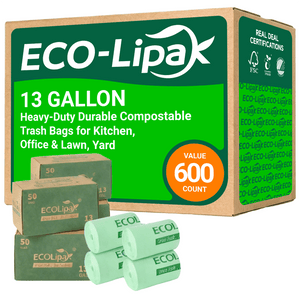
Quick Answer: A boutique hotel should buy 13-gallon compostable trash bags only after confirming the liner fits its room and public-area bins. ECO-Lipak currently offers a 600-count wholesale 13-gallon carton; a separate multi-size listing includes 13-gallon 100-count boxes and 200-count cartons. Count actual liner changes per occupied room and public bin, then compare days of coverage and storage. A 600-count case is useful for repeat demand, but not if it takes months to use or the bag fails the bin-fit test.
Key Takeaways
- Use measured liner changes per day, not room count alone; occupancy, housekeeping policy and public bins change demand.
- Current purchase choices include 13-gallon 100-, 200- and 600-count options across separate listings.
- Test bin rim fit, removal, bag load and closure with the actual waste stream before buying a large case.
- Set a reorder trigger from daily use, delivery lead time and a reserve for high-turnover weekends.
- Check local organics collection rules. A certified bag does not make mixed hotel trash compostable.
A hotel may use 13-gallon liners in guest rooms, a breakfast area and small back-of-house bins. Those stations do not all need a fresh bag at the same rate. A guest staying three nights may have one or several liner changes depending on policy and waste; a breakfast bin can change twice in a morning. Buying by number of rooms alone hides this difference.
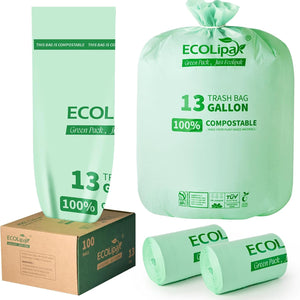
The wholesale 13-gallon compostable bag is listed at 600 per carton. For a smaller test, the multi-size bag listing currently shows 13-gallon 100-count boxes and 200-count cartons. These are distinct product options; confirm the chosen variant, bag dimensions, closure style and current stock before checkout.

First, Prove the Liner Fits the Bin
A gallon label describes nominal capacity, not an exact opening circumference or height. Measure the top rim, depth and expected overhang of each bin. Place a production sample on the bin, fill it with the normal housekeeping load, lift it out and check whether the liner slips, stretches or tears. A bag that fits an empty bin may fail when staff pull it around a full load.
| Hotel station | What to count | Fit check | Buying implication |
|---|---|---|---|
| Guest-room bin | Actual liner changes per occupied room | Rim grip and removal without tearing | Largest recurring demand |
| Breakfast area | Changes per service day | Food weight and moisture | May need more frequent changes |
| Lobby or staff bin | Changes per day or week | Different bin shape and opening | Do not assume the room liner fits |
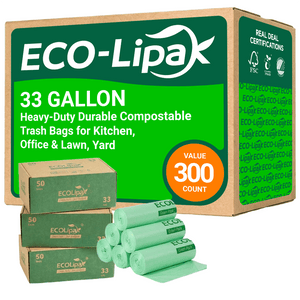
If the hotel uses a smaller countertop bin, the 2.6-gallon handled option may be a better physical match. If a back-of-house bin is much larger, compare a 33-gallon wholesale liner instead of stretching a 13-gallon bag beyond its job. The right material cannot compensate for the wrong bin size.
Calculate a Case From Real Change Counts
Consider an illustrative 25-room property at 80% average occupancy. If its policy results in one 13-gallon room-liner change per occupied room per day, that is 20 room liners daily. Add four daily changes across breakfast and public-area bins for a planning total of 24. A 100-count box then covers about four days, a 200-count carton about eight days, and a 600-count carton about 25 days, before damaged bags or a reserve. The formula is useful; the one-change-per-room assumption is not universal. Replace it with a one-week housekeeping tally.
For a smaller hotel with only eight occupied rooms most days, 600 bags may last much longer. If storage is limited or the waste program is changing, start with 100 or 200 until the fit and usage pattern are proven. Conversely, several properties buying together may use 600 rapidly and reduce repeated ordering work. Compare delivered cost per usable bag, not only the listed carton price.

Three Hotel Scenarios
Weekday business property
Occupancy is steady Monday to Thursday but falls on weekends. A room-turnover-based tally gives a better order than a flat 25-bags-per-day assumption. Keep a reserve for unexpectedly full weeks rather than overfilling each room cart.
Weekend destination hotel
Arrivals and departures bunch around Friday and Sunday. Count the largest realistic housekeeping run, then ensure the shelf holds enough bags before the next delivery. A case may be sensible even if average weekday use is modest, because shortage during a sold-out weekend is more disruptive.
Property with breakfast service
Food-soiled waste may be heavier and wetter than room waste. Test the normal load and bag removal, and confirm whether the hotel's collection route actually accepts the bag with that waste stream. A compostable liner used for mixed trash does not turn the contents into compost.
Set a Reorder Point
If the measured total is 24 liners daily, delivery takes five operating days and the manager wants three days of reserve, reorder around 24 x (5 + 3) = 192 usable bags. That is near a 200-count carton. Count the rolls on room carts and in back-room storage, and deduct any reserved for a booked group. If demand doubles during a holiday week, recalculate before the usual reorder day.
Assign the supply count to one role, but make it visible to the whole housekeeping team. A simple log needs starting inventory, bags delivered, bags issued to carts, damaged bags and remaining stock. Review the actual changes after two weeks. When the room service policy changes, the forecast should change as well.
Disposal and Claim Check
The product's BPI certification should be evaluated on the exact variant and against the receiving facility's rules. The US EPA's composting guidance is a useful reminder to connect purchasing claims to real collection infrastructure. Never tell guests that a filled mixed-waste bag can enter any compost bin. Keep food-waste and general-waste instructions separate if the property has separate streams.
Browse ECO-Lipak's trash bag collection for other sizes. The existing 600-versus-200 wholesale guide compares pack formats; this hotel plan focuses on occupancy-driven changes and reorder timing.
Frequently Asked Questions
How many 13-gallon trash bags should a boutique hotel buy?
Count actual room and public-bin changes for one to two weeks, then cover supplier lead time plus a reserve. Room count by itself is not enough.
How long does a 600-count carton last?
At an illustrative 24 changes daily, about 25 days before reserve. Divide 600 by your measured daily changes for a property-specific answer.
Should I test a 100- or 200-count pack first?
Yes when bin fit, bag performance or occupancy demand is uncertain. Move to the 600-count carton after the selected bag passes the real load test.
Does a 13-gallon label guarantee bin fit?
No. Measure the bin rim and depth, then test the actual bag under a normal filled load.
Can a compostable liner holding mixed hotel trash be composted?
Not automatically. Follow the local collector's rules for the specific bag and the waste inside it.