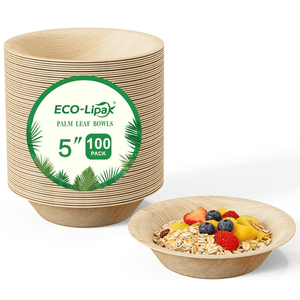
Quick Answer: Palm leaf bowls are a strong fit for snack bars, brunch sides, fruit portions, dips, and relaxed outdoor hosting because they bring a natural table look without needing ceramic bowls at every station. Use them when the food is casual, colorful, and self-serve, and pair them with matching plates when guests need a complete place setting.
Key Takeaways
- Palm leaf bowls work best for sides, snacks, dips, berries, chips, nuts, slaws, and small desserts.
- They are especially useful for outdoor brunches, backyard parties, grazing tables, and casual catered events.
- Bowls should be planned by station, not only by guest count.
- Use smaller bowls for high-value toppings and larger bowls for chips, fruit, and shared sides.
- A palm leaf table setting feels natural, but disposal still depends on local composting and event cleanup rules.
A snack table rarely fails because the food is wrong. It fails because the table flow is messy: chips too far from dips, fruit bowls too large, sauces sinking into plates, and guests balancing three things at once. Palm leaf bowls solve a quiet part of that problem by giving small foods a clear home.

Where Palm Leaf Bowls Fit Best
| Serving moment | Food examples | Planning note |
|---|---|---|
| Brunch bar | Berries, granola, yogurt toppings, fruit | Use several smaller bowls so toppings stay fresh. |
| Snack table | Chips, nuts, olives, trail mix | Place bowls near plates so guests move in one direction. |
| Buffet sides | Slaw, salsa, roasted vegetables, salads | Use bowls for foods that do not sit cleanly on flat plates. |
| Dessert station | Cookies, fruit, mini sweets, toppings | Keep small portions visible without overfilling the table. |
ECO-Lipak's 5 inch and 6.3 inch palm leaf bowls are a practical fit for sides, snacks, dips, and toppings. For plates that match the same natural table language, compare wholesale 6 inch square palm leaf plates. If you need a broader overview of ECO-Lipak materials, the resource list is a useful next step.
Snack Bar Setup Checklist
- Group bowls by temperature. Keep room-temperature snacks separate from chilled fruit or salads.
- Use smaller bowls for expensive toppings. This keeps refill control easier and the table cleaner.
- Place plates before bowls. Guests should pick a plate, then move across toppings and sides.
- Keep sauce cups or spoons nearby. Bowls help presentation, but sauces still need clean serving tools.
- Plan the cleanup station. A natural-looking table still needs clear compost, trash, or recycling instructions.

The EPA food service ware guidance can help buyers think about serving ware as part of sourcing, use, and disposal rather than a single product decision.
FAQ
What are palm leaf bowls best used for?
Palm leaf bowls are best for snacks, sides, toppings, dips, fruit, small salads, and casual dessert portions.
Are palm leaf bowls only for outdoor events?
No. They work indoors too, especially for brunch bars, grazing tables, dessert stations, and catered side dishes.
Should I use palm leaf bowls or plates for buffet sides?
Use bowls for loose, wet, or small foods. Use plates for items that need a flat serving surface.
Can palm leaf bowls be composted anywhere?
No. Composting availability varies, so event teams should check local rules and disposal instructions before making claims.