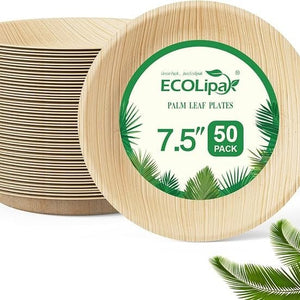
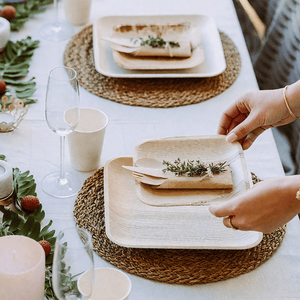
Quick Answer: Palm leaf plates are becoming a better fit for modern buffet tables because they add natural texture without making the table feel overdesigned. Use them when the menu is mostly room-temperature or warm, the setting needs a sturdier plate than thin paper, and the host wants disposable tableware that still looks intentional.
Key Takeaways
- Choose 10 inch palm leaf plates for most entree plates; smaller square plates work better for desserts, fruit, and appetizer stations.
- Palm leaf plates are best for buffets, catered lunches, backyard dinners, and rustic-modern tables where the plate is part of the visual experience.
- For saucy foods, use a plate with a raised edge and keep very wet dishes in bowls or trays instead of forcing everything onto a flat plate.
- Plan 1.2 to 1.5 plates per guest when people return for seconds or move between appetizer, entree, and dessert stations.
- Check local composting rules before calling any used plate compost-ready; food residue and facility access matter.

Why Palm Leaf Plates Fit the Current Tableware Shift
The quiet trend in disposable tableware is not just “make it compostable.” Hosts and food-service buyers are asking whether the table still feels warm, clear, and worth photographing after the disposable items are added. Round palm leaf plates answer that need because each plate has visible grain, a naturally neutral color, and enough structure for buffet service.
That does not mean every menu needs palm leaf. For high-volume takeout, molded fiber trays may be more practical. For a wedding welcome lunch, office garden party, chef demo, or family-style salad bar, palm leaf plates can make the disposable choice look less temporary.
Where They Work Best
| Setting | Best Palm Leaf Format | Planning Note |
|---|---|---|
| Backyard dinner | 10 inch round plates | Use 1.3 plates per guest if dessert is separate. |
| Office catered lunch | Round entree plates plus square appetizer plates | Place stacks at both ends of the buffet to reduce crowding. |
| Grazing table | Small square plates | Better for fruit, cheese, pastries, and small bites. |
| Rustic wedding brunch | Mixed round and square palm leaf plates | Keep the plate color consistent and vary the shape by course. |
If you are building a full tableware set, start with the palm leaf plates collection, then compare it with the broader plates collection when heat, sauce, or price is the bigger decision.

Menu Fit: Texture Helps, But Shape Still Matters
A palm leaf plate can handle many plated foods, but the best result comes from matching plate shape to the way people eat. Grain salads, roasted vegetables, sandwiches, pastries, and fruit hold well. Very brothy foods, heavy sauces, or meals carried while standing need more edge support.
For mixed menus, use square palm leaf plates for appetizers and the round 10 inch format for entrees. This makes the table easier to scan and keeps guests from overloading a small plate with a full meal.
A Simple Quantity Rule
For a two-hour gathering, multiply the guest count by 1.25 for a single buffet line. Use 1.5 per guest if there are separate appetizer and dessert stations. Add a small reserve if the event has children, self-serve seconds, or food stations placed far apart.

Disposal Notes Without Greenwashing
Palm leaf tableware is plant-based, but disposal still depends on local infrastructure. The EPA’s composting guidance is a useful reminder that composting works best when materials and food scraps are handled by the right system. The FTC Green Guides also make it clear that environmental claims should be specific, not broad promises.
For ECO-Lipak buyers, the practical approach is simple: use palm leaf plates where their texture and stiffness improve the service experience, then follow the event venue or municipality’s disposal rules. For larger events, ask the venue whether food-soiled plant-fiber tableware goes to compost, landfill, or a separate collection stream.
FAQ
Are palm leaf plates good for hot food?
Yes, palm leaf plates can work for many warm foods. Avoid treating them like cookware or using them for very wet, oily, or brothy dishes without testing the menu first.
Do palm leaf plates all look the same?
No, natural grain variation is part of the material. That variation is usually a benefit for rustic, garden, and modern natural table settings.
How many palm leaf plates should I buy for 50 guests?
Plan about 65 plates for a simple buffet and about 75 plates if dessert or appetizers use separate plates. Buy more if guests will serve themselves multiple times.
Are palm leaf plates better than paper plates?
They are better when appearance and stiffness matter. Paper plates may still be the simpler option for very casual, low-cost, or kids-only meals.
Can used palm leaf plates be composted?
Only if your local program accepts them with food residue. Composting access varies by city, event venue, and hauler.
Recommended Reading
- Palm Leaf Plates: The Strong, Safe, Eco-Friendly Choice
- Compostable Food Trays: What Sugarcane Fiber Changes After the Party
- Why 5-Compartment Plates Help Reduce Food Mixing and Cleanup Waste
- Clear Compostable Cold Cups: What Iced Drink Programs Need Before Summer Rush
For material standards, product options, or event sourcing questions, ECO-Lipak’s brand page and contact page are the best next steps.