Your microwave heats food using special electromagnetic waves that cause the water molecules inside your food to vibrate rapidly. This constant motion creates friction, which generates heat, much like rubbing your hands together to warm them up. This process is why food often cooks from the inside out. Understanding The Physics of the Microwave: Understanding Why Certain Materials React Poorly is key to knowing why some containers, like our sturdy compostable plates, are safe for reheating, while others are not.
Key Takeaways
Microwaves heat food by making water molecules move very fast.
Never put metal in a microwave; it can cause sparks and damage the oven.
Some plastics can melt or release bad chemicals into your food when heated.
Glass, ceramic, and special compostable plates are safe for microwave use.
Do not run an empty microwave; it can break the machine.
The Physics of the Microwave: How It Heats Food
To use your microwave oven safely and effectively, you first need to understand the science behind it. The magic happens in a special component called a magnetron, which generates invisible waves. This process is the core of the physics of the microwave: understanding why certain materials react poorly is essential for safe kitchen practices. Let's break down exactly how these waves cook your meals.
What Are Microwaves?
Microwaves are a type of electromagnetic wave, just like radio waves or visible light. They fall into a specific frequency range on the spectrum, from 300 megahertz (MHz) to 300 gigahertz (GHz). To give you some perspective on their wavelength:
Radio waves have the longest wavelengths.
Microwaves have shorter wavelengths than radio waves.
Infrared waves have even shorter wavelengths than microwaves.
Fun Fact: An Accidental Discovery! 🧑🔬 The use of microwaves for cooking was discovered by accident. In 1945, an engineer named Percy Spencer was working with an active radar set when he noticed a candy bar in his pocket had melted. This surprising event led him to experiment with popcorn and an egg, paving the way for the modern microwave ovens we use today.
How Microwaves Interact with Water
The key to microwave cooking lies in how the radiation interacts with certain molecules in your food. Microwaves primarily affect "polar" molecules. A water molecule is a perfect example of a polar molecule. It has a slightly positive end and a slightly negative end, much like a tiny magnet.
Because of this polarity, water molecules try to align themselves with the electric field of the microwaves. The field inside your oven flips back and forth billions of times per second. This causes the water molecules to spin and flip at an incredible speed—around 2.5 billion times every second! This rapid movement is the first step in generating heat.
It's not just water, either. Other polar molecules found in food, like fats and sugars, also get energized by microwaves. This is why foods high in sugar or fat can get very hot, very quickly. The energy from the microwave radiation is absorbed by food through this interaction with polar molecules.
From Molecular Vibration to Heat
All that frantic spinning creates friction between the molecules. This friction generates heat in a process called dielectric heating. Think of it like rubbing your hands together on a cold day—the friction warms them up. The same principle applies inside your food at a microscopic level.
Once these water, fat, and sugar molecules heat up, they don't keep the warmth to themselves.
In solid foods, the heat spreads to the rest of the meal through conduction.
In liquids like soup, the heat spreads through convection, as warmer areas circulate.
This entire process, from wave generation to molecular vibration, is how your microwave turns a cold dish into a hot meal. This is also why the physics of the microwave: understanding why certain materials react poorly is so important, as some materials can interfere with this process. The efficient absorption of energy is what makes cooking the food so fast.
Understanding Why Certain Materials React Poorly
You now know how microwaves heat your food by exciting water molecules. This same science explains why some materials are dangerous to use. The physics of the microwave: understanding why certain materials react poorly is crucial for your safety. Certain materials don't absorb microwaves; instead, they reflect or react to them in hazardous ways. Let's explore what you should never put in your microwave.
The Danger of Metal Objects in a Microwave
You have likely heard the number one rule of microwave safety: never put something metallic inside. This is not just an old wives' tale. Metal acts like a mirror to microwaves. It reflects the energy instead of letting it pass through to your food. This creates several serious problems.
Uneven Cooking: The metal blocks microwaves from reaching your food, leaving you with cold spots.
Sparks and Fire: The reflected energy can cause sparks and even ignite a fire inside your appliance.
Damage to the Microwave: The reflected waves can bounce back to the magnetron, causing it to overheat and break.
The most dramatic effect you might see with metal objects in a microwave is arcing, or sparking. Microwaves create a concentrated electric field around any sharp points or edges on a piece of metal. This intense field can ionize the air around it, causing visible and audible electric sparks jumping between points. This is why a fork, with its sharp tines, is especially dangerous. This is a core part of the physics of the microwave: understanding why certain materials react poorly.
The Melting Risk of Certain Plastics
Not all plastics are created equal, and many pose risks when heated. Some plastics can melt or warp, ruining your container and your meal. Worse, they can release harmful chemicals into your food. You should always avoid plastics that are not explicitly labeled "microwave-safe."
⚠️ Warning: Avoid This Plastic! Plastic #6, also known as Polystyrene (PS), is a scientifically proven non-microwave-safe material. You often find it in disposable cups, takeout containers, and meat trays. Never heat food in these containers.
The biggest health concern involves chemicals called bisphenols (like BPA) and phthalates. Manufacturers use these to make plastics stronger or more flexible. These chemicals do not bind tightly to the plastic. Heat gives them the energy to escape and leach into your food and drinks. Exposure to these toxins is linked to serious health problems:
Hormone Disruption: They can mimic or block your body's natural hormones.
Developmental Issues: Exposure in early life is linked to problems like hyperactivity, anxiety, and asthma.
Adult Health Risks: In adults, they are associated with obesity, type 2 diabetes, heart disease, and reduced fertility.
Even a "microwave-safe" symbol doesn't guarantee zero risk. It simply means the container was tested and released chemicals below a level the FDA considers dangerous. The physics of the microwave: understanding why certain materials react poorly extends to these chemical reactions, making glass, ceramic, or certified compostable options a safer choice.
Why an Empty Microwave Is a Bad Idea
Have you ever accidentally turned on your microwave with nothing inside? This common mistake can seriously damage your appliance. Your microwave oven needs something to absorb the energy it produces. Normally, your food does this job.
When the oven is empty, the microwaves have nowhere to go. They bounce around the chamber and are eventually re-absorbed by the component that created them: the magnetron. This causes the magnetron to rapidly overheat. This is the final key to the physics of the microwave: understanding why certain materials react poorly, or in this case, how a lack of material causes a problem.
Running an empty microwave for just a few seconds is usually harmless. However, letting it run for more than a few minutes can cause permanent damage.
Look out for these signs of a damaged magnetron:
🔥 An electrical burning smell during or after operation.
⚡ Loud humming or arcing sounds.
🧊 The microwave runs but no longer heats your food.
✨ You see visible burn marks on the magnetron's antenna inside the cavity.
If you notice any of these issues, it's time to unplug your appliance and call a professional for repair.
Choosing Safe Containers for Your Microwave
Now that you understand what not to use, let's focus on the best containers for reheating your meals. Safe containers are "transparent" to microwaves, meaning the waves pass right through them to heat your food directly. This ensures even cooking and prevents damage to your appliance or container.
Materials That Are 'Transparent' to Microwaves
Glass and ceramic are excellent choices for microwave use. However, you should be aware of a few exceptions.
Avoid ceramic items with metallic trim, as the metal can cause sparks.
Do not move a container directly from the fridge to a hot setting, as the sudden temperature change can cause cracks.
Never use a container that already has cracks.
Always check for a "Microwave Safe" label, as some glazes are not safe for heating.
Plain paper products are also generally safe for short periods. You can use parchment paper or plain white paper towels to cover dishes. Avoid paper products with plastic coatings, colored dyes, or glues, as these can melt or release chemicals.
Eco-Friendly and Safe: Ecolipak Palm Leaf Plates
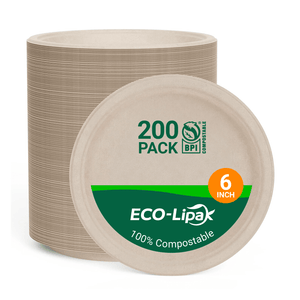
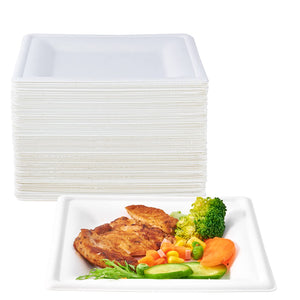
For a modern, safe, and sustainable option, consider Ecolipak, a brand dedicated to eco-friendly solutions. Their Compostable Square Palm Leaf Plates are a perfect example of a safe and durable material for reheating. These plates are made from 100% naturally fallen palm leaves through a simple, chemical-free process. Workers collect, clean, and heat-press the leaves into a sturdy shape.
Unlike some plastics, these plates are completely toxin-free and will not release harmful substances when heated. They are significantly more durable than standard paper plates and will not get soggy or bend, even with moist or heavy foods. This makes them an excellent, eco-conscious choice.
A Simple Test for Microwave Safety
If you are ever unsure about a container, you can perform a simple test.
Safety Test 🧪
Place the empty container inside your microwave.
Next to it, place a cup or bowl filled with water.
Heat them on high for one minute.
After one minute, carefully feel the container. If it remains cool, it is safe for use in the oven. If the container is warm or hot, it absorbed microwave energy. This means it is not microwave-safe and could burn you or leach chemicals.
Your microwave heats food by making water molecules vibrate. This simple science dictates what is safe. You should always choose containers that let microwaves pass through them.
Safe choices include glass, ceramic, and sustainable options like Ecolipak's palm leaf plates.
You must never put metal in the oven. Metal reflects the waves, which can damage your appliance. Avoid metal containers and any dishes with metallic trim. Understanding why metal is dangerous is key to kitchen safety.
By making smart, eco-friendly choices, you protect your meals and your appliance.
FAQ
Why does my food cook unevenly in the microwave?
Microwaves heat the outer layers of your food first. The heat then moves toward the center. For best results, you should arrange food in a single layer and stir or rotate it halfway through cooking. This helps distribute the heat evenly.
Should I cover my food in the microwave?
Yes, you should cover your food. A cover traps steam, which helps your food cook more evenly and prevents messy splatters.
Quick Tip 💡 You can use a microwave-safe lid, a paper towel, or parchment paper. Avoid plastic wrap unless it is labeled "microwave-safe."
Why do some foods get hotter than others?
Foods with high water, fat, or sugar content heat up much faster. These molecules vibrate very efficiently when exposed to microwaves. This is why a sugary pastry filling can become extremely hot while the dough is still just warm.
Are eco-friendly plates like Ecolipak's really safe for microwaves?
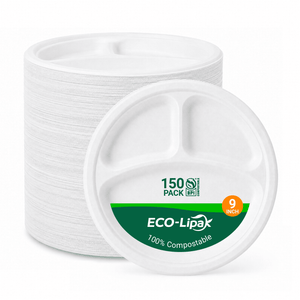
Absolutely. Plates made from natural materials like palm leaf or sugarcane are "transparent" to microwaves. The energy passes through them to heat your food directly. They are a durable, toxin-free, and safe alternative to certain plastics.